Starting seeds indoors gives gardeners a head start on the growing season, but it comes with challenges. One of the most common problems is leggy seedlings—those tall, thin, droopy plants that look like they're reaching desperately for something. These weak stems and pale leaves signal that something isn't quite right with the growing conditions.
Leggy seedlings develop when plants don't get enough light, causing them to stretch upward in search of sun, but overwatering, poor air circulation, and crowding can also contribute to the problem. While leggy growth doesn't mean the plants are dying, it does lead to weaker stems that struggle to support fruit, reduced harvests, and plants that are more vulnerable to pests and diseases. The good news is that legginess can be prevented with a few simple adjustments to how seeds are started.
Understanding what causes leggy seedlings and how to fix them makes the difference between struggling plants and strong, productive ones. With the right light, water, spacing, and care, anyone can grow sturdy seedlings that thrive both indoors and after transplanting outside.
Key Takeaways
- Leggy seedlings result from insufficient light and other poor growing conditions that cause weak, tall stems
- Prevention involves providing adequate light, proper watering, good airflow, and appropriate spacing between plants
- Some leggy seedlings can be fixed by pinching them back, planting deeper, or adjusting their growing environment
Understanding Leggy Seedlings
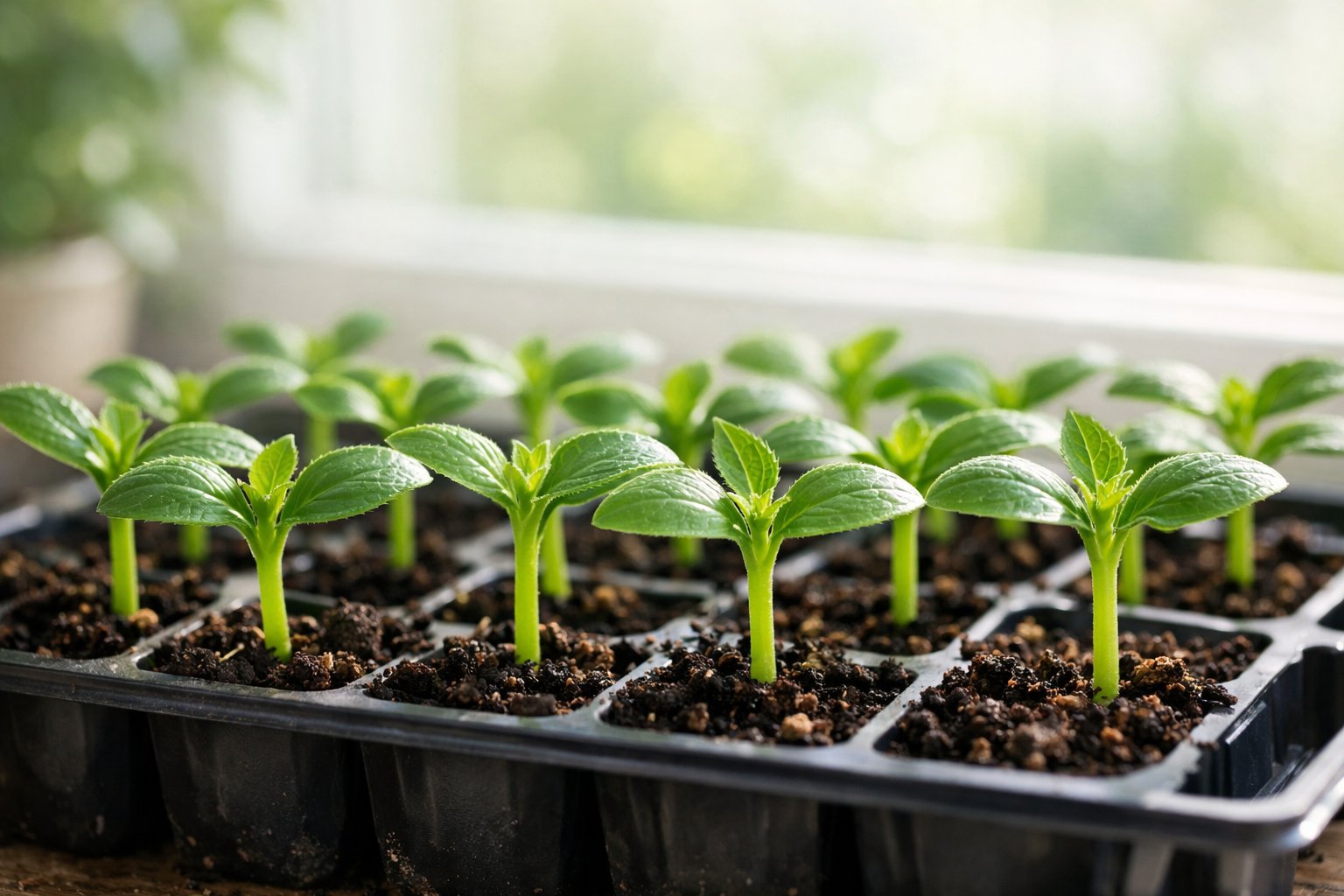
Leggy seedlings develop weak, elongated stems that can't properly support the plant's growth. These seedlings show specific visual signs that distinguish them from healthy plants, and they face serious challenges when it comes to survival and productivity.
What Are Leggy Seedlings
Leggy seedlings are plants with abnormally tall, thin stems and underdeveloped leaves. The stems grow too long in proportion to the rest of the plant, creating a spindly appearance that signals a problem with growing conditions.
This condition happens when seedlings stretch upward in search of light or respond to environmental stress. The plant puts all its energy into height rather than developing a balanced structure. Instead of growing thick, sturdy stems, the seedling produces pale, weak stalks that can barely support their own weight.
Healthy seedlings have short, thick stems with vibrant green leaves. They stand upright without support and show balanced growth between stem and foliage. Leggy seedlings look the opposite—tall, droopy, and fragile.
Common Signs of Leggy Growth
The most obvious sign is excessive height with thin stems that bend or flop over easily. These seedlings often lean dramatically toward the light source, sometimes bending completely sideways.
Other warning signs include:
- Pale or light green stems instead of vibrant green
- Widely spaced leaves with large gaps between leaf nodes
- Smaller, fewer leaves compared to the stem length
- Weak stems that can't support the plant upright
- Seedlings falling over or drooping at the base
The bottom of the stem may struggle to support the top growth, causing the entire seedling to collapse. Seedlings started in spring, like tomatoes, broccoli, and lettuce, show these symptoms most often.
Consequences of Leggy Growth
Leggy seedlings face multiple challenges that affect their long-term health. The weak stems make plants more vulnerable to wind, rain, and handling during transplanting. They struggle to survive the hardening-off process.
These plants also become easy targets for pests and diseases. Their compromised structure can't defend against common threats that healthy seedlings would normally resist. Growth becomes stunted as the plant tries to compensate for its poor foundation.
Fruit and vegetable production suffers significantly. The plant may produce smaller harvests or fail to produce at all. Even if leggy seedlings survive to maturity, they rarely perform as well as plants that started with strong, healthy stems.
Main Causes of Leggy Seedlings
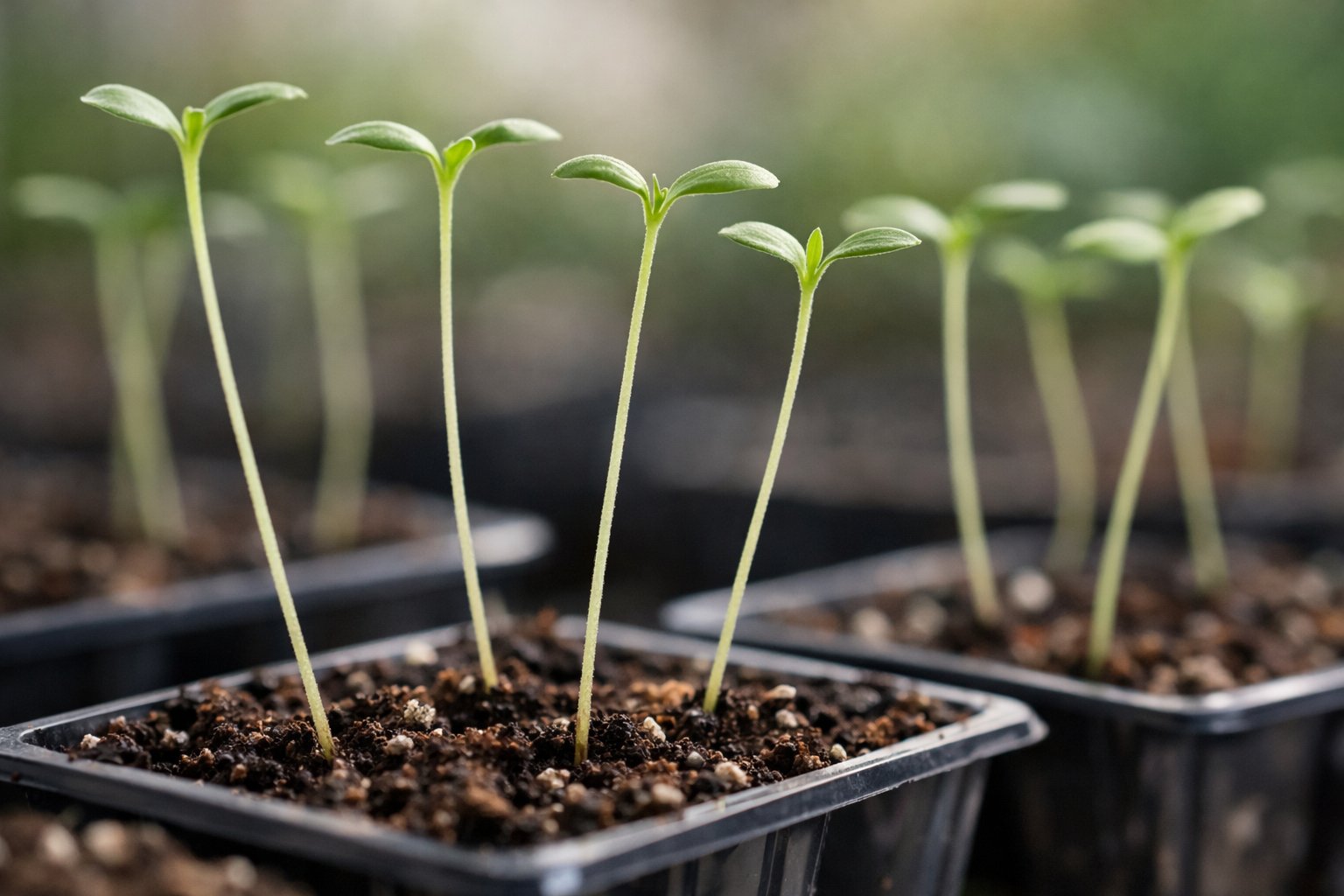
Leggy seedlings develop when specific growing conditions trigger plants to stretch upward instead of growing thick and sturdy. The most common culprits include inadequate lighting, temperature imbalances, crowded conditions, and watering issues that stress young plants.
Insufficient Light Exposure
Light is the single most important factor in preventing leggy growth. When seedlings don't receive enough light, they stretch upward trying to reach a stronger light source. This creates tall, thin stems that can't support the plant's weight.
Seedlings need 12-16 hours of bright, consistent light each day. A sunny windowsill rarely provides enough light intensity, even on the south side of a house. The light from windows is often too far away and too indirect to meet seedling needs.
Proper light setup requires:
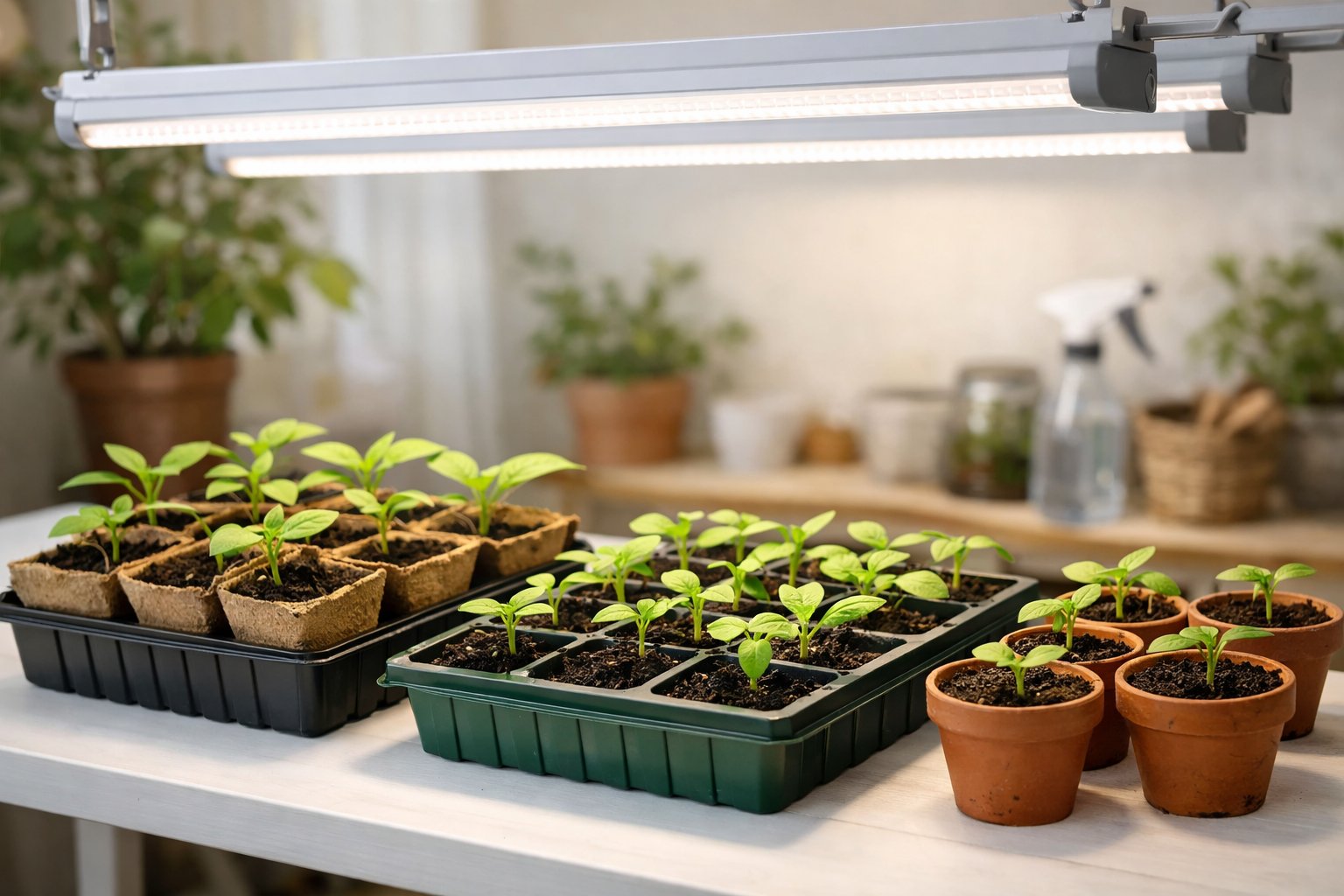
- Grow lights positioned 2-3 inches above the seedlings
- Lights adjusted upward as plants grow to maintain distance
- A timer to ensure consistent 12-16 hour periods
- Light intensity strong enough to prevent stretching
Without adequate light from the moment seeds sprout, seedlings will become leggy within just a few days. The stems elongate rapidly as the plant searches for more light energy to fuel growth.
Excessive Heat After Germination
Heat mats and warm locations help seeds germinate faster, but too much warmth after sprouting causes problems. High temperatures speed up growth without giving stems time to develop strength. The combination of heat with insufficient light creates the worst scenario for leggy seedlings.
Seeds benefit from warmth during germination, typically 70-80°F. Once seedlings emerge, they need cooler conditions around 65-70°F during the day. Nighttime temperatures should drop slightly lower.
Seedlings kept on heat mats after germination or placed near heating vents grow too quickly. The rapid growth outpaces stem development, resulting in weak, spindly plants. Remove heat sources once seeds sprout and provide cooler growing conditions to encourage compact, sturdy growth.
Overcrowding in Seed Starting Trays
Multiple seedlings competing in the same cell of seed starting trays stretch upward to access light. When seedlings crowd together, they shade each other and trigger the stretching response. Each plant tries to grow taller than its neighbors to capture more light.
Thinning seedlings prevents this competition. Gardeners should remove the weakest seedlings and keep only the strongest one per cell. Use scissors to snip unwanted seedlings at soil level rather than pulling them out, which can disturb roots.
Proper spacing in seed starting trays allows air to circulate around each plant. This airflow strengthens stems and reduces disease risk. The seed starting mix also provides better nutrient access when one seedling isn't competing with others in the same space.
Improper Watering and Nutrition
Overwatering creates soft, weak growth that contributes to leggy stems. Seedlings in constantly wet seed starting mix develop shallow root systems and put energy into top growth rather than building strong stems. The excess moisture combined with limited light makes the legginess worse.
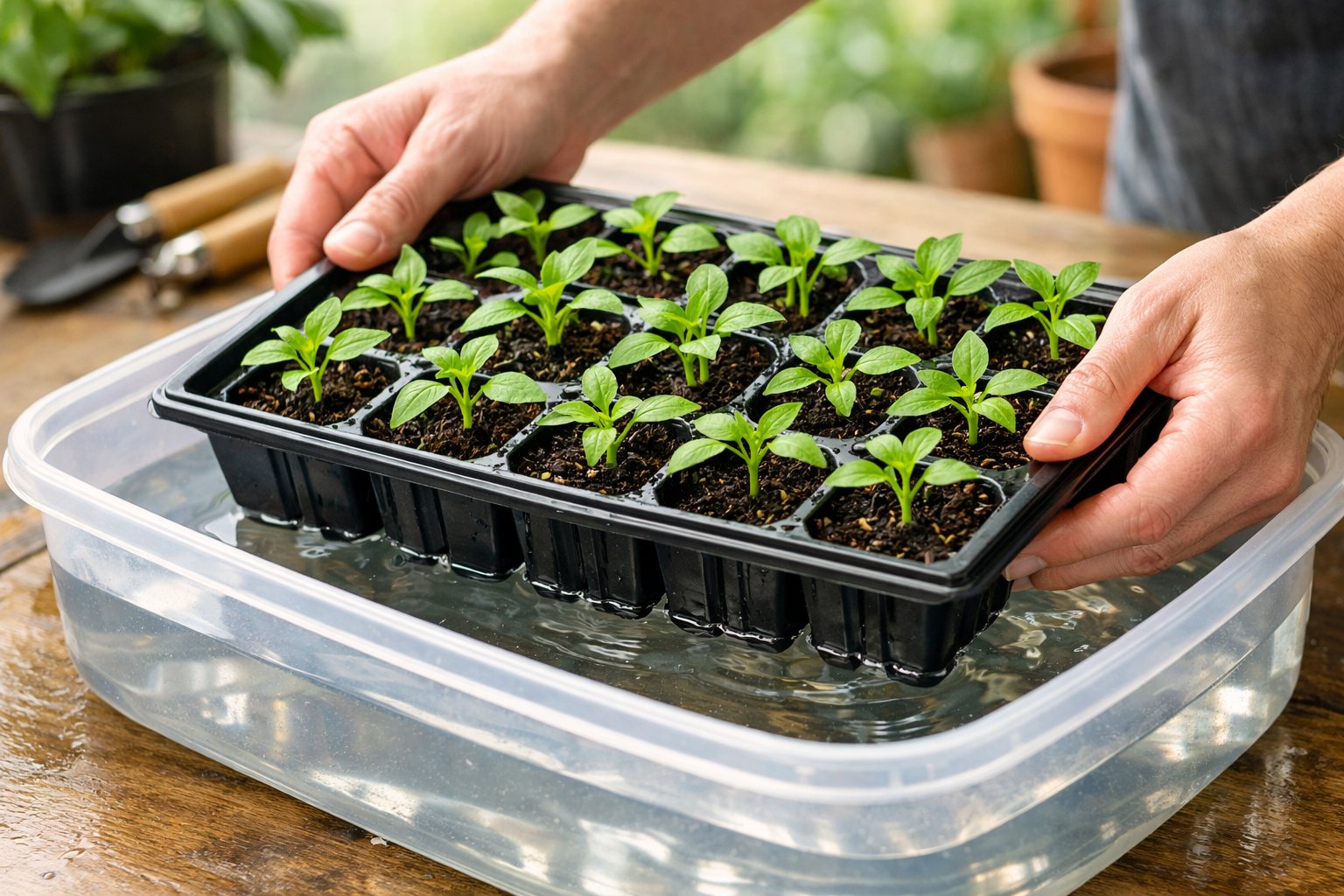
Bottom watering encourages deeper root development and stronger plants. Place seed starting trays in shallow water and let the soil absorb moisture from below. This method prevents soggy conditions at the soil surface while building robust root systems.
Watering guidelines:
- Allow the top of the seed starting mix to dry slightly between waterings
- Water in the morning so foliage dries during the day
- Avoid fertilizing until true leaves appear
- Use diluted fertilizer only after seedlings establish
Most seed starting mix contains enough nutrients for the first few weeks. Adding fertilizer too early encourages rapid, weak growth rather than sturdy development. Focus on proper lighting and watering before considering nutrition needs.
How to Prevent Leggy Seedlings
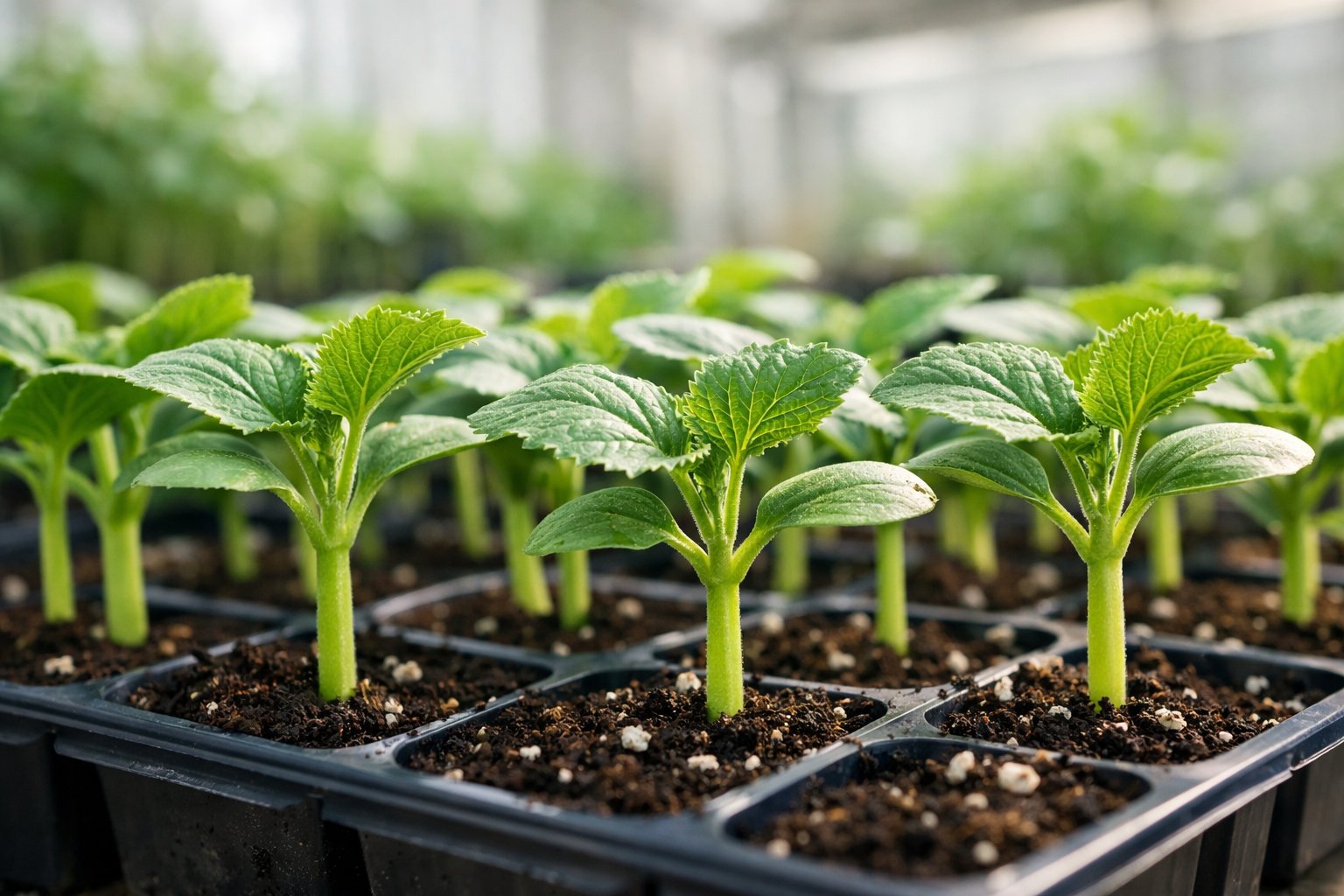
Strong seedlings need the right light, temperature, and spacing from the start. Setting up proper conditions during indoor seed starting stops stretching before it begins.
Optimize Light for Seedlings
Light is the most critical factor in preventing leggy seedlings. Seedlings stretch and become weak when they don't get enough light, even if they're near a window.
Using a grow light solves most legginess problems. Position grow lights 2-4 inches above seedlings and keep them on for 14-16 hours per day. As plants grow taller, raise the lights to maintain the same distance.
Key light requirements:
- Intensity: Seedlings need bright, direct light once they emerge
- Duration: 14-16 hours of light daily
- Distance: Keep lights close to prevent stretching
- Rotation: Turn trays every 2-3 days for even growth
Seedlings can germinate in lower light, but they need maximum light exposure immediately after sprouting. Without adequate light, stems elongate rapidly as they search for a light source. Windows rarely provide enough intensity, even on sunny windowsills.
Regulate Temperature and Airflow
Temperature affects how quickly seedlings grow. Warm season plants like tomatoes and peppers need temperatures between 70-75°F, while cool season crops like spinach prefer 60-65°F.
Too much heat causes rapid, weak growth. Match the temperature to what each plant needs in its normal growing environment.
Air circulation strengthens stems. A small fan running on low speed for a few hours daily makes seedlings sway gently. This movement triggers them to develop thicker, sturdier stems that resist breaking.
The breeze also reduces moisture on leaves and helps prevent fungal diseases. Set the fan to create gentle movement without blowing seedlings over.
Space and Thin Seedlings Appropriately
Crowded seedlings compete for light and grow tall trying to outreach their neighbors. This creates the exact conditions that cause legginess.
Thin seedlings as soon as the first true leaves appear. Remove the weakest plants and leave only the strongest one per cell or space plants 2-3 inches apart in trays.
When multiple seeds sprout in one spot, cut the extras at soil level with scissors instead of pulling them out. Pulling damages the roots of the seedling you want to keep. Proper spacing gives each plant access to light from all sides and prevents the competition that leads to stretching.
Seed Starting Best Practices Indoors
The right materials and setup make starting seeds indoors more successful. Quality seed starting mix, proper use of humidity domes, and well-chosen trays give seedlings the foundation they need to grow strong instead of stretching.
Choose the Right Seed Starting Mix
Seed starting mix differs from regular potting soil in important ways. It contains lightweight materials like peat moss, coconut coir, perlite, and vermiculite that drain well while holding moisture. These mixes have fine particles that let delicate roots grow easily.
Regular garden soil and potting mix are too dense for seed starting. They compact easily and hold too much water, which leads to poor drainage and weak roots. Dense soil also makes it harder for tiny seedlings to push through to the surface.
Key ingredients to look for:
- Peat moss or coconut coir for moisture retention
- Perlite or vermiculite for drainage and aeration
- No added fertilizer (seeds have their own nutrients)
Most seed starting mixes come sterile, which prevents damping-off disease. This fungal problem kills seedlings at the soil line before they can develop strong stems. Gardeners can also make their own mix using equal parts peat or coir, perlite, and vermiculite.
Proper Use of Humidity Domes
Humidity domes trap moisture and warmth during germination. They create the ideal environment for seeds to sprout by keeping the soil surface from drying out. Most seeds germinate best when the growing medium stays consistently moist.
Remove the dome as soon as seedlings emerge from the soil. Leaving it on after germination traps too much heat and humidity, which encourages weak, stretched stems. Seedlings also need air circulation once they sprout to develop strong stems and prevent disease.
Vent the dome if condensation completely covers the inside surface. Too much moisture buildup can lead to fungal problems. Some domes have adjustable vents that let gardeners control airflow during germination.
Selecting and Using Seed Starting Trays
Cell size matters when choosing seed starting trays. Smaller cells work for plants that get transplanted early, while larger cells suit seedlings that need more time indoors before moving to the garden.
Standard 1020 trays with 72-cell inserts work well for most vegetables. The individual cells keep roots separated and make transplanting easier. Trays with drainage holes prevent water from pooling at the bottom.
Common tray options:
- 72-cell trays: Good for small seedlings and quick transplants
- 50-cell trays: Better for medium-sized plants that need more root space
- 32-cell trays: Ideal for larger seedlings or longer indoor growing periods
Reusable plastic trays last several seasons if cleaned with a 10% bleach solution between uses. This removes disease organisms that could affect new seedlings. Some growers prefer biodegradable pots made from peat or cow manure that can be planted directly in the garden.
How to Fix Leggy Seedlings
Leggy seedlings can be rescued with the right adjustments to their growing conditions and care routine. Techniques like replanting stems deeper, improving light exposure, and providing structural support help strengthen weak plants.
Repotting and Burying Stems Deeper
One of the most effective ways to fix leggy seedlings is to transplant them into deeper containers and bury part of the elongated stem. This works especially well for tomato seedlings, peppers, and brassicas like broccoli and cabbage. These plants can develop new roots along their buried stems, which creates a stronger root system and more stable base.
To repot correctly, fill a larger container with fresh potting mix. Carefully remove the seedling from its current container and gently loosen any tangled roots. Place the seedling in the new pot so that only the top few leaves remain above the soil line. Fill around the stem with soil and press it down gently to eliminate air pockets.
Water the newly potted seedling thoroughly. The buried portion of the stem will sprout additional roots within one to two weeks. This method transforms a weak, spindly plant into one with a robust foundation that can better support future growth and fruit production.
Adjusting Light and Temperature
Insufficient light is the primary cause of legginess, so increasing light exposure is critical. Move seedlings to the brightest available spot or place them under grow lights for 14 to 16 hours daily. Position lights 2 to 4 inches above the seedlings and adjust the height as plants grow.
Rotate seed trays every two to three days. This prevents seedlings from leaning toward a single light source and promotes even growth on all sides.
Temperature adjustments also help fix leggy growth. Warm-season plants like tomato seedlings need temperatures between 65°F and 75°F during the day. Cool-season plants like spinach and lettuce prefer slightly cooler conditions between 60°F and 70°F. Using a seedling heat mat can provide consistent bottom warmth when needed, but remove it once seedlings emerge to prevent excessive stem elongation.
Pruning and Supporting Weak Seedlings
Pruning encourages bushier, more compact growth in leggy seedlings. Once plants reach 3 to 4 inches tall, pinch off the top set of leaves just above a leaf node. This removes the growing tip and forces the plant to branch out from lower nodes, creating a fuller shape with stronger stems.
Thin out overcrowded seedlings by removing the weakest ones. This reduces competition for light and nutrients, allowing the remaining plants to develop thicker stems. Use small scissors to cut unwanted seedlings at soil level rather than pulling them out, which can disturb nearby roots.
For extremely weak seedlings that struggle to stay upright, insert small stakes or toothpicks next to the stems. Use soft ties or strips of fabric to loosely attach the stem to the support. This prevents the seedling from falling over while it develops strength. Add a small fan near the seedlings to create gentle air movement, which stimulates the plant to produce thicker, sturdier stems naturally.
Tips for Growing Strong, Healthy Seedlings
Strong seedlings require more than just adequate light—they need proper watering, nutrition, and careful preparation before moving outdoors. Understanding leaf development stages helps growers make better decisions about care and timing.
Recognizing Cotyledons and True Leaves
Cotyledons are the first leaves that emerge when a seed sprouts. These initial leaves look different from the plant's mature foliage and serve as built-in food stores for the young seedling.
True leaves appear after cotyledons and show the actual shape and characteristics of the plant species. Tomato true leaves look like small tomato plant leaves, while pepper true leaves resemble miniature pepper plant foliage.
The appearance of true leaves signals an important growth stage. At this point, the seedling begins producing its own food through photosynthesis rather than relying solely on seed reserves. This is when seedlings become more resilient and can handle gentle handling during transplanting.
Growers should wait until seedlings have at least two sets of true leaves before transplanting them into larger containers. This ensures the plants have developed enough root structure and leaf surface to support continued growth.
Maintaining Balanced Watering and Nutrition
Seedlings need consistent moisture but not waterlogged soil. The top layer of soil should feel slightly dry before watering again. Overwatering causes weak stems and root rot, while underwatering leads to stunted growth.
A spray bottle or gentle watering can helps deliver water without disturbing delicate seedlings. The soil should feel moist like a wrung-out sponge—not soggy or bone dry.
Seedlings don't need fertilizer immediately after sprouting because they rely on nutrients stored in the seed. Once true leaves appear, a diluted liquid fertilizer applied every 10-14 days supports healthy growth. Use a balanced fertilizer at quarter or half strength to avoid burning tender roots.
Fresh seed-starting mix contains enough nutrients for the first few weeks of growth. Yellowing leaves or slow growth after true leaves develop may indicate the need for supplemental feeding.
Gradual Acclimation Before Transplanting
Hardening off prepares indoor seedlings for outdoor conditions. This process involves gradually exposing plants to sun, wind, and temperature changes over 7-10 days.
Start by placing seedlings outside in a sheltered, shaded spot for 1-2 hours on the first day. Each day, increase outdoor time by 1-2 hours and gradually move plants into brighter locations. Bring seedlings inside if temperatures drop below their preferred range or if harsh weather threatens.
By day 7-10, seedlings should tolerate full sun and outdoor conditions for the entire day. This gradual transition prevents transplant shock, sunburn, and wind damage. Plants that skip hardening off often wilt, develop bleached leaves, or experience severe stress after transplanting.
Monitor seedlings closely during hardening off. If leaves show signs of burning or wilting, move plants back to shade and slow down the acclimation process.
Frequently Asked Questions
Seedlings become leggy when they don't get enough light, face temperature issues, or experience poor growing conditions. Most leggy seedlings can recover with quick action and proper care adjustments.
What steps can be taken to prevent seedlings from becoming leggy when grown indoors?
Providing 14 to 16 hours of light daily is the most important step for preventing leggy seedlings. LED grow lights positioned 2 to 4 inches above seedlings work better than windowsill light, especially during late winter and early spring when natural daylight is limited.
Temperature control plays a key role in prevention. Seedlings grow best at 65°F to 70°F during the day and 55°F to 60°F at night. Removing humidity domes and heat mats within two days of germination prevents rapid, weak growth.
Proper spacing stops seedlings from competing for light. Once the first true leaves appear, seedlings need at least one to two inches of space between them. Good airflow from a small fan strengthens stems and reduces disease risk.
Bottom watering keeps soil moisture consistent throughout the root zone. This method encourages downward root growth and prevents the weak stems that result from inconsistent watering.
Is it possible for leggy seedlings to recover and thrive?
Leggy seedlings can recover if the problem gets caught early. Many leggy seedlings that receive prompt treatment go on to produce normal yields once transplanted outdoors.
Recovery depends on fixing the underlying cause quickly. Adding grow lights, adjusting temperature, and improving spacing give leggy seedlings the chance to develop stronger stems. The younger the seedling, the better its chances of full recovery.
Some plants like tomatoes actually benefit from their long stems. These stems can grow additional roots when buried deeper during transplanting, which strengthens the overall plant.
What are effective techniques for correcting leggy seedlings?
Increasing light exposure immediately helps correct leggy growth. Moving seedlings under grow lights for 14 to 16 hours per day stops the stretching behavior and promotes sturdier development.
Gently brushing fingers across the tops of seedlings daily strengthens their stems. This motion mimics outdoor wind and triggers the plants to grow thicker stems. Running a small oscillating fan near seedlings for a few hours each day achieves the same result.
Repotting leggy seedlings into deeper containers allows gardeners to bury part of the stem. This technique works especially well for tomatoes, peppers, eggplants, and tomatillos, which can develop roots along buried stem sections.
Adjusting watering practices and ensuring proper spacing between plants supports recovery. Seedlings need consistent moisture and room to grow without competing for resources.
When transplanting, how should leggy seedlings be handled?
Leggy seedlings need careful hardening off before transplanting outdoors. Gradually exposing them to outdoor conditions over 7 to 10 days prepares their weak stems for wind and direct sunlight.
Burying stems deeper during transplanting helps stabilize leggy seedlings. For tomatoes and related plants, burying the stem up to the lowest set of leaves encourages additional root development along the buried portion. The plant can be laid in a shallow trench rather than requiring a deep hole.
Support stakes or cages should be installed at transplanting time for very leggy seedlings. This extra support protects weak stems until they have time to strengthen in their permanent location.
Transplanting should happen as soon as soil temperatures and weather conditions allow. Keeping leggy seedlings indoors longer than necessary only worsens their condition.
What distinguishes normal seedling growth from leggy development?
Normal seedlings have thick, sturdy stems that stand upright without support. Their leaves are full-sized and darkly colored, with proper spacing between leaf sets along the stem.
Leggy seedlings appear tall and thin with pale, elongated stems. They lean or bend toward the light source and have smaller, fewer leaves than healthy seedlings. The distance between leaf sets stretches longer than normal.
Healthy seedlings maintain balanced proportions between stem height and stem width. Leggy seedlings sacrifice girth for height, creating fragile stems that struggle to support even their limited leaf growth.
What are the primary factors that lead to seedlings growing leggy?
Insufficient light causes the majority of leggy seedling problems. Seedlings grown on windowsills or under dim artificial lights stretch toward any available light source in an attempt to survive. Windows with UV-blocking coatings and limited winter daylight make this problem worse.
Excessive heat accelerates stem growth before leaf production can keep pace. Seedlings left on heating mats or under humidity domes too long after germination develop thin, weak stems from the rapid growth spurt.
Overcrowding forces seedlings to compete for available light. When planted too close together, seedlings grow taller trying to reach light above their neighbors, which creates the characteristic spindly appearance.
Inconsistent watering stresses seedlings and prevents them from developing strong stems. When soil dries out frequently between waterings, seedlings cannot access the nutrients needed for balanced growth.