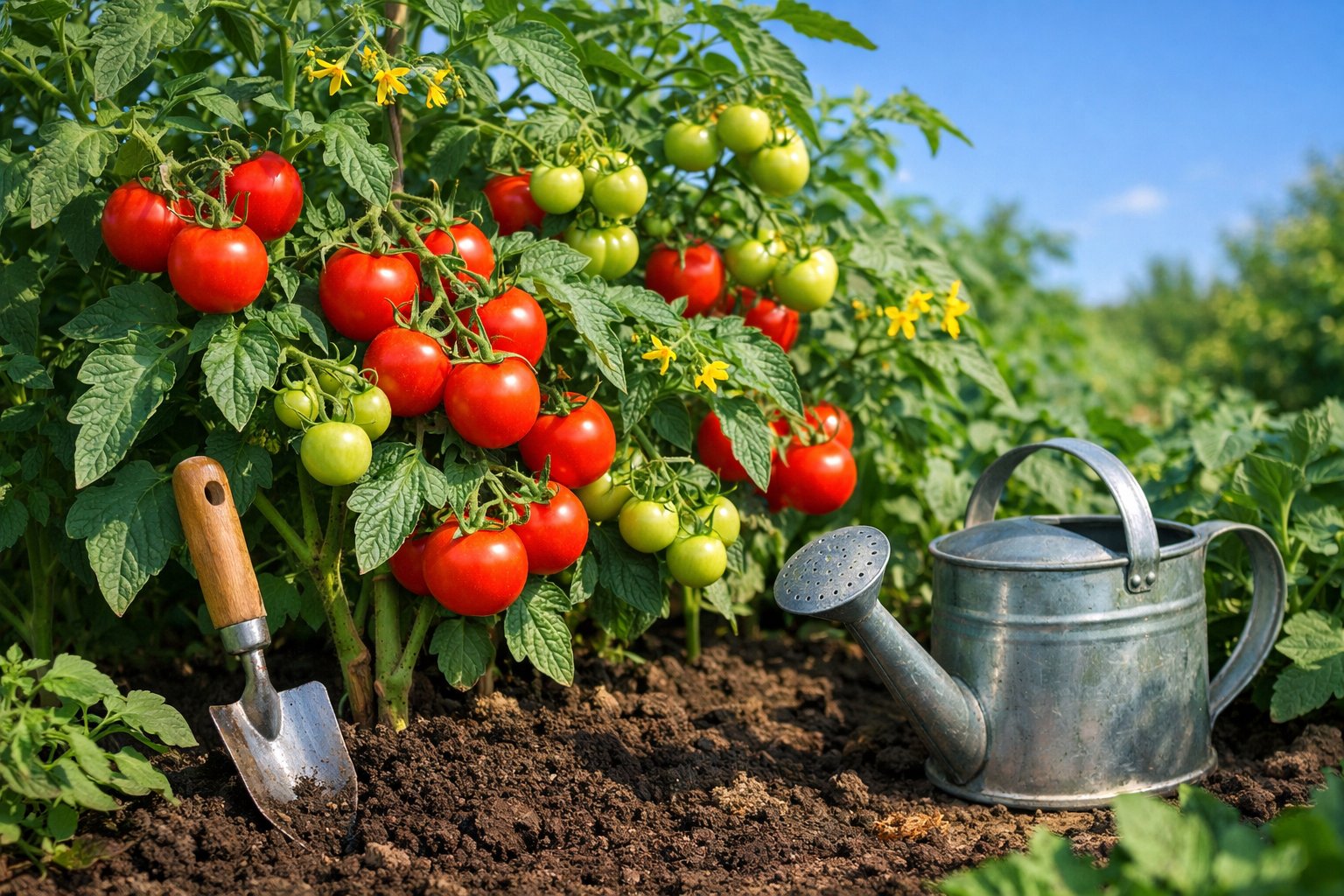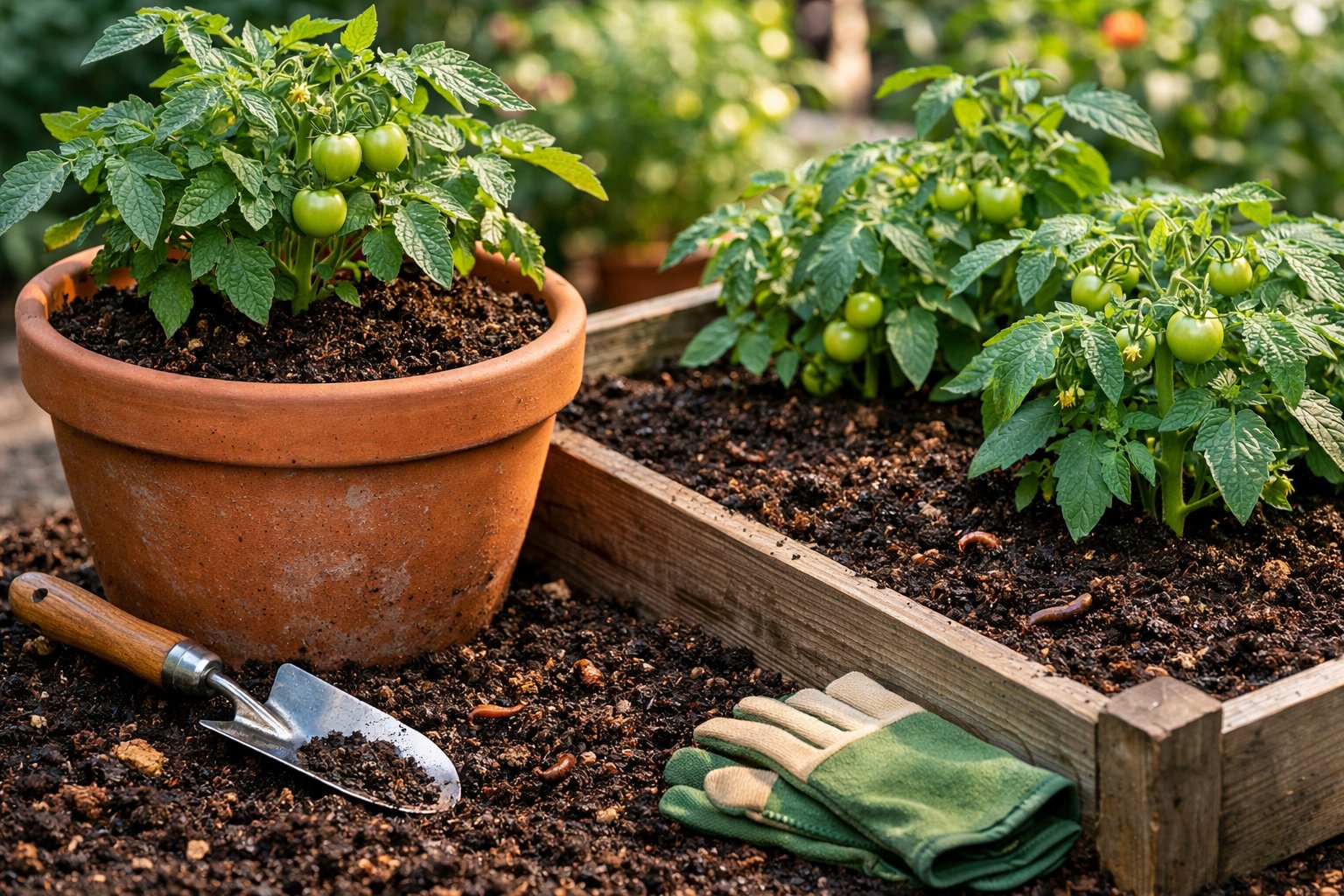
Growing tomatoes successfully starts with one critical decision: choosing the right soil. Whether planting in containers or garden beds, tomatoes need soil that drains well, holds moisture, provides nutrients, and allows roots to breathe. Many gardeners struggle with poor yields or diseased plants simply because they used regular garden soil or a basic potting mix that doesn't meet tomato needs. Using a specific potting soil for tomatoes can make a significant difference in harvest quality.
The best soil for tomatoes combines organic matter like compost, drainage materials such as perlite or pumice, and moisture-retaining ingredients like coconut coir or peat moss, with a slightly acidic pH between 6.0 and 6.8. Container tomatoes need lighter, fluffier mixes than garden beds since pots dry out faster and compact more easily. Garden bed tomatoes benefit from amendments that improve existing soil structure while adding long-term fertility.
Understanding what makes soil work for tomatoes helps growers avoid common problems like blossom-end rot, stunted growth, and poor fruit production. This guide covers the best soil ingredients and mixes for both pots and beds, along with practical tips for maintaining healthy soil throughout the growing season.
Key Takeaways
-
Tomato soil must balance drainage, moisture retention, aeration, and nutrients with a pH between 6.0 and 6.8
-
Container mixes need lighter materials like coconut coir and perlite while garden beds benefit from compost and aged manure amendments
-
Regular feeding, mulching, and proper watering maintain soil health and prevent common nutrient deficiencies throughout the season
Key Characteristics of the Best Soil for Tomatoes
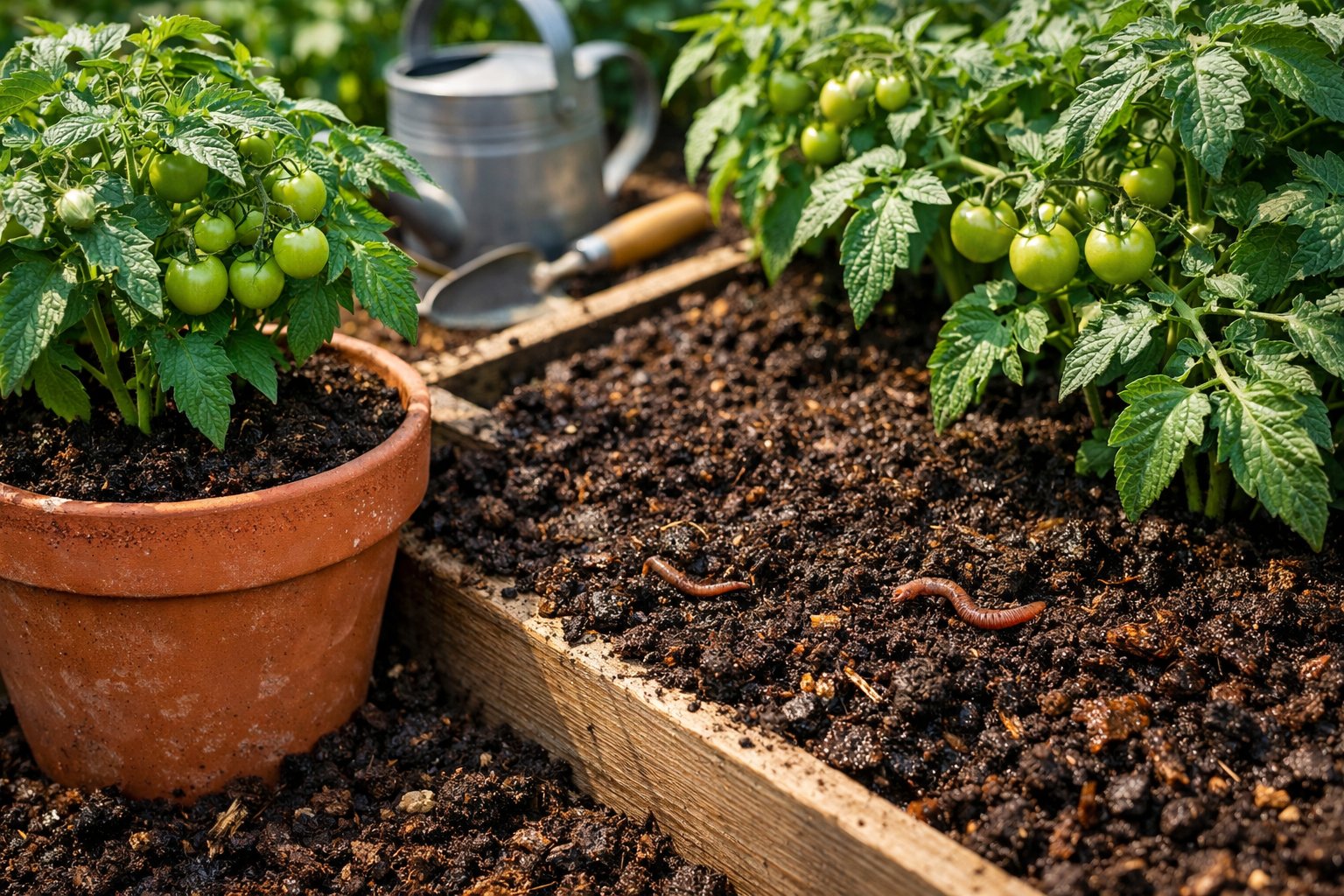
Tomatoes need soil that drains well while holding enough moisture to support steady growth. The right combination of texture, nutrients, pH level, and air circulation creates conditions where tomato plants develop strong roots and produce healthy fruit.
Well-Draining and Loamy Structure
Loam is the gold standard for tomato soil. This balanced mixture of sand, silt, and clay provides the ideal soil texture for root development and water movement.
Well-draining soil prevents water from pooling around tomato roots. Standing water creates oxygen-poor conditions that lead to root rot and fungal diseases. Sandy loam works particularly well because it allows excess water to move through while keeping enough moisture for plant needs.
Drainage holes are essential for container tomatoes. Without proper drainage, even the best potting mix becomes waterlogged and harmful to plants. The soil should feel moist but never soggy to the touch.
Loose soil structure lets roots spread easily and access nutrients throughout the growing area. Compacted or heavy clay soils restrict root growth and limit how much water and nutrients plants can absorb.
Nutrient-Rich Organic Matter
A nutrient-rich soil gives tomatoes the resources they need for foliage growth and fruit production. Organic matter serves as the foundation for building fertility in both garden beds and containers. High-quality amendments ensure your plants have access to the minerals they need for large, flavorful harvests.
Key nutrients for tomatoes include:
-
Nitrogen - supports leaf and stem development in early growth
-
Phosphorus - promotes strong root systems and fruit formation
-
Potassium - improves overall plant health and disease resistance
Compost improves soil structure and adds organic matter that feeds beneficial microbes. These microbes break down organic material into forms that tomato plants can absorb and use. Adding 2-3 inches of compost before planting creates a solid nutrient base.
Worm castings provide trace minerals and boost soil fertility beyond what compost alone offers. These castings improve plant health and help tomatoes grow more productive throughout the season.
Ideal Soil pH for Tomatoes
The pH for tomatoes ranges from 6.0 to 6.8, with 6.2 to 6.6 being optimal. This slightly acidic soil environment allows tomatoes to access nutrients most efficiently. Maintaining this balance is essential for preventing nutrient lockout and ensuring healthy growth.
Testing soil before planting reveals the current pH level and nutrient content. Home test kits or extension office testing provide accurate readings that guide amendment decisions.
Soil that is too acidic (below 6.0) or too alkaline (above 7.0) locks up essential nutrients. Plants grown in incorrect pH conditions show yellowing leaves, stunted growth, and poor fruit development even when nutrients are present in the soil.
Adjusting pH takes time and should be done before planting. Lime raises pH in acidic soils, while sulfur lowers pH in alkaline conditions. Small adjustments made gradually produce better results than large applications all at once.
Aeration and Moisture Retention Balance
Tomato roots need both air and water to function properly. Soil must allow oxygen to reach roots while maintaining consistent moisture levels throughout the growing season.
Perlite improves aeration in garden soil and potting mixes. This volcanic material creates air pockets that prevent compaction and help soil maintain the right balance between moist and well-draining.
Moisture retention keeps tomato plants from experiencing water stress during hot weather. Soil that dries out too quickly forces plants to focus on survival rather than fruit production. Improved nutrient retention is often a side effect of good moisture management in organic systems.
Mulch helps soil hold moisture and reduces how often watering is needed. A 2-3 inch layer of wood chips or leaf mold keeps soil temperatures stable and adds nutrients as it breaks down. Container tomatoes dry out faster than garden plants and need more frequent watering to maintain consistent moisture.
Best Soil Mixes and Ingredients for Pots and Garden Beds
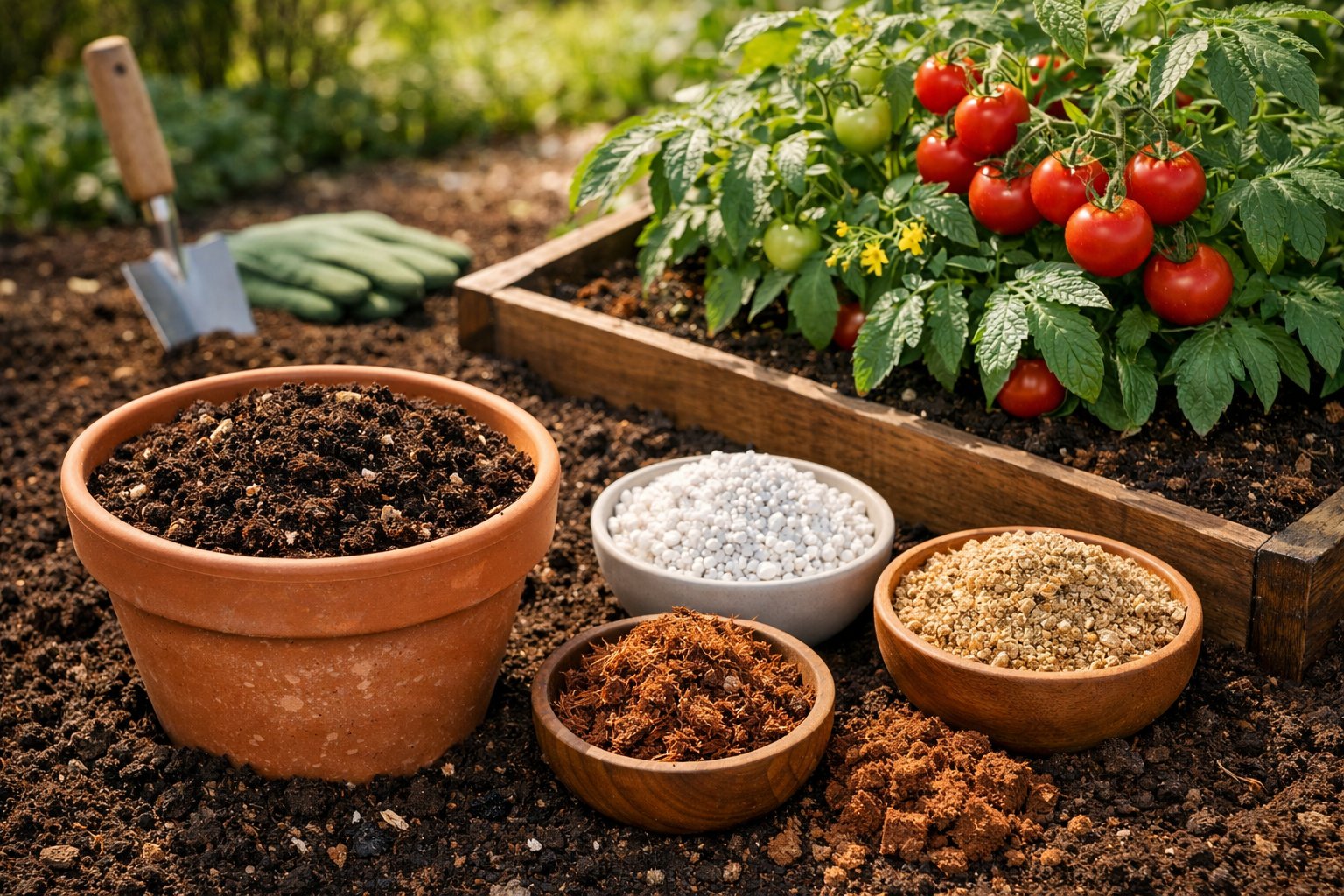
Tomatoes need different soil depending on where they grow. Container tomatoes require lightweight, well-draining soil with good moisture retention, while garden bed tomatoes need a balanced blend that supports deep root growth and steady nutrient availability.
Potting Mix versus Garden Soil
Potting mix is designed for containers and differs from garden soil in important ways. A soilless potting mix contains peat moss or coconut coir, perlite, and vermiculite to stay light and airy. These ingredients prevent compaction and help roots breathe.
Garden soil is too heavy for pots. It compacts quickly in containers and blocks oxygen from reaching roots. This leads to poor drainage and root rot.
For raised beds, gardeners should use a blend rather than straight potting mix or garden soil. A good ratio is 60 percent raised bed soil, 30 percent compost, and 10 percent organic material. This combination provides structure while maintaining drainage.
Organic potting soil works well for tomatoes in containers. Premium mixes like FoxFarm Ocean Forest and Espoma Organic Potting Mix contain aged manure, earthworm castings, and other nutrients tomatoes need. These OMRI-listed products support organic growing methods and provide the best potting soil for tomatoes in varied climates.
Essential Soil Amendments
Worm castings improve soil structure and add beneficial microbes. Gardeners should mix in a half-inch to one-inch layer when planting tomatoes. Earthworm castings release nutrients slowly and won't burn plant roots.
Key amendments for tomato soil include:
-
Peat moss or coco coir - Retains moisture while improving drainage
-
Aged manure - Provides nitrogen and organic matter
-
Perlite or vermiculite - Increases aeration and prevents compacting
-
Gypsum - Adds calcium to prevent blossom end rot
Canadian sphagnum peat moss has been the standard choice, but coconut coir offers a peat-free alternative that works just as well. Both hold water while allowing excess to drain away.
Soil pH should stay between 6.2 and 6.8 for tomatoes. Adding compost naturally buffers pH and provides steady nutrition throughout the growing season.
Optimizing Soil for Potted Tomatoes
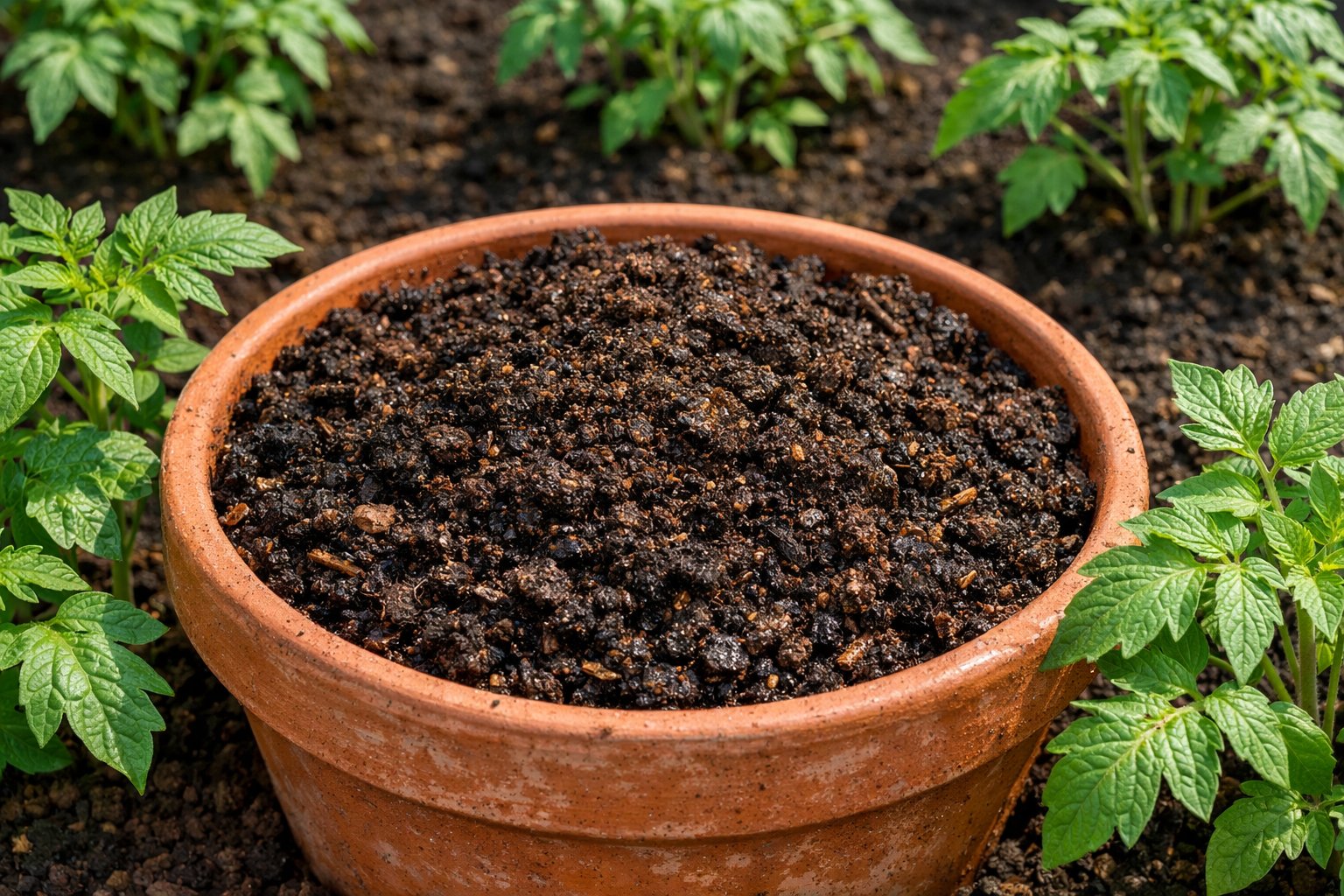
Growing tomatoes in containers demands careful attention to soil composition, drainage, and water management. The right potting mix combined with proper container selection creates an environment where roots can thrive and plants can produce healthy fruit. Success when growing tomatoes in containers depends heavily on the quality of the medium used.
Choosing the Right Potting Mix
Potted tomatoes need a specialized potting mix rather than garden soil. Standard potting mixes designed for containers provide the right balance of drainage and moisture retention. These mixes typically contain organic matter like peat moss or coconut coir combined with perlite or vermiculite.
A quality potting mix for tomatoes should have a pH between 6.0 and 7.0. The mix must be lightweight enough to prevent compaction while still holding adequate moisture. Many gardeners blend their own mix using equal parts compost, peat moss or coconut coir, and perlite.
Commercial tomato-specific potting mixes often include starter nutrients that support young plants. However, these nutrients only last 4-6 weeks, so additional fertilization becomes necessary as plants mature. Avoid using garden soil in containers, as it compacts easily and restricts root growth.
Drainage and Container Selection
Good drainage prevents root rot and other water-related problems in container tomatoes. Every pot must have drainage holes at the bottom to allow excess water to escape. Without these holes, water accumulates and suffocates roots.
Your choice of container size directly affects soil performance and plant health. Determinate tomato varieties need pots at least 12 inches deep and wide, while indeterminate types require containers 18-24 inches in diameter. Selecting the right container size ensures the plant has enough room to grow without becoming root-bound. Larger containers hold more soil, which means better moisture stability and more room for root development.
Adding perlite or coarse sand to potting mix improves drainage in containers. A ratio of 20-30% perlite helps prevent waterlogging while maintaining adequate water retention. Some growers place a layer of gravel or broken pottery at the pot bottom, though this is optional if drainage holes are adequate.
Moisture Control in Containers
Container soil dries out faster than ground soil, making moisture control critical for tomatoes in pots. The soil should stay consistently moist but never waterlogged. Most container tomatoes need watering once daily during hot weather, sometimes twice for smaller pots.
Vermiculite added to potting mix helps retain moisture while maintaining airflow around roots. This mineral expands when wet and gradually releases water as soil dries. A 10-15% vermiculite content works well for most container tomato setups.
Mulching the soil surface with straw or wood chips reduces evaporation and keeps moisture levels stable. The mulch layer should be 1-2 inches thick but kept away from the plant stem to prevent rot. Self-watering containers offer another solution for gardeners who struggle with consistent watering schedules.
Preparing Soil for Tomatoes in Garden Beds
Garden bed soil needs proper testing and amendments before planting tomatoes to ensure strong root development and healthy fruit production. The ideal foundation combines good drainage, balanced nutrients, and a slightly acidic pH between 6.0 and 6.8.
Soil Preparation and Testing
A soil test reveals the current pH level and nutrient content before any amendments are added. This test shows how much nitrogen, phosphorus, and potassium exists in the soil and identifies any deficiencies that could limit plant growth.
The optimal soil pH for tomatoes ranges from 6.0 to 6.8. If the pH is too high, gardeners can add sulfur to lower it. If the pH is too low, lime raises it to the proper range.
Testing also helps prevent over-fertilizing, which creates excessive foliage with minimal fruit production. Nitrogen supports initial plant establishment, but too much nitrogen produces bushy plants instead of productive ones. A balanced soil test result guides precise amendments rather than guesswork.
Improving Poor Soil Conditions
Heavy clay soil retains too much water and restricts root growth through soil compaction. Adding organic matter like compost or aged manure breaks up clay particles and improves drainage. A 2-3 inch layer worked into the top 8-12 inches of soil creates better structure.
Sandy soil drains quickly but struggles to hold nutrients and moisture. The same organic amendments help sandy soil retain water while adding essential nutrients. Aged manure provides slow-release nutrients as it continues breaking down through the growing season.
Soil compaction prevents roots from spreading and accessing nutrients. Loosening compacted soil to a depth of 12 inches allows tomato roots to grow deep and strong. This step is completed before adding any amendments to ensure proper mixing throughout the root zone.
Amending for Optimal Structure
Loam soil or sandy loam provides the best natural foundation for tomatoes because it balances drainage with moisture retention. These soil types contain a mix of sand, silt, and clay particles that support healthy root systems.
Gardeners should mix 2-3 inches of compost into the planting area several weeks before transplanting tomatoes. Compost improves soil structure, adds beneficial microbes, and provides steady nutrient release. The microbes break down organic materials into forms that plant roots can absorb.
Worm castings add trace minerals and beneficial organisms when mixed with compost. A handful per planting hole boosts plant health without the risk of burning roots. Mulch applied after planting keeps soil temperatures stable and prevents moisture loss during hot weather.
Managing Nutrients and Fertility
Tomatoes need steady nutrition throughout their growing season, with key minerals like calcium and magnesium playing specific roles in fruit development and plant health. Balanced feeding paired with active soil biology creates the foundation for strong plants and high-quality harvests.
Slow-Release Fertilizers and Balanced Nutrition
Slow-release fertilizers provide steady nutrition over weeks or months without the risk of burning roots. Products containing Osmocote or similar coated granules work well for container tomatoes because they release nutrients gradually as soil warms and plants grow. A balanced N-P-K ratio around 3-4-6 supports leafy growth early on while emphasizing phosphorus and potassium for flowering and fruiting.
Gardeners should apply slow-release fertilizer at planting time by mixing it into the top 6 inches of soil. Most formulas feed plants for 3-6 months, though heavy feeders like tomatoes may benefit from a mid-season supplement.
Container tomatoes often need more frequent feeding than garden beds. Liquid fertilizer applications every 2-3 weeks complement slow-release products and address any nutrient gaps. Testing soil pH annually helps ensure nutrients remain available, as tomatoes absorb minerals best between 6.0-7.0 pH.
Calcium and Magnesium for Fruit Quality
Calcium prevents blossom end rot, a common disorder that creates dark, sunken spots on tomato bottoms. Adding dolomitic limestone to soil before planting supplies both calcium and magnesium while helping maintain proper pH levels. Most potting mixes already contain some limestone, but additional amendments benefit gardeners in areas with soft water or acidic soil.
Epsom salts provide supplemental magnesium when plants show yellowing leaves with green veins. Dissolve 1-2 tablespoons per gallon of water and apply as a foliar spray or soil drench every 2-4 weeks during active growth. Magnesium supports chlorophyll production and helps tomatoes use other nutrients more efficiently.
Consistent watering matters as much as soil amendments. Irregular moisture prevents roots from absorbing calcium even when plenty exists in the soil, so gardeners should water deeply and regularly rather than letting containers dry out completely between waterings.
Supporting Beneficial Soil Microbes
Beneficial microbes break down organic matter and make nutrients available to plant roots. Adding compost or worm castings introduces diverse bacteria and fungi that improve nutrient retention and help prevent soil-borne diseases. A focus on nutrient retention helps maintain a steady supply of food for your plants during the peak of summer. These microorganisms thrive in well-aerated soil with steady moisture and organic material to feed on.
Mycorrhizal fungi form partnerships with tomato roots, extending their reach and improving phosphorus uptake. Many organic potting mixes contain these helpful fungi, or gardeners can add them as an inoculant at planting time. Avoiding synthetic fertilizers helps preserve microbial populations since some chemical products can disrupt soil biology.
Mulching the soil surface with compost or straw feeds microbes while conserving moisture. A 2-3 inch layer protects beneficial organisms from temperature extremes and provides a steady supply of organic matter as it breaks down throughout the season.
Common Problems and Troubleshooting
Even with quality soil, tomato growers face issues like root rot from poor drainage, nutrient deficiencies from depleted soil, and blossom end rot from inconsistent watering. Understanding how to spot and fix these problems keeps plants healthy and productive.
Preventing Root Rot and Soil-Borne Diseases
Root rot develops when soil stays too wet for too long. Water fills air spaces in the soil, suffocating roots and creating conditions where harmful fungi thrive.
Proper drainage is the first defense. Garden beds need soil that allows excess water to flow away from roots. Adding perlite or coarse sand improves drainage in heavy clay soils. For containers, drainage holes are essential. Growers should use pots with multiple holes at the bottom.
Moisture retention matters, but balance is key. Soil should hold enough water for roots to absorb between waterings without staying soggy. Compost helps achieve this balance by improving soil structure.
Some potting mixes contain yucca extract, which works as a natural wetting agent. It helps water spread evenly through the soil instead of creating dry spots or waterlogged areas.
Crop rotation prevents disease buildup in garden beds. Tomatoes should not grow in the same spot two years in a row. Moving them to a different bed breaks the cycle of soil-borne pathogens.
Identifying and Fixing Nutrient Deficiencies
Yellow leaves often signal nitrogen deficiency. This shows up first on lower leaves, which turn pale yellow while veins stay green.
Purple-tinted leaves or stems indicate phosphorus deficiency. This usually appears in cooler soil temperatures when plants cannot absorb phosphorus efficiently.
Brown edges on leaves suggest potassium deficiency. The leaf margins turn brown and crispy while the center stays green.
Blood meal adds quick nitrogen for leafy growth. Bone meal provides phosphorus for strong roots and fruit development. Wood ash or greensand supplies potassium for better fruit quality.
Balanced organic fertilizers work well for overall nutrition. A mix of compost and aged manure provides slow-release nutrients throughout the growing season.
Magnesium deficiency causes yellowing between leaf veins while the veins stay green. This is less common but can be fixed with Epsom salts mixed into water.
Balancing Moisture to Avoid Blossom End Rot
Blossom end rot appears as a dark, sunken spot on the bottom of tomatoes. The spot starts small but grows larger and turns leathery as the fruit develops.
This condition stems from calcium deficiency, but the real problem is usually inconsistent watering. When soil moisture swings from very dry to very wet, plants cannot absorb calcium properly even when plenty exists in the soil.
Consistent watering is the solution. Soil should stay evenly moist but never waterlogged. Checking soil moisture daily during hot weather helps maintain steady levels.
Mulch reduces moisture swings by keeping soil temperature stable and slowing evaporation. A 2-3 inch layer of straw or shredded leaves works well around tomato plants.
Container tomatoes need more frequent watering than in-ground plants. Pots dry out faster, especially in hot weather. Some growers water containers twice daily during summer heat.
Drip irrigation or soaker hoses deliver water directly to roots at a steady rate. These systems prevent the wet-dry cycles that trigger blossom end rot.
Enhancing Tomato Growth with Sustainable Practices
Sustainable soil practices build long-term health for tomato plants while reducing environmental impact. These methods focus on renewable materials, smart soil management, and plant partnerships that naturally support growth.
Peat-Free and Eco-Friendly Alternatives
Peat harvesting damages fragile bog ecosystems that take thousands of years to form. Gardeners can switch to coconut coir as a sustainable replacement that performs just as well in tomato containers and beds.
Coconut coir comes from coconut husks and retains moisture while allowing proper drainage. It breaks down slower than peat, which means containers stay fluffy and well-aerated throughout the growing season. The material also has a neutral pH around 6.5, which falls right into the ideal range for tomatoes.
Other eco-friendly options include composted bark, leaf mold, and wood fiber. These materials add organic matter to soil without depleting non-renewable resources. Many quality potting mixes now highlight their peat-free formulas on the label. Some brands made in USA specifically market their sustainable ingredients to environmentally conscious gardeners.
Rotation and Reuse of Tomato Soil
Reusing soil from previous tomato crops saves money but requires proper handling. Tomatoes deplete specific nutrients and can leave behind disease pathogens in the soil. Gardeners should avoid planting tomatoes in the same spot for at least three years.
Used tomato soil works well for other plant families during the rotation period. The soil still contains valuable organic matter and can support crops like beans, lettuce, or root vegetables. Adding fresh compost and testing pH levels before reuse ensures the soil meets new plants' needs.
Container soil needs refreshing between seasons. Gardeners can spread used potting mix in garden beds as an amendment or mix it half-and-half with fresh material for less demanding plants. Sterilizing soil by solarization kills pathogens if reuse for tomatoes is necessary.
Companion Planting Benefits
Companion planting places beneficial plants near tomatoes to improve growth and reduce pest problems. Basil planted alongside tomatoes repels aphids, whiteflies, and hornworms while some gardeners report it enhances tomato flavor.
Marigolds deter nematodes in the soil with their root secretions. These bright flowers also attract pollinators and beneficial insects that prey on tomato pests. Nasturtiums serve as trap crops by drawing aphids away from tomato plants.
Avoid planting tomatoes near members of the Brassica family like cabbage or broccoli, as they compete for similar nutrients. Corn can attract tomato pests, and potatoes share diseases with tomatoes. Smart companion choices create a balanced garden ecosystem that supports healthy tomato production without chemical inputs.
Frequently Asked Questions
Tomato growers often need specific answers about soil composition, preparation methods, and product selection for different growing environments. The ideal soil varies based on container type, location, and climate conditions.
What type of soil mixture is optimal for tomato plants in containers?
Container tomatoes need a loose, well-draining mix with plenty of organic matter. The best mixture contains peat moss, compost, vermiculite, perlite, and sand in balanced proportions.
A good potting mix retains moisture without becoming waterlogged. Heavy garden soil and regular potting soil are too dense for containers and can suffocate plant roots. The mix should allow water to drain while keeping enough moisture for the plants to access nutrients.
Tomatoes grown in pots require more organic matter than ground-grown plants because containers limit root space. Adding compost provides essential nutrients that support healthy growth and fruit production.
How do you prepare the soil for growing tomatoes in raised beds?
Preparation starts with creating well-drained, fertile loam with a pH between 6.0 and 7.0. Gardeners should spread 2-3 inches of compost over the bed surface before planting.
A soil test reveals nutrient deficiencies and pH levels. If phosphorus is low, bone meal can be added to the bed. If the pH exceeds 7.0, sulfur brings it down, while lime raises pH levels below 6.0.
Working organic matter into the top 6 inches of soil creates the ideal texture. The soil should absorb at least 1 inch of water within one hour. Sandy soil benefits from added compost to improve water retention, while clay-heavy soil needs several inches of organic amendments like pine bark and composted leaves.
Which commercially available potting soils are recommended for tomatoes?
Quality potting mixes designed for vegetables work well for tomato plants. Products containing peat moss, vermiculite, and perlite provide the right balance of drainage and moisture retention.
Organic coir-based mixes offer lightweight texture suitable for multiple pots and raised beds. These expand when moistened and reduce the need for frequent soil purchases.
Gardeners should avoid products labeled as "potting soil" alone, as these can be too heavy for optimal drainage. The best commercial options specifically mention vegetable growing or tomato cultivation on their packaging.
How does climate, such as in California, affect soil choice for tomatoes in pots and beds?
Warmer, drier climates require soil mixes that retain more moisture. California gardeners often need to increase the organic matter content to prevent rapid drying.
Mediterranean climates benefit from added vermiculite or coconut coir to maintain consistent moisture levels. These materials help reduce watering frequency during hot summer months.
In regions with mild winters, gardeners can prepare beds year-round rather than waiting for spring. A light layer of leaves or compost during winter months adds nutrients and slows weed growth.
What are the key ingredients to look for in a tomato soil mix?
The essential components include organic matter, drainage materials, and moisture-retaining elements. Compost provides nutrients that tomatoes need as heavy feeders.
Perlite and vermiculite improve drainage while preventing soil compaction. Sand helps create air pockets in the mix. Peat moss or coconut coir retains water without making the soil soggy.
A complete mix balances nitrogen, phosphorus, and potassium for strong plant production. The ingredients should create a pH between 6.5 and 7.0 for optimal nutrient uptake.
How can you modify garden soil to support tomato growth in pots and beds?
Garden soil requires amendments before use in containers or raised beds. Adding 2-3 inches of compost to the top 6 inches of soil improves both texture and nutrition.
Sandy soil needs organic matter to increase water retention and nutrient availability. Working in compost creates the loamy texture that tomatoes prefer.
Clay soil requires more extensive modification. Light to moderate clay responds well to several inches of compost, pine bark, and composted leaves worked into the existing soil. Gardeners should avoid adding sand or peat moss to clay, as these increase density rather than improve it. Heavy clay may need complete replacement with a mixture of topsoil, compost, and other amendments.