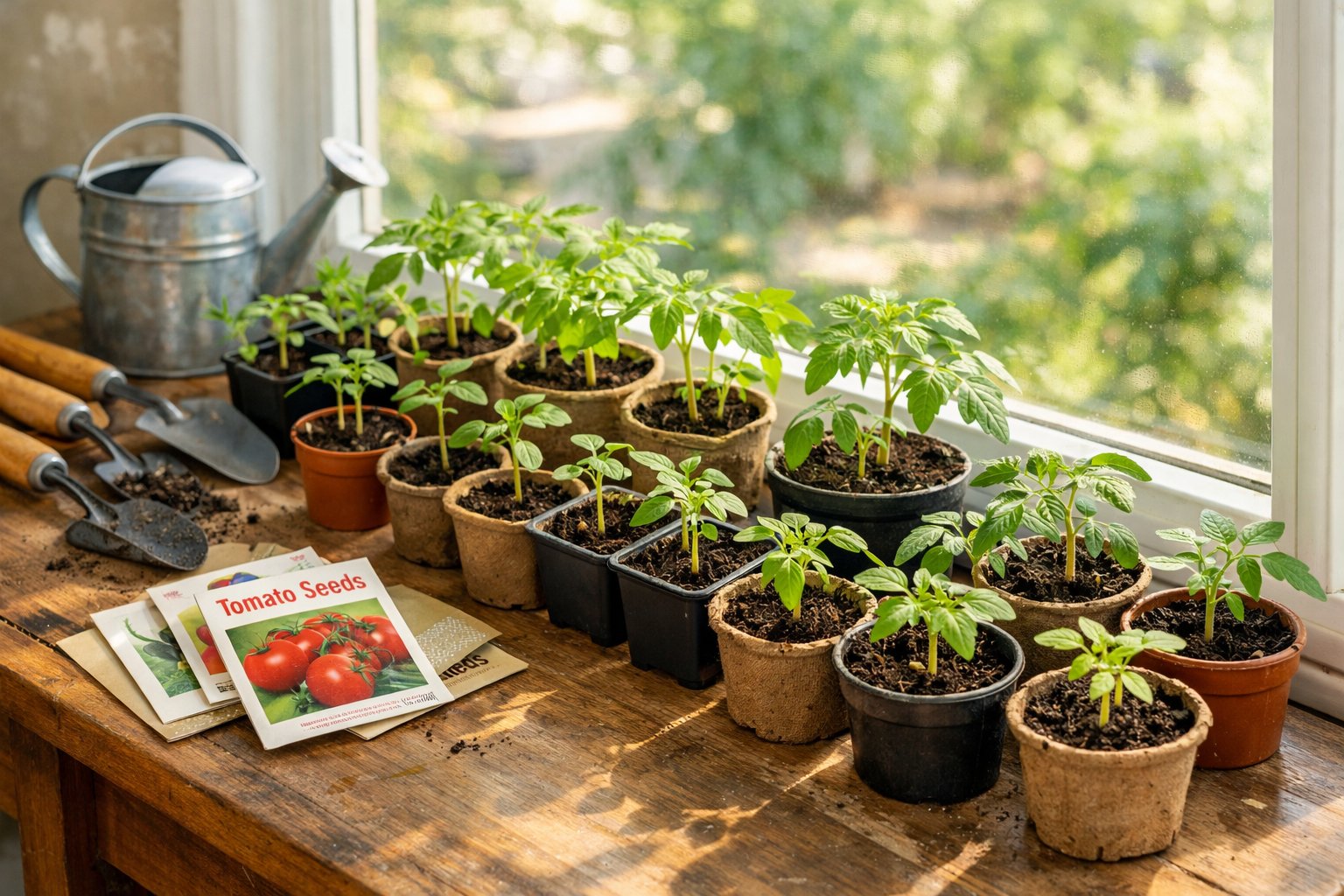
Starting tomato seeds indoors gives gardeners a head start on the growing season and leads to stronger, more productive plants. The challenge is figuring out exactly when to begin. Start too early and seedlings become leggy and root-bound. Start too late and plants won't have enough time to mature before the first fall frost arrives.
Most gardeners should start tomato seeds indoors 4 to 8 weeks before their last expected spring frost date, with the exact timing depending on their USDA hardiness zone. Zone 3 gardeners typically start seeds in early April, while those in warmer zones like 9 and 10 can start as early as mid-January. Understanding your local climate and frost dates makes the difference between healthy transplants and struggling seedlings.
This guide breaks down the best seed-starting times for zones 3 through 10 and covers everything needed to grow strong tomato seedlings indoors. From choosing the right containers to providing adequate light and warmth, these steps help ensure tomatoes are ready to thrive when transplant time arrives.
Key Takeaways
- Start tomato seeds indoors 4 to 8 weeks before your last spring frost date based on your hardiness zone
- Tomato seedlings need warmth between 60 to 70°F, at least 8 hours of direct light daily, and consistent moisture to develop properly
- Harden off seedlings for 7 to 10 days before transplanting them outdoors after all danger of frost has passed
Why Indoor Tomato Seed Starting Is Essential
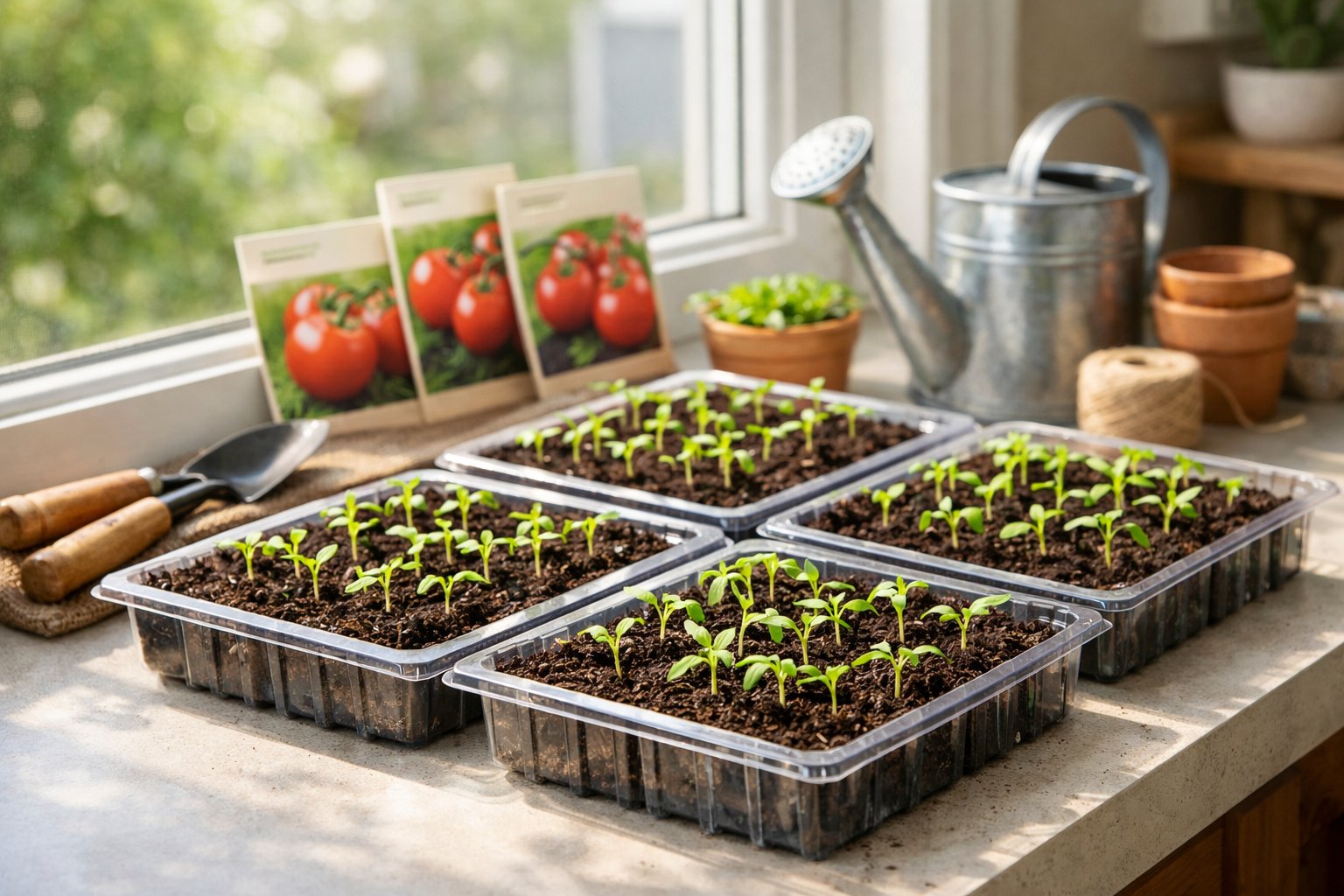
Starting tomato seeds indoors gives gardeners control over growing conditions and extends the harvest season. Indoor starting protects young plants from unpredictable weather and creates stronger seedlings that produce more fruit.
Benefits of Starting Tomatoes Indoors
Starting seeds indoors gives tomatoes a head start of 6 to 8 weeks before the last frost. This extra time lets plants develop strong root systems and sturdy stems before facing outdoor conditions.
Indoor environments offer complete control over temperature, light, and moisture. Gardeners can maintain soil temperatures between 60 and 70°F, which seeds need for reliable germination. Grow lights provide consistent light for at least 8 hours daily, preventing weak and spindly growth.
Starting tomato seeds indoors extends the growing season in areas with short summers. Plants reach maturity faster and produce fruit weeks earlier than direct-sown tomatoes. This matters most in zones 3 through 6, where outdoor growing time is limited.
Indoor starting also lets gardeners choose from more tomato varieties. Seed catalogs offer hundreds of options that aren't available as transplants at garden centers.
Challenges of Outdoor Sowing for Tomatoes
Direct sowing tomatoes outdoors rarely succeeds in most climates. Cold soil temperatures below 50°F prevent germination entirely or cause seeds to rot before sprouting.
Late spring frosts kill young tomato seedlings. Even in warmer zones, unpredictable weather patterns damage or destroy outdoor seedlings before they establish roots. Heavy rains wash away seeds, while dry spells require constant monitoring.
Outdoor sowing also shortens the harvest window significantly. Tomatoes sown directly in the garden produce fruit 4 to 6 weeks later than transplanted seedlings. In zones with early fall frosts, this delay means fewer tomatoes before cold weather ends the season.
Pests and diseases pose bigger threats to outdoor seedlings. Cutworms, slugs, and birds target vulnerable young plants. Soil-borne diseases spread more easily when seeds germinate in uncontrolled outdoor conditions.
Understanding USDA Plant Hardiness Zones 3–10
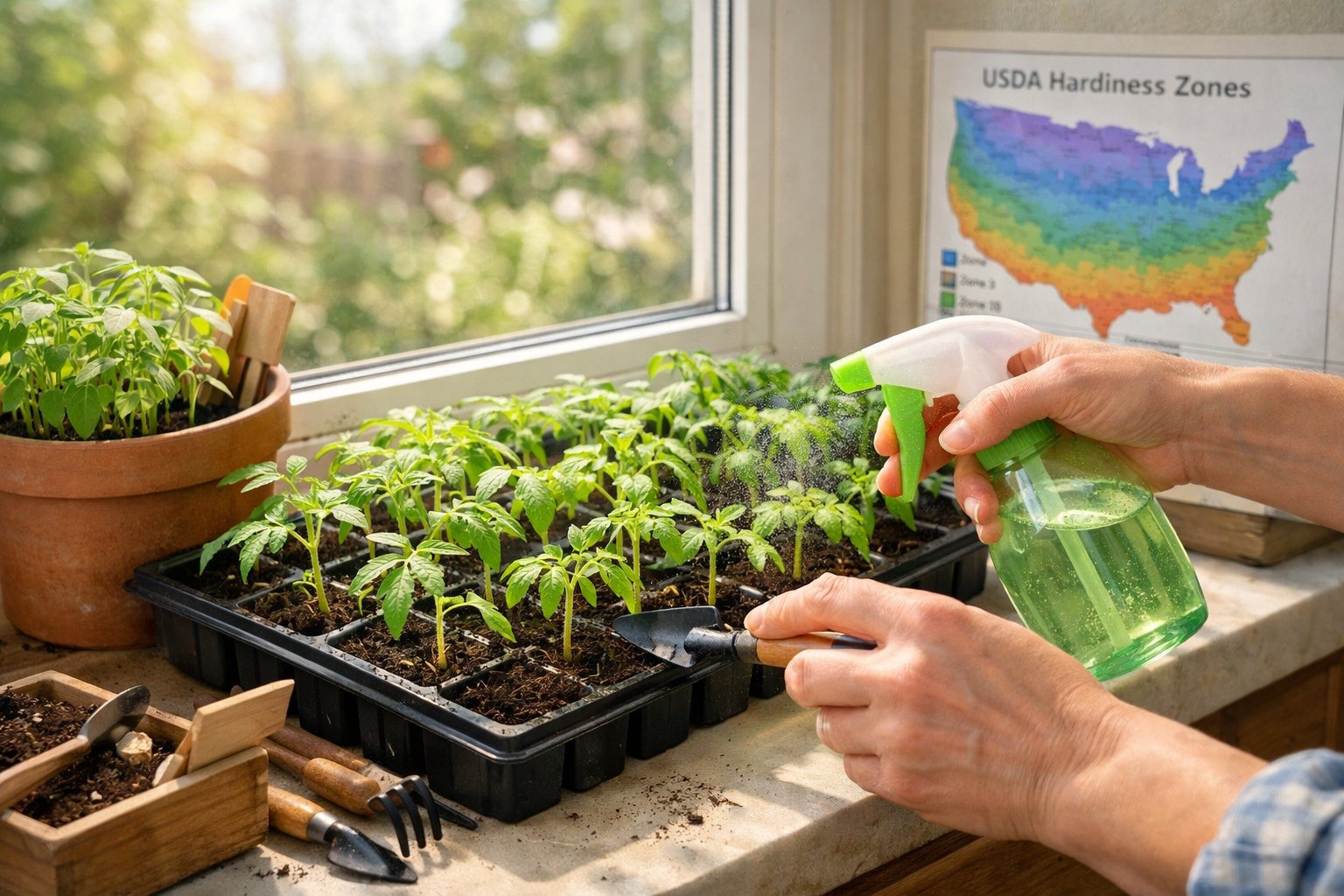
USDA zones define where plants survive based on average minimum winter temperatures, and zones 3 through 10 cover most of the continental United States where tomatoes can be grown successfully. Each zone directly impacts when gardeners should start seeds indoors and when it becomes safe to transplant seedlings outside.
Overview of USDA Zones
The USDA plant hardiness zone system divides North America into 13 zones based on average annual minimum winter temperatures. Each zone represents a 10°F difference in minimum temperature. Zone 3 experiences extreme cold with winter lows between -40°F and -30°F, while Zone 10 stays mild with minimum temperatures between 30°F and 40°F.
Zones 3 through 10 encompass the majority of tomato-growing regions in the United States. Zone 3 covers areas like northern Montana and Minnesota. Zone 5 includes locations such as Illinois and parts of Pennsylvania. Zone 7 stretches across Virginia and parts of Texas. Zone 10 covers southern Florida and coastal California.
The zone number tells gardeners how cold their winters get, which determines the length of the frost-free growing season. Colder zones have shorter seasons, while warmer zones allow multiple planting windows.
How Zones Affect Your Tomato Timeline
Zone numbers determine three critical dates for tomato growers: when to start seeds indoors, when to transplant seedlings outside, and how many days remain for fruit production. Zone 3 gardeners typically start seeds in early to mid-April for a late May or early June transplant date. Zone 7 gardeners can start seeds in early February and transplant by mid-April.
The growing season length varies dramatically across zones. Zone 3 offers roughly 90 to 120 frost-free days, requiring fast-maturing determinate varieties. Zone 8 provides 180 to 240 frost-free days, allowing two separate crops or slow-ripening heirloom varieties.
Soil temperature matters as much as air temperature. All zones must wait until soil reaches at least 60°F before transplanting, regardless of the calendar date. A gardener in Zone 6 might have a last frost date of April 15 but still need to wait until early May for proper soil warmth.
Frost Dates and Their Impact on Tomato Seed Starting
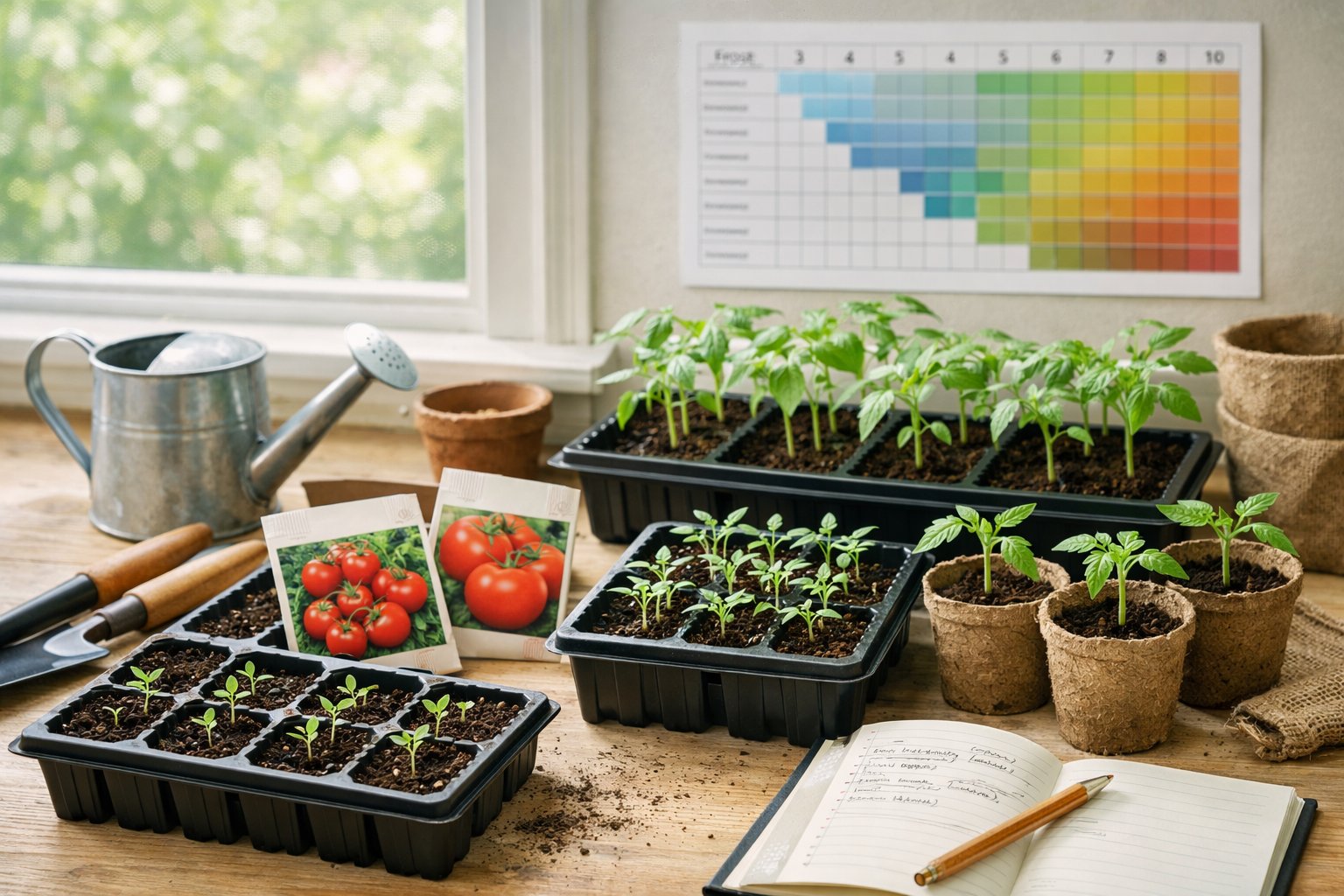
The last spring frost date determines when tomato seedlings can safely go outdoors, which means it also controls when seeds need to start indoors. Starting seeds 6-8 weeks before the transplant date ensures seedlings are strong enough to handle outdoor conditions without becoming overgrown or weak.
Calculating Your Last Spring Frost Date
Finding the last spring frost date is the foundation of timing tomato seed starts correctly. Local cooperative extension offices provide the most accurate frost date information for specific areas. Their data reflects years of weather observations in the region.
Online frost date calculators offer quick estimates when entering a zip code. The National Gardening Association and Old Farmer's Almanac maintain reliable tools for this purpose. These calculators use historical weather data to predict when frost risk drops below 10%.
The frost date represents an average, not a guarantee. Some years experience late frosts that arrive after the predicted date. Other years warm up earlier than expected.
Gardeners should record their local frost date and count backward 6-8 weeks to find the ideal seed starting window. A last frost date of May 15 means starting seeds between March 20 and April 3. This calculation ensures seedlings reach the right size for transplanting when outdoor conditions become safe.
Transplanting After Frost Risk
Tomato transplants should move outdoors 1-2 weeks after the average last frost date. This buffer protects young plants from unexpected late-season cold snaps that damage or kill frost-sensitive tomato seedlings.
Soil temperature matters as much as air temperature when transplanting. The soil needs to reach at least 60°F at a depth of 6 inches before planting. Cold soil slows root growth and increases disease risk, even if frost danger has passed.
A soil thermometer removes guesswork from transplant timing. Checking soil temperature in the morning for several consecutive days confirms the ground has warmed sufficiently. Gardeners in colder zones or low-lying areas where cold air settles should wait a full 2-3 weeks after the frost date. These locations experience frost later than surrounding areas.
Calculating the Best Time to Start Tomatoes Indoors in Zones 3–10
Starting tomato seeds at the right time depends on your hardiness zone and the last expected frost date in your area. Different zones have different planting windows, and the type of tomato you grow affects when seeds should go into the soil.
Optimal Seed Starting Windows by Zone
The standard recommendation is to start seeds indoors 4 to 8 weeks before the last frost date. Each zone has specific timing based on its climate patterns.
Zone 3a gardeners should start seeds in early to mid-April. Transplanting happens in late May through early June when the danger of frost passes.
Zones 3b through 6 have similar windows. Seeds go in the ground indoors from early to mid-March. Transplanting occurs from mid-April through early June.
Zone 7 starts earlier, with seeds planted from mid-February through early March. Plants move outside from early April through early June.
Zone 8 begins even sooner. Start seeds from mid-January through mid-February and transplant from April through early July.
Zones 9 and 10 have extended growing seasons with multiple planting opportunities. Zone 9 starts seeds mid-January through mid-February for spring transplanting in mid-March through mid-April. A second planting happens in early August. Zone 10a follows similar spring timing but adds a second window starting in early September. Zone 10b extends this even further through December.
Adjusting for Tomato Variety and Days to Harvest
Different tomato varieties have different maturity times that affect when to start seeds indoors. Most tomatoes need 60 to 100 days to harvest from seed.
Determinate varieties typically mature faster than indeterminate types. Cherry tomatoes often reach harvest earlier than large beefsteak varieties. Gardeners should check seed packets for specific days to harvest information.
Starting seeds earlier than recommended works if space and proper growing conditions exist. Seedlings can be moved into larger containers and kept indoors with adequate light and warmth. This strategy requires gallon-sized pots and consistent care until outdoor conditions improve.
Heat-loving tomato plants need warm soil and air temperatures to thrive. Starting too early without proper equipment leads to weak, spindly seedlings. Starting too late reduces the harvest window before fall frost arrives.
Step-By-Step Guide: How to Start Tomato Seeds Indoors
Starting tomato seeds indoors requires the right seed selection, proper containers with quality growing medium, and correct planting depth combined with ideal temperature conditions. These three elements work together to produce healthy seedlings ready for outdoor transplanting.
Choosing the Right Tomato Seeds and Varieties
Gardeners can choose from hundreds of tomato varieties when starting seeds indoors. Cherry tomatoes like 'Texas Wild' and 'Tumbling Tom' work well for beginners because they grow quickly and produce reliably. Beefsteak types provide large slicing tomatoes, while roma varieties excel for sauces and canning.
Heirloom tomato seeds offer unique flavors and colors not found in stores. Varieties like 'Pineapple', 'Amish Paste', and 'Japanese Black Trifele' produce fruits with distinctive tastes and appearances. Some heirlooms even grow in unusual colors including green, black, and striped patterns.
The botanical name for all tomato plants is Solanum lycopersicum. When selecting seeds, gardeners should consider their climate zone and the number of days to maturity. Most tomatoes need 60 to 100 days from transplanting to first harvest. Shorter-season varieties work better in northern zones with cooler summers.
Preparing Seed Trays and Soil Mix
Seed-starting containers need drainage holes in the bottom to prevent waterlogging. Recycled yogurt cups, plastic salad containers, or purpose-made seed trays all work effectively. Each container should be at least 2 inches deep.
Seed-starting mix differs completely from garden soil or potting soil. This soilless medium contains fine, lightweight materials like peat moss, vermiculite, and perlite. The light texture allows delicate seedling roots to grow easily. Garden soil stays too dense and heavy for starting seeds indoors.
Fresh seed-starting mix should be moistened before filling containers. The mix should feel damp like a wrung-out sponge but not dripping wet. Containers get filled to within half an inch of the rim. Pre-moistening prevents seeds from washing away during the first watering.
Sowing and Germination Techniques
Seeds get pressed about 1/2 inch deep into the moistened growing mix. Gardeners can plant 2-3 seeds per container to ensure at least one germinates successfully. A gentle watering after planting settles the mix around the seeds without displacing them.
Covering containers with plastic wrap or a clear dome keeps moisture levels consistent. The covered containers belong in a warm location between 65°F and 85°F. A heat mat speeds germination but isn't required. Seeds should never experience temperatures above 95°F.
Most tomato seeds germinate within 5-10 days when kept warm and moist. Once green shoots appear, gardeners must immediately remove the plastic covering and move containers to bright light. The seeds no longer need heat but require 14-16 hours of light daily from grow lights or a sunny window.
Essential Growing Conditions for Tomato Seedlings
Tomato seedlings need at least 8 hours of direct light daily and consistent moisture to develop strong stems and healthy root systems. Temperature control and proper watering prevent common problems like weak growth and damping-off disease.
Lighting Requirements: Sunlight vs Grow Lights
Tomato seeds require light for germination and strong early growth. A south-facing window provides the best natural light in the northern hemisphere, while north-facing windows work better in the southern hemisphere.
Most indoor spaces don't provide enough natural light during winter months. Grow lights solve this problem by delivering the intensity seedlings need to develop thick stems instead of weak, spindly growth.
Position grow lights 2 to 4 inches above seedlings and adjust the height as plants grow. Seedlings need 14 to 16 hours of artificial light per day when using grow lights as the primary light source.
Using grow lights with a south-facing window works well as a combination approach. This supplements natural sunlight during short winter days and removes light as a limiting factor for growth.
Watering and Humidity Best Practices
Keep soil consistently moist but never waterlogged during germination and early growth. Tomato seedlings need moisture to support rapid growth, but too much water leads to root rot and fungal diseases.
Water from the bottom when possible to keep foliage dry and reduce disease risk. Check soil daily by touching the surface—water when the top feels dry but before the soil pulls away from container edges.
Seedlings grow best with 50 to 70 percent humidity. Dry indoor air during winter can slow growth and stress young plants. A humidity dome or clear plastic cover helps maintain moisture levels during germination.
Remove humidity covers once seedlings emerge to improve air circulation. Good airflow prevents damping-off disease while maintaining enough humidity for healthy growth.
Hardening Off and Transplanting Tomatoes Outdoors
Moving tomato seedlings from indoors to the garden requires a gradual transition period and proper timing. Plants need 7-10 days to adjust to outdoor conditions before permanent transplanting.
Timing and Steps for Hardening Off
Hardening off should begin 7-10 days before the planned transplant date. This process gradually exposes indoor-grown seedlings to direct sunlight, wind, and temperature changes.
Days 1-3: Place seedlings in a shaded, wind-protected area for 1-2 hours. A covered porch or under a tree works well.
Days 4-6: Increase exposure to 3-4 hours with morning sun and afternoon shade. Bring plants indoors if temperatures drop below 50°F.
Days 7-9: Move seedlings into full sun for 6-8 hours. Leave them out during the day but bring them inside at night if frost threatens.
Day 10: Leave plants outdoors for 24 hours if nighttime temperatures stay above 50°F. Cold frames offer excellent protection during this final stage, allowing gardeners to control ventilation while shielding plants from harsh conditions.
Seedlings that skip this process often develop sunburned leaves, wilted stems, or stunted growth that delays fruiting by weeks.
Best Practices for Transplanting Outside
Transplant tomatoes 1-2 weeks after the last spring frost when soil temperatures reach at least 55°F. A soil thermometer provides the most reliable reading at 4-6 inches deep.
Plant seedlings deeper than they grew indoors, burying the stem up to the first set of true leaves. Tomatoes develop roots along buried stems, creating stronger plants. Space determinate varieties 18 inches apart and indeterminate varieties 24-36 inches apart in raised garden beds or ground-level plots.
Water deeply immediately after transplanting to settle soil around roots. Apply 2-3 inches of mulch around each plant to retain moisture and regulate soil temperature.
Row covers extend the season in cooler zones by adding 2-4 weeks of frost protection. Install them immediately after transplanting and remove them once daytime temperatures consistently exceed 70°F. Support the covers with hoops to prevent direct contact with foliage.
Companion Planting and Early Season Preparation
Starting companion crops alongside tomatoes indoors creates a coordinated garden system, while preparing outdoor beds with mulch and organic matter sets the foundation for healthy growth when transplanting time arrives.
Companion Crops to Start Indoors with Tomatoes
Some companion plants benefit from indoor starting at the same time as tomatoes. Onions can be started from seed 8-10 weeks before the last frost, matching the tomato timeline in most zones. They help deter aphids and other pests when planted near tomatoes later.
Basil is another excellent choice for indoor starting. It germinates quickly and can be started 6 weeks before the last frost. Basil grows well alongside tomatoes both indoors under lights and later in the garden.
Other companions work better with direct seeding outdoors. Carrots, radishes, and beets should be sown directly in the garden 2-4 weeks before the last frost. Peas can go in the ground even earlier, about 4-6 weeks before the last frost.
Spinach and kale are cold-hardy crops that can be direct seeded 4-6 weeks before the last frost. These greens will be ready to harvest before tomatoes need their full space.
Preparing Beds with Mulch and Organic Matter
Garden beds need preparation before tomato transplants arrive. Add 2-3 inches of compost or well-rotted manure to the soil 2-4 weeks before transplanting. This organic matter improves soil structure and provides nutrients throughout the growing season.
Garlic planted the previous fall should already be growing in beds by early spring. It serves as a natural pest deterrent for tomatoes and can remain in place when transplanting.
Work the organic matter into the top 6-8 inches of soil. The soil should be loose and crumbly, not compacted. Test soil pH and adjust to 6.0-6.8 for optimal tomato growth.
Wait to apply mulch until after transplanting and the soil warms up. A 2-3 inch layer of organic mulch helps retain moisture and suppress weeds. Straw, shredded leaves, or wood chips all work well as mulch materials.
Frequently Asked Questions
Starting tomato seeds indoors requires careful timing based on your hardiness zone and last frost date. Most zones follow a 6 to 8 week window before transplanting, though specific regional conditions affect the exact schedule.
What is the optimal time frame for starting tomato seeds indoors in Zone 6?
Gardeners in Zone 6 should start tomato seeds indoors in early March through mid-March. This timing provides 6 to 8 weeks of indoor growth before transplanting.
The transplant window for Zone 6 runs from mid-April through early June. This schedule accounts for the zone's typical last frost date and allows seedlings to develop strong root systems before outdoor planting.
How early can I begin planting tomato seeds indoors if I am located in Zone 7?
Zone 7 gardeners can start tomato seeds indoors from mid-February through early March. This earlier start reflects the zone's milder climate and earlier last frost date compared to northern zones.
Transplanting in Zone 7 occurs from early April through early June. The extended transplant window gives growers flexibility based on actual weather conditions and seedling development.
In Zone 8A, what is the recommended schedule for sowing tomato seeds indoors?
Zone 8A requires starting tomato seeds from mid-January through mid-February. The earlier start date reflects the zone's warm climate and early growing season.
Transplanting happens from April through early July in Zone 8A. Many Zone 8 gardeners also grow tomatoes twice per year, with a second planting in late summer for fall harvest.
For beginners growing tomatoes, what are the initial steps to start seeds indoors?
New growers should first determine their hardiness zone and last frost date. They need to count back 6 to 8 weeks from the last frost date to find their seed starting date.
Essential supplies include seed starting mix, containers with drainage holes, and a light source. Seedlings need consistent moisture and temperatures between 60 to 70°F for germination. A grow light or south-facing window provides necessary light, with seedlings requiring at least 8 hours of direct light daily.
Seeds should be planted about ⅛ inch deep in moist soil. Two or three seeds per container increases chances of successful germination.
For Zone 9b, when is the ideal period to start tomatoes indoors?
Zone 9b gardeners start tomato seeds from mid-January through mid-February for spring planting. The transplant window runs from mid-March through mid-April.
Zone 9b also supports a second growing season in fall. Seeds for fall crops can be started again in early September through December, taking advantage of the zone's long temperate periods.
What are the key considerations for starting tomatoes indoors in Zone 10?
Zone 10 growers start seeds from mid-January through mid-February for the main growing season. The transplant period spans from mid-March through mid-April.
Zone 10 offers multiple planting opportunities throughout the year due to minimal frost risk. A second planting window begins in early September, and in Zone 10b specifically, transplanting can continue through December. Growers in this zone must manage heat stress during summer months rather than cold protection.