When to Plant Carrots (Zones 3–10): Complete Guide by Zone
Carrots grow best in cool weather, which means timing matters more than many gardeners realize. Plant too early and seeds won’t sprout in cold soil. Plant too late and summer heat can ruin the crop. The best time to plant carrots is 2 to 4 weeks before the last spring frost date in zones 3–10, when soil temperatures reach at least 40–45°F, with optimal germination occurring between 55–75°F. Fall planting also works well, giving gardeners a second chance at harvest.
Different growing zones need different planting schedules. Gardeners in zone 3 start planting in May, while those in zone 10 can plant as early as January. Understanding these zone-specific windows helps ensure strong germination and healthy root development.
This guide breaks down exactly when to plant carrots based on climate zone. It covers spring and fall planting dates, variety selection, soil preparation, and care tips that lead to straight, sweet carrots. Whether growing in the ground or containers, the right timing makes all the difference.
Key Takeaways
- The best time to plant carrots is 2 to 4 weeks before the last spring frost date in zones 3–10, once soil reaches at least 40–45°F, with the most reliable germination at 55–75°F.
- Planting dates vary by zone from May in cold climates to January in warm regions, with fall planting extending the harvest season
- Success depends on choosing varieties suited to the climate, maintaining moist soil during germination, and proper spacing for straight root growth
Understanding USDA Plant Hardiness Zones
The USDA Plant Hardiness Zone Map divides regions based on average minimum winter temperatures, helping gardeners identify which plants survive in their area. These zones guide planting decisions but don't tell the full story about when to start seeds or how long the growing season lasts.
What Are USDA Plant Hardiness Zones?
USDA hardiness zones organize North America into 13 numbered zones based on average annual minimum winter temperatures. Each zone represents a 10°F difference in the coldest temperatures a region typically experiences.
Zone 1 is the coldest, while Zone 13 is the warmest. Each zone splits into two subzones, labeled "a" and "b," with a 5°F difference between them. For example, Zone 7a experiences minimum temperatures of 0°F to 5°F, while Zone 7b ranges from 5°F to 10°F.
The USDA released an updated map that reflects recent climate changes across the United States. This system helps gardeners understand which perennial plants will survive winter in their location. For carrots, zones matter less than soil temperature and frost dates, since carrots grow as annuals and tolerate cold better than many vegetables.
How to Find Your Zone
Gardeners can find their USDA plant hardiness zone by entering their ZIP code on the official USDA Plant Hardiness Zone Map website. State extension offices also provide zone information specific to local areas.
The map shows color-coded regions across the country, with each color representing a different zone. Gardeners should note both their zone number and subzone letter for the most accurate information.
Microclimates within a property can shift effective zones by one or two levels. South-facing walls, urban heat islands, and paved surfaces create warmer pockets that act like higher zones. Low-lying areas, wind tunnels, and heavily shaded spots stay cooler and behave like lower zones. A gardener in Zone 7b might have a Zone 8a microclimate near a brick wall and a Zone 7a spot in a shaded corner.
Hardiness Zones vs. Growing Season
The USDA hardiness zone map shows winter survival temperatures, not growing season length or ideal planting times. A zone tells which plants survive winter but doesn't indicate when soil warms enough for carrot seeds to germinate.
Growing season depends on first and last frost dates, which vary within the same zone. Two gardens in Zone 6 might have frost dates three weeks apart due to elevation, proximity to water, or latitude. Soil temperature matters most for carrots, since seeds germinate reliably at 50°F to 75°F regardless of zone number.
Frost-tolerant crops like carrots can be planted before the last spring frost in any zone, as long as soil has warmed sufficiently. Fall plantings depend on counting backwards from the first fall frost, typically 10 to 12 weeks before hard freezes arrive. Gardeners should use zones as a starting point, then check local frost dates and soil temperature for precise timing.
Optimal Times to Plant Carrots by Zone
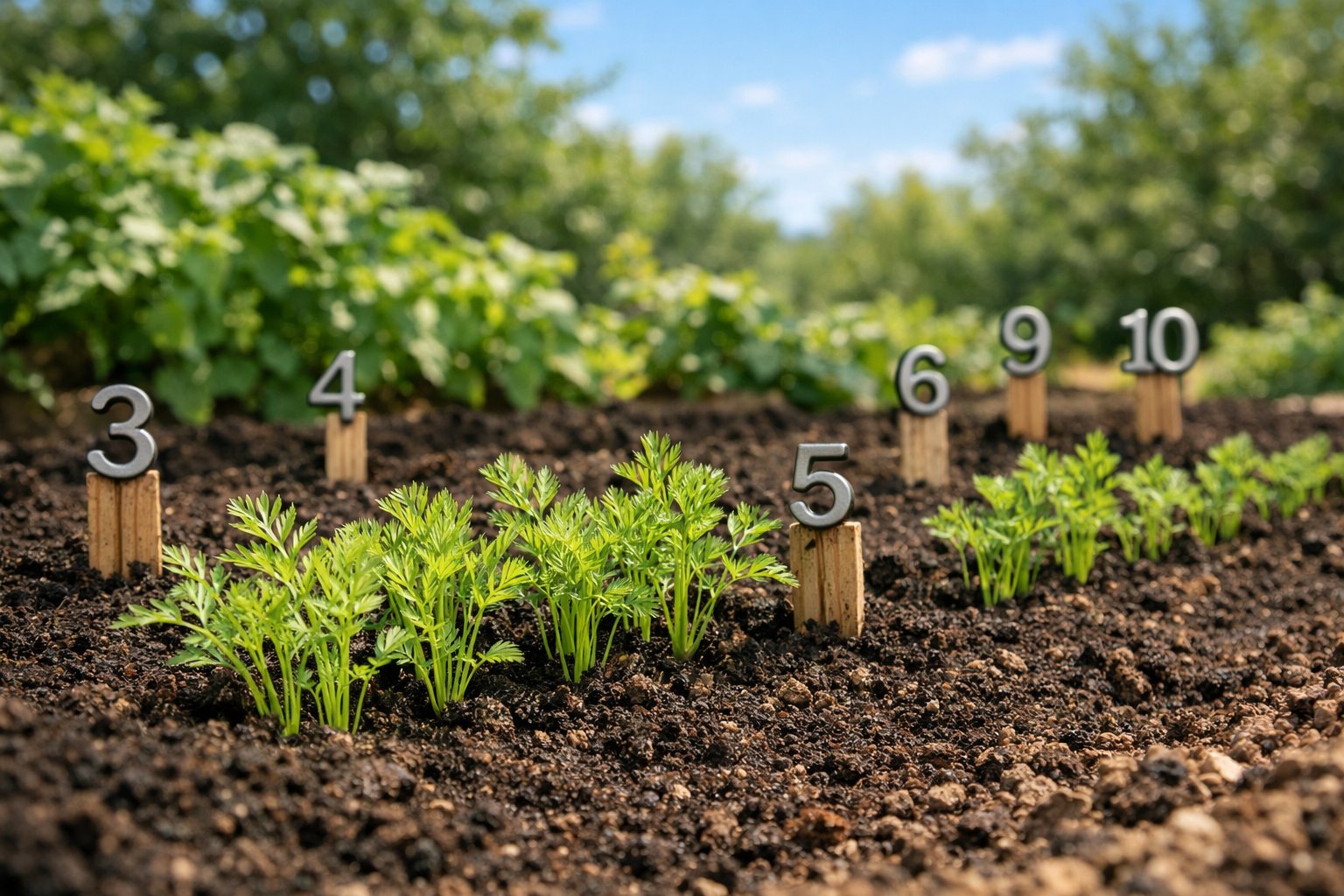
Carrot planting success depends on understanding zone-specific timing and temperature needs. Spring planting typically begins 2-4 weeks before the last frost date, while fall crops need 10-12 weeks before the first hard freeze.
Timing varies widely depending on climate and location. The tables below show general spring and fall sowing windows by zone and region.
For exact planting dates based on your location, use the
AgrowGuide Planting Calendar to get personalized recommendations based on frost dates and local climate.
Carrot Planting Calendar by USDA Zone (Zones 3–10)
| USDA Zone | Spring Sow Window | Fall Sow Window |
|---|---|---|
| Zone 3 | Late April – July | Not recommended |
| Zone 4 | April – June | Not recommended |
| Zone 5 | Late March – July | Late July |
| Zone 6 | March – July | Late July – Early August |
| Zone 7 | Late January – March | August – September |
| Zone 8 | February – March | August – September |
| Zone 9 | January – March | September – December |
| Zone 10 | January – February | October – December |
Note: Carrots can germinate at 40–45°F, but the most reliable germination is 55–75°F.
Carrot Planting Calendar for Europe (By Region)
| European Region | Typical Countries | Spring Sow Window | Fall Sow Window |
|---|---|---|---|
| Northern Europe | Norway, Sweden, Finland, Iceland, Baltics | April – June | July |
| Northwest Europe | UK, Ireland, Netherlands, Belgium, Denmark | March – May | July – August |
| Central Europe | Germany, Poland, Czechia, Austria, Switzerland | March – May | July – August |
| Western Europe | France, Luxembourg | February – April | August – September |
| Southern Europe (Mediterranean) | Spain, Portugal, Italy, Greece, Malta, Cyprus | January – March | September – November |
| Southeast Europe / Balkans | Romania, Bulgaria, Croatia, Serbia, Bosnia, Albania | February – April | August – October |
Notes: In Mediterranean areas, avoid mid-summer sowing due to heat and poor germination. In Northern Europe, sow as soon as soil is workable and above ~5–7°C (40–45°F).
Not sure when to plant carrots in your exact location?
Use the AgrowGuide Planting Calendar to instantly see:
- Your local frost-safe planting window
- Best sowing dates for your climate
- What vegetables to plant right now
Zones 3–5: Cool Climates
Gardeners in zones 3-5 work with shorter growing seasons and later spring warmth. Spring planting runs from late March through July, depending on the specific zone.
Zone 3 (3a and 3b) has the shortest season. Planting begins in late April and extends through July. These zones skip fall planting due to early freezes.
Zone 4 (4a and 4b) allows April through June planting. The soil needs to thaw completely before sowing seeds.
Zone 5 (5a and 5b) offers the most flexibility in cool climates. Seeds go in the ground from late March through July.
All three zones need direct seeding once soil temperatures reach 45°F. The soil should be workable and not waterlogged. Seeds take 14-21 days to germinate in cool conditions, so gardeners must keep the soil consistently moist during this period.
Zones 6–8: Moderate Climates
Moderate climate zones support both spring and fall carrot crops. This dual-season approach provides fresh carrots for most of the year.
Zones 6a and 6b start spring planting in March and continue through July. Fall planting is not listed for these zones due to variable conditions.
Zones 7a and 7b plant from late January through March for spring harvests. Fall planting begins in early August and runs through September.
Zones 8a and 8b follow a February to March spring window. Fall crops go in the ground during August and September.
These zones benefit from milder winters and longer growing periods. Gardeners can succession plant every 2-3 weeks to ensure continuous harvests. The moderate temperatures mean faster germination and stronger growth compared to cooler zones.
Zones 9–10: Warm Climates
Warm climate zones flip the traditional growing calendar. Winter becomes the prime carrot season because summer heat damages roots and causes bitter flavors.
Zone 9a plants from January through February for spring and October through December for fall. Zone 9b extends the spring window from January to March, with fall planting from September through December.
Zones 10a and 10b follow January to February for spring and October through December for fall planting.
Hot weather stops carrot production in these zones. Summer temperatures above 80°F cause poor germination, woody texture, and reduced sweetness. Gardeners focus on cool-season windows when soil temperatures stay between 55-75°F. Container growing provides better temperature control in these warm regions.
Adjusting for Microclimates and Frost Dates
Every garden has unique conditions that affect when to plant carrots. A planting calendar based on zone numbers provides starting points, but local factors require adjustments.
Frost dates vary within zones based on elevation, proximity to water, and urban heat effects. Gardeners should check their specific last frost date rather than relying solely on zone averages. Carrots tolerate light frost and taste sweeter after cold exposure, but hard freezes damage unharvested roots.
Microclimates create warmer or cooler spots in the same yard. South-facing slopes warm earlier in spring. Low-lying areas collect cold air and frost. Raised beds drain faster and warm quicker than ground-level plots.
Soil temperature matters more than air temperature. A soil thermometer confirms when conditions reach 45°F for germination. Dense clay soils warm slower than sandy or amended soils, pushing planting dates back by 1-2 weeks.
Choosing the Best Carrot Varieties for Your Zone
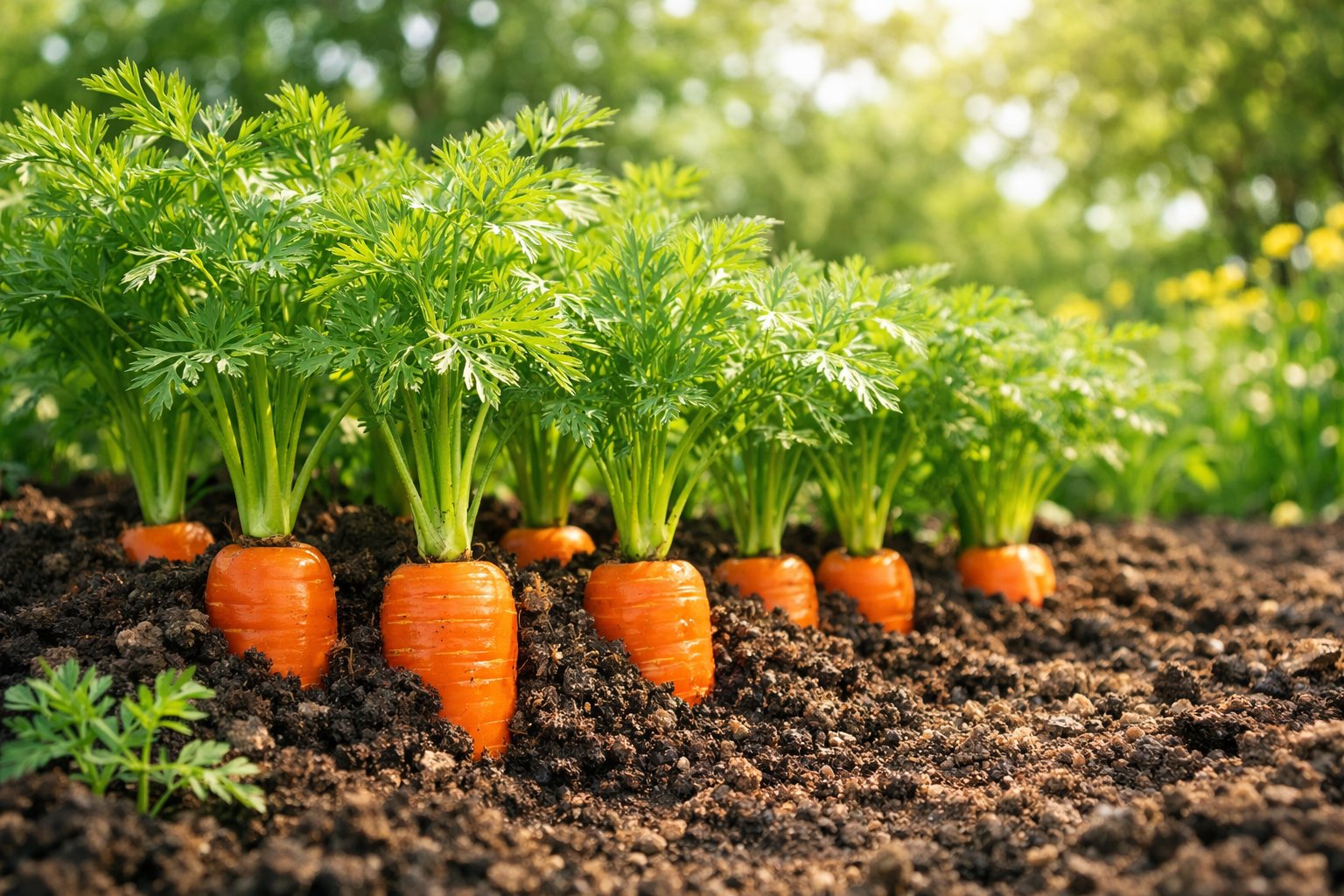
Different carrot varieties perform better in specific climates and growing seasons. Cold-hardy types work well for early spring planting in northern zones, while heat-tolerant varieties handle warmer conditions in southern regions.
Short-Season and Cold-Hardy Types
Gardeners in zones 3-5 benefit from short-season varieties that mature quickly before heat arrives. Little Finger carrots reach maturity in 50-60 days and grow just 3-4 inches long, making them ideal for heavy soils and short growing seasons. Paris Market carrots are round, golf ball-sized roots that mature in 50-70 days and tolerate cold soil well.
Nantes types are naturally cold-hardy and sweet. They have blunt tips and cylindrical shapes that work well in clay soils. These carrots handle light frosts and actually improve in flavor when exposed to cool temperatures.
Danvers varieties mature in 65-75 days and tolerate various soil types. They grow 6-7 inches long with broad shoulders. These carrots store well through winter in zones with cold winters.
Heat-Tolerant and Specialty Varieties
Southern gardeners in zones 8-10 need varieties that resist bolting in warm weather. Imperator carrots are long, tapered types that reach 8-10 inches. The Imperator carrot handles heat better than other types but needs deep, loose soil to develop straight roots.
Kuroda carrots tolerate warm soil and resist cracking. They mature in 70-75 days and produce sweet, crisp roots even in summer plantings.
Baby carrots come from varieties like Babette and Thumbelina. These grow 2-4 inches long and mature in 50-65 days. They work well in containers and shallow soils across all zones.
Purple, yellow, and white types offer variety beyond orange. Cosmic Purple and Yellow Solar carrots grow in most zones and add color to gardens.
Tips on Selecting Carrot Seeds
Match carrot seeds to soil depth and texture. Imperator types need 12 inches of loose soil, while round Paris Market carrots grow in just 6 inches.
Check days to maturity on seed packets. Zones 3-5 need varieties under 70 days for spring planting. Zones 8-10 can grow longer-season types in fall and winter.
Buy seeds from companies that test varieties in different regions. Fresh carrot seeds germinate better than old stock. Seeds lose viability after 2-3 years.
Consider succession planting with multiple varieties. Plant quick-maturing Little Finger carrots every 2-3 weeks alongside longer-season types of carrots for continuous harvests. Sweet carrots like Bolero and Scarlet Nantes provide the best flavor when harvested in cool weather.
Essential Steps for Planting Carrots
Successful carrot cultivation starts with proper soil preparation and correct seeding technique. Direct sowing is the only reliable method since carrots develop a long taproot immediately after germination that doesn't tolerate transplanting.
How to Prepare Soil for Carrots
Carrots require loose, well-draining soil free of rocks, clumps, and debris. Heavy or compacted soil causes roots to fork, twist, or grow stunted. Gardeners should work the soil to a depth of 12 inches, removing any stones or hard objects that could block root growth.
The ideal soil texture is sandy loam with a pH between 6.0 and 6.8. Adding compost improves soil structure, but fresh manure should be avoided as it causes excessive leaf growth and forked roots.
For clay-heavy soil, gardeners can mix in sand and aged compost to improve drainage. Raised beds offer an excellent alternative for problem soils since they provide complete control over soil composition.
Sowing Carrot Seeds
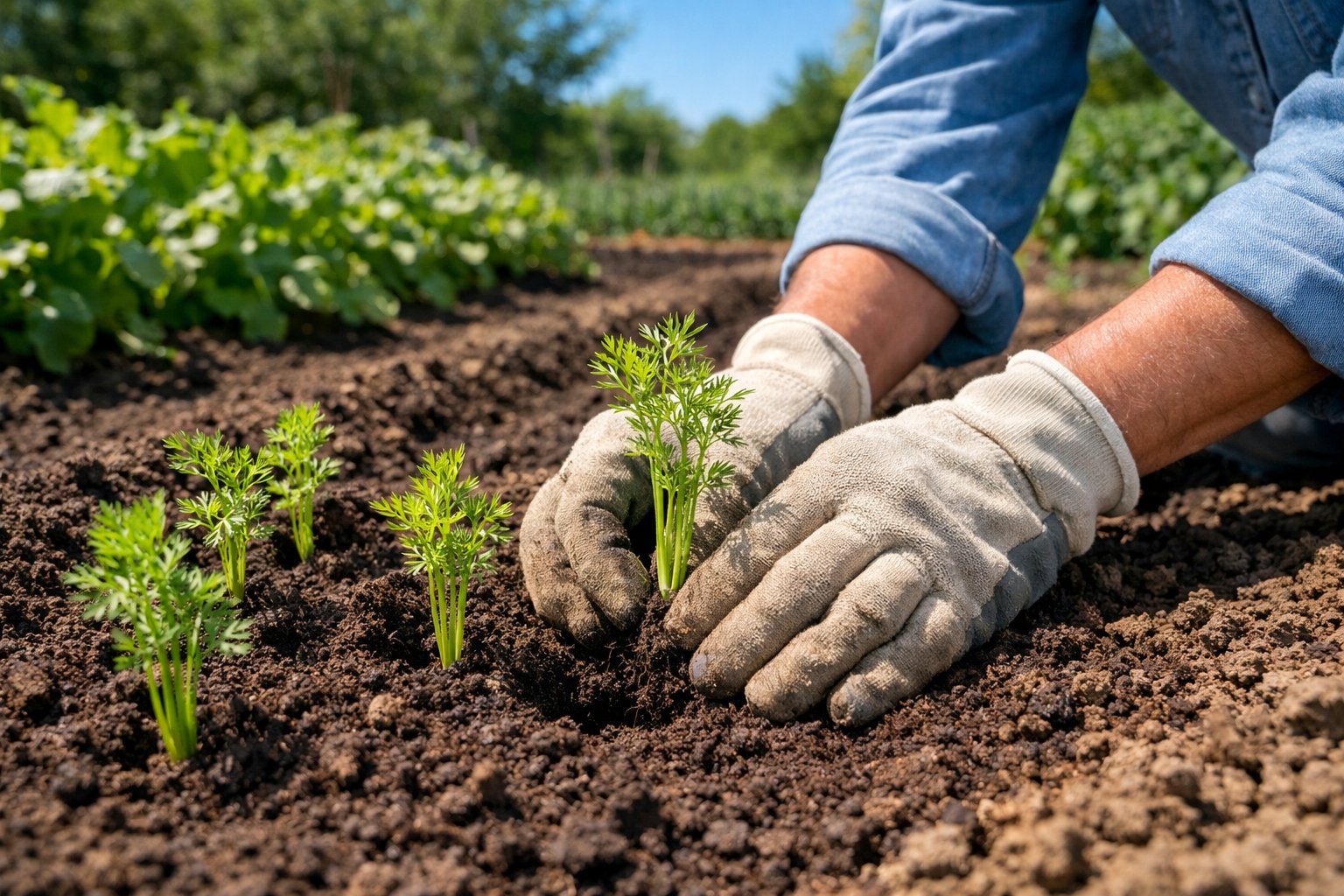
Carrot seeds should be sown directly into the garden or container where they will grow. The seeds are tiny, which makes even distribution challenging but essential for healthy growth.
Seeds need to be planted no more than 1/4 inch deep and lightly covered with fine soil. Deeper planting delays germination or prevents sprouting entirely. After sowing, gardeners should water gently with a fine spray to avoid washing away seeds.
The soil must stay consistently moist until germination occurs, which typically takes 14 to 21 days. Allowing the soil to dry out during this period will result in poor or failed germination. Some gardeners cover the seeded area with a thin board or burlap to retain moisture, removing it as soon as sprouts appear.
Spacing and Depth Guidelines
Carrot seeds are difficult to space properly due to their small size. Most gardeners sow them fairly close together, then thin the seedlings once they reach one inch tall.
Proper Spacing Requirements:
- Seed depth: 1/4 inch
- Initial spacing: Seeds scattered thinly in rows
- Final spacing: 2 to 4 inches between plants
- Row spacing: 12 to 18 inches apart
Thinning is critical for growing quality carrots. Crowded seedlings compete for nutrients, water, and light, resulting in small or deformed roots. When thinning, gardeners should pull out the weakest seedlings and keep the strongest ones.
As carrots mature, the tops may push above the soil surface. Mounding soil around exposed shoulders prevents them from turning green and bitter.
Starting Seeds Indoors vs. Direct Sowing
Direct sowing is the only practical method for planting carrots from seed. Unlike most vegetables, carrots cannot be started indoors and transplanted successfully.
Carrot seedlings develop a taproot immediately upon germination. This root becomes the edible carrot and grows straight down into the soil. Disturbing or bending this taproot during transplanting causes permanent deformity.
Gardeners who want an early start should prepare the outdoor planting site as soon as soil can be worked in spring. The ground needs to thaw and drain enough to be loosened, which usually occurs 2 to 4 weeks before the last frost date. Containers offer the only indoor option, but seeds must be sown directly into the final pot rather than started elsewhere and moved.
Growing Carrots: Care and Best Practices
Carrots (Daucus carota) need consistent moisture, full sun, and proper spacing to develop straight, sweet roots. Success with these root vegetables depends on regular watering, adequate light exposure, and timely thinning of crowded seedlings.
Watering and Mulching
Growing carrots requires even moisture throughout the growing season. The soil should stay consistently moist but not waterlogged. Water deeply once or twice per week, providing about 1 inch of water total.
Inconsistent watering causes split or cracked roots. Dry spells followed by heavy watering stress the plants and deform the roots. A simple finger test helps—if the top inch of soil feels dry, it's time to water.
Mulch helps regulate soil moisture and temperature. Apply a 2-inch layer of straw, shredded leaves, or compost around young plants once they reach 3 inches tall. Keep mulch away from the crown to prevent rot.
Drip irrigation or soaker hoses work better than overhead watering. They deliver water directly to the root zone and reduce moisture on leaves, which can invite disease.
Light and Temperature Requirements
Carrots need full sun for best growth—at least 6 to 8 hours of direct sunlight daily. Partial shade works in hot climates, particularly for summer plantings, but reduces root size and sweetness.
Soil temperature matters more than air temperature for carrot care. Seeds germinate when soil reaches 45°F, with optimal germination between 55°F and 75°F. Air temperatures between 60°F and 70°F produce the sweetest, crispest roots.
Heat above 85°F slows growth and makes roots woody and bitter. In warm zones, gardeners should plant carrots in spring or fall to avoid midsummer heat. A light frost actually improves flavor by converting starches to sugars in mature roots.
Thinning and Managing Carrot Seedlings
Carrot seedlings emerge in 10 to 21 days and initially look like grass. Thinning is essential—crowded plants produce small, twisted roots. Wait until seedlings reach 2 inches tall, then thin to 2 inches apart for Nantes varieties or 3 inches for longer types.
Use scissors to snip unwanted seedlings at soil level rather than pulling them. Pulling disturbs neighboring roots and releases scent that attracts carrot rust flies.
Thin in stages if the stand is very dense. Remove every other plant when seedlings are small, then thin again two weeks later. Water the bed before thinning to soften soil and reduce stress on remaining plants.
Weeding matters early in the season when carrot seedlings grow slowly. Hand-pull weeds carefully to avoid damaging shallow carrot roots, or use a stirrup hoe between rows.
Managing Diseases and Pests
Carrots face challenges from both insect pests and diseases that can damage roots and reduce yields. Protecting plants involves using physical barriers, practicing good cultural methods, and catching problems early before they spread.
Common Carrot Pests: Carrot Rust Fly and Weevils
Carrot rust fly is one of the most damaging pests. The larvae burrow into carrot roots and create rust-colored tunnels that make the crop unmarketable. These flies can cause yield losses up to 30% if left uncontrolled.
The adult flies lay eggs near the base of young plants. When the eggs hatch, larvae tunnel into the roots and feed throughout the growing season.
Carrot weevils cause different but equally serious damage. Adult weevils feed on carrot tops and cause leaves to wilt. The larvae burrow into roots and create dark zigzag grooves. This pest can reduce yields by up to 50%.
Both pests overwinter in crop debris and soil. Removing all plant material after harvest eliminates hiding spots. Crop rotation helps by breaking the pest life cycle. Growers should avoid planting carrots in the same spot for at least two years.
Harvesting entire blocks at once rather than leaving carrots in the ground reduces pest pressure. Clean fields between seasons and turn soil deeply to expose overwintering insects.
Disease Prevention and Control
Carrots are vulnerable to several fungal and bacterial diseases. Bacterial soft rot thrives in waterlogged conditions and causes roots to become mushy with water-soaked lesions. This disease spreads quickly in wet soil.
Well-draining soil is essential for disease prevention. Raised beds improve drainage and reduce standing water around roots. Avoid over-irrigation and allow soil to dry between waterings.
Alternaria leaf blight and Cercospora leaf blight attack foliage. Alternaria creates dark brown lesions on leaf margins that can cause up to 90% defoliation. Cercospora produces tan spots with dead centers.
Crop rotation of three to seven years prevents disease buildup in soil. Using disease-free seeds stops pathogens from entering the field. Remove and destroy infected plant debris rather than composting it.
Space plants properly to allow air circulation between leaves. This reduces moisture on foliage where diseases develop. Water at the base of plants instead of using overhead sprinklers.
Using Row Covers and Cold Frames
Row covers provide physical barriers against flying insects like carrot rust fly. The lightweight fabric allows sunlight and rain through while blocking pests from reaching plants.
Apply row covers immediately after planting and before adult flies emerge. Secure edges with soil or stakes to prevent insects from crawling underneath. Row covers must stay in place throughout the growing season for complete protection.
Cold frames extend the growing season and protect plants from temperature extremes. They also create a barrier against pests in early spring and late fall plantings.
Cold frames work well in zones 3-5 where temperatures drop below 50°F early in the season. The enclosed environment keeps soil warmer and promotes faster germination. Ventilate frames on warm days to prevent overheating.
Both methods reduce the need for chemical controls. They work best when combined with crop rotation and field sanitation. Remove covers or frames during harvest to prevent pest accumulation underneath.
Container and Raised Bed Carrot Gardening
Containers and raised beds offer excellent alternatives to traditional garden plots for growing carrots, providing better control over soil quality and drainage. These methods work especially well in areas with heavy clay soil or limited garden space.
Growing Carrots in Pots and Containers
Container carrots need pots that are at least 12 inches deep for most varieties. The container should measure 12 to 24 inches in diameter to allow proper spacing between plants.
Multiple drainage holes are essential because container-grown carrots require consistent moisture but cannot tolerate waterlogged soil. Gardeners should water container carrots more frequently than garden-grown ones since pots dry out faster.
Seeds should be sown directly into the container at a depth of 1/4 inch. Transplanting does not work well because carrots develop a long taproot immediately after germination. Once seedlings reach one inch tall, thin them to 2 to 4 inches apart to prevent competition for nutrients and water.
Containers offer the advantage of portability, allowing gardeners to move them to optimize sunlight exposure and temperature. This flexibility extends the growing season in many zones.
Best Carrot Varieties for Containers
Shorter carrot varieties perform better in containers than full-sized types. 'Atlas' produces small spherical roots that grow 1 to 2 inches long and thrives in limited space. 'Little Finger' is a Nantes-type carrot with 4-inch roots that stays small and sweet.
'Paris Market' develops small round carrots ideal for shallow containers. These finger-sized varieties mature more quickly than standard carrots and grow straight without the deformities that can occur in confined spaces.
Danvers varieties work well for beginners because they adapt to various container conditions without much fuss. For gardeners with deeper containers exceeding 12 inches, Imperator varieties become an option, though they require more careful attention to spacing and soil depth.
Soil and Drainage for Container Carrots
Potting soil formulated for vegetables provides the loose, lightweight texture carrots need to develop properly. Garden soil should never be used in containers because it compacts too easily and restricts root growth.
The soil must be free of stones, debris, and clumps that could cause carrots to fork or become misshapen. A well-draining mix prevents root rot while maintaining enough moisture for steady growth.
Gardeners should keep the soil consistently moist but not soggy throughout the growing season. A gentle watering stream prevents washing away seeds or disturbing young seedlings. As carrots mature and push up through the soil surface, mounding additional soil around the exposed tops prevents green shoulders caused by sunburn.
Harvesting and Storing Carrots
Proper harvesting timing and storage methods determine how long carrots stay fresh and flavorful. Most carrot varieties reach maturity 60 to 80 days after planting, though cooler fall temperatures can enhance sweetness.
When and How to Harvest Carrots
Carrots are ready to harvest when the crown (top of the root) reaches about 3/4 to 1 inch in diameter. This typically occurs 60 to 80 days after planting, depending on the variety. Gardeners can gently brush away soil from the top of a carrot to check its size before pulling.
The best time to harvest is when the soil is slightly moist, as this makes pulling easier and reduces the chance of breaking roots. For harvesting, grasp the carrot tops close to the crown and pull straight up with steady pressure. If the soil is compacted, use a garden fork to loosen the soil around the carrots first.
Carrots left in the ground after a light frost often taste sweeter, as cold temperatures convert starches to sugars. In mild climates (Zones 8-10), gardeners can leave carrots in the ground through winter and harvest as needed by covering them with a thick layer of straw or mulch.
Tips for Storing Carrots After Harvest
Remove the green tops immediately after harvesting, cutting them about 1/4 inch above the crown. The tops pull moisture from the roots, causing them to become limp and dry.
Do not wash carrots before storage unless they will be used within a few days. Excess moisture promotes rot during long-term storage. Simply brush off loose soil and store them unwashed.
For long-term storage, carrots need cold temperatures (32-40°F) and high humidity (90-95%). Root cellars provide ideal conditions. Gardeners without root cellars can store carrots in:
- Plastic bags with holes in the refrigerator crisper drawer (2-3 months)
- Containers filled with damp sand, sawdust, or peat moss in a cool basement (4-6 months)
- The ground under heavy mulch in zones with mild winters
Maintaining Carrot Freshness
Check stored carrots regularly and remove any that show signs of rot or mold. One spoiled carrot can quickly affect others nearby.
Carrots stored in sand or sawdust should be checked monthly to ensure the storage medium stays slightly damp but not wet. If the material feels dry, lightly mist it with water.
Refrigerated carrots maintain best quality for 3 to 4 weeks when stored in perforated plastic bags. Adding a damp paper towel to the bag helps maintain humidity without creating excess moisture. Avoid storing carrots near apples or other ethylene-producing fruits, as this gas can make carrots bitter.
Frequently Asked Questions
Planting times for carrots vary by zone, with spring plantings starting as early as May in Zone 3 and as early as February in Zone 9. Fall plantings extend from mid-July in cooler zones to October in warmer regions.
What is the ideal time of year to plant carrots in Zone 5b?
Zone 5b gardeners should plant carrots in early to mid-April for a summer harvest. The soil temperature needs to reach at least 40°F for germination, though 55-75°F is better.
For a fall harvest, the last planting date falls in late July. This timing allows carrots to mature during cooler fall temperatures, which improves their sweetness and flavor.
Succession planting every 2-3 weeks from April through July provides a continuous harvest throughout the growing season.
How should I adjust planting times for carrots in Zone 9a compared to other zones?
Zone 9a has a longer growing season than cooler zones, allowing for earlier spring planting and later fall planting. Gardeners can start planting as early as February or March when soil temperatures are suitable.
The main challenge in Zone 9a is avoiding extreme summer heat during germination. Carrot seeds struggle to germinate when soil temperatures exceed 85°F.
For fall harvests, planting can occur as late as September or early October. Many Zone 9a gardeners plant in late summer for winter harvests, as carrots can overwinter in the ground in this climate.
What's the earliest I can sow carrot seeds in Zone 3?
Zone 3 gardeners can sow carrot seeds as soon as the soil can be worked in spring, typically in May. The soil must be workable and not frozen or waterlogged.
Planting 4-6 weeks before the last frost date works well in Zone 3. Carrots tolerate light frosts and their seeds will wait for proper soil temperatures before germinating.
Cold frames or tunnels allow for even earlier planting, potentially in late April. These protection methods warm the soil faster and shield young seedlings from harsh conditions.
Are there specific considerations for planting carrots in Zone 7b?
Zone 7b offers flexibility for both spring and fall carrot crops. Spring planting begins in March, about 2-4 weeks before the last frost date.
Summer heat can stress carrots in Zone 7b, so gardeners should provide shade cloth during the hottest months if planting in June or July. Keeping the seedbed consistently moist is critical during warm weather germination.
Fall planting in August yields excellent results, as carrots mature during cooler autumn weather. Some gardeners in Zone 7b can overwinter carrots with heavy mulch, though success depends on winter severity.
Can I plant carrots in Zone 8a during late summer?
Late summer planting works well in Zone 8a for fall and winter harvests. Gardeners can plant from late August through September and expect good results.
The key challenge is keeping the soil moist during germination when temperatures are still warm. Daily watering may be necessary until seeds sprout, which takes 7-21 days.
Zone 8a's mild winters allow carrots planted in late summer to be harvested throughout winter. Floating row covers protect the crop from occasional hard frosts and extend the harvest season.
What are the best practices for planting carrots in cooler climates such as Zone 6a?
Zone 6a gardeners should plant carrots in mid to late April for spring crops. Waiting until the soil reaches at least 40°F ensures better germination rates.
Pre-warming the soil with row covers or black plastic speeds up the planting timeline by a week or two. This technique is helpful when gardeners want the earliest possible harvest.
For fall crops, the final planting date in Zone 6a is late July to early August. Succession planting every 2-3 weeks from April through July provides steady harvests from summer through fall.