Growing a successful garden involves more than just watering and sunlight. Companion planting is the practice of growing specific plants together so they can help each other thrive, reduce pests, and improve overall garden health. This gardening method has been used for generations and works by taking advantage of how different plants naturally interact with each other.
Some plants keep harmful insects away from their neighbors. Others attract helpful bugs that pollinate flowers or eat pests. Certain combinations even improve the soil or help nearby plants grow stronger and produce more food.
This companion planting guide explains which plants work well together and why. Gardeners can use these strategies to create a healthier garden without relying on chemicals or complicated techniques.
Key Takeaways
- Companion planting pairs specific plants together to naturally control pests and boost growth
- Different plant combinations provide unique benefits like attracting pollinators and improving soil nutrients
- Using a companion planting chart helps gardeners plan which crops to grow side by side for best results
Understanding Companion Planting Fundamentals
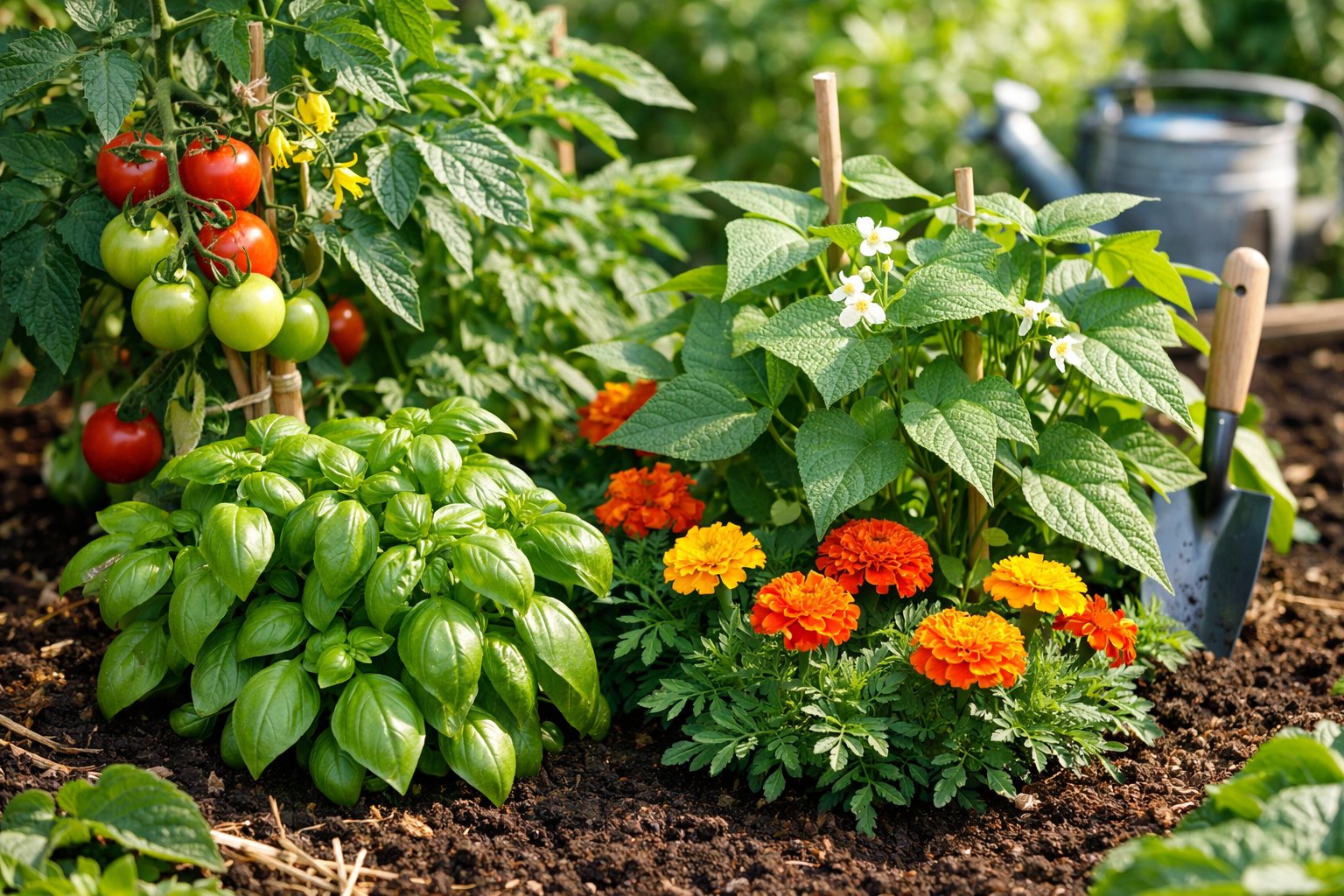
Growing plants together strategically creates mutually beneficial relationships in gardens. Different plants interact through their roots, leaves, and flowers to improve growth, reduce pest problems, and make better use of space.
What Is Companion Planting?
Companion planting is the practice of growing specific plants together to help each other thrive. These plant partnerships work because different species support one another in various ways.
Some plants repel pests that would otherwise damage nearby crops. Others attract helpful insects like ladybugs and parasitic wasps that eat garden pests. Certain plants improve soil conditions for their neighbors by adding nutrients or breaking up hard earth with deep roots.
The practice also maximizes garden space efficiently. Tall plants can provide shade for crops that need cooler conditions. Fast-growing plants harvest early, making room for slower crops to spread out later.
Plant partnerships reduce or eliminate the need for chemical pesticides and fertilizers. A well-planned companion planting system creates a balanced garden ecosystem where plants naturally protect and nourish each other.
History and Origins of Plant Partnerships
Native American farmers developed the Three Sisters method hundreds of years ago. This system combined corn, beans, and squash in one planting area. The corn provided support for climbing beans, while beans added nitrogen to the soil, and squash leaves shaded the ground to retain moisture and block weeds.
European cottage gardens traditionally mixed vegetables, herbs, and flowers together. Gardeners noticed that certain combinations produced better harvests and fewer pest problems. These observations passed down through generations created many companion planting guidelines still used today.
Asian farming systems practiced polyculture for thousands of years. Rice paddies integrated fish, ducks, and multiple plant species. These complex systems maximized food production while maintaining soil health.
Modern research has validated some traditional plant pairings while disproving others. Scientists now study the chemical compounds plants release and how they affect nearby species.
Core Principles of Effective Pairing
Pest management forms a primary benefit of companion planting. Strong-smelling herbs like basil and rosemary mask the scent of vegetables that pests seek. Trap crops deliberately attract pests away from main crops. Flowering plants bring in beneficial insects that prey on garden pests.
Nutrient relationships between plants create healthier soil. Legumes like beans and peas fix nitrogen from air into soil through special root bacteria. Deep-rooted plants pull up minerals from subsoil layers, making them available to shallow-rooted neighbors.
Physical support and space use allows multiple crops in limited areas. Climbing plants use vertical space on sturdier plants. Groundcover plants fill gaps between larger crops, suppressing weeds and moderating soil temperature.
Growth timing matters for successful pairings. Quick-maturing radishes harvest before cucumbers need the space. Early spring lettuce grows in spots where tomatoes will plant later.
Plants must share similar needs for water, sunlight, and soil conditions. Pairing a water-loving plant with a drought-tolerant one creates care conflicts.
How Companion Planting Works: Mechanisms and Benefits
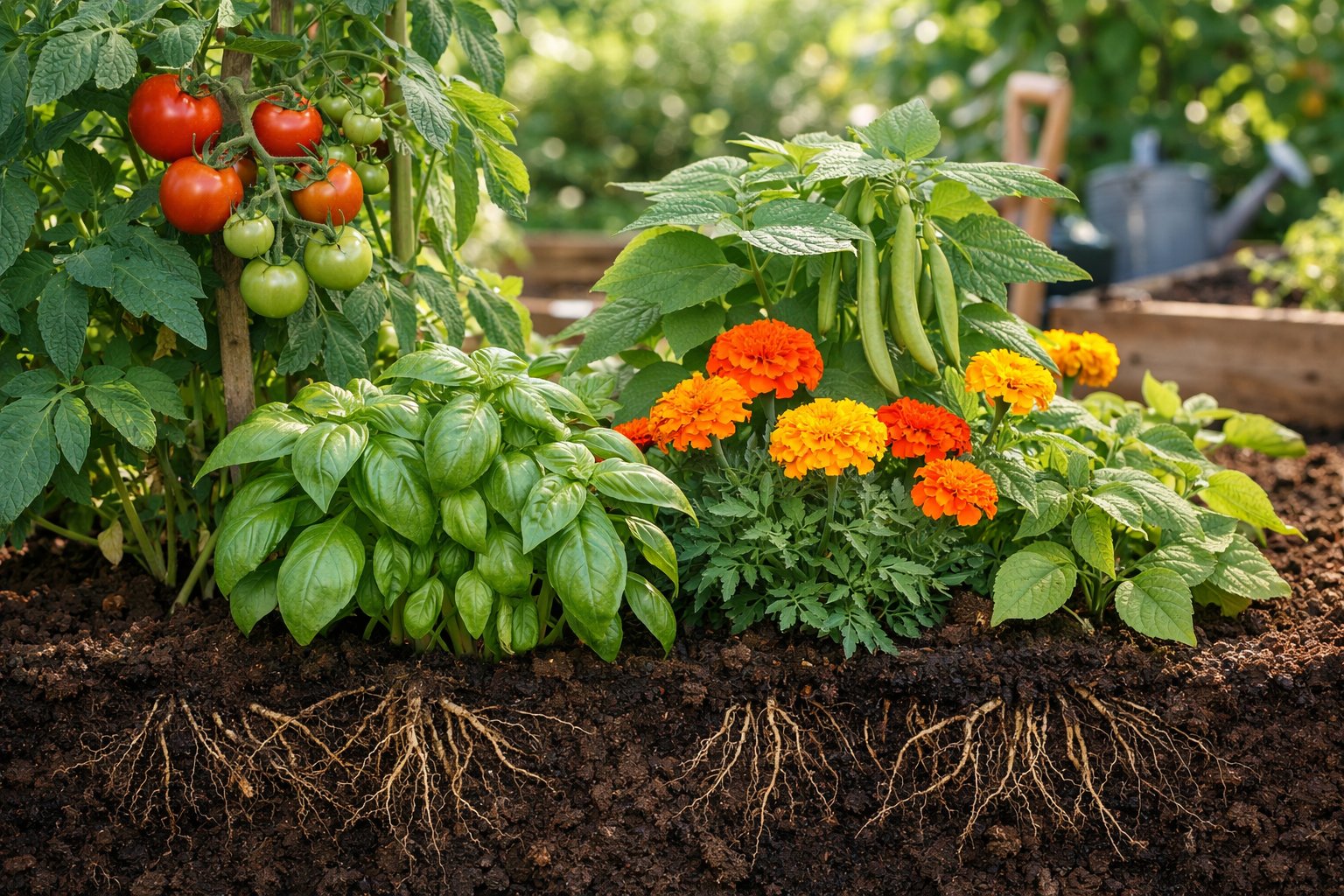
Companion planting creates natural partnerships between plants through chemical signals, physical interactions, and ecological relationships. These mechanisms work together to control garden pests, improve pollination, enhance soil health, and optimize growing space.
Natural Pest Control Strategies
Plants release chemical compounds through their leaves, roots, and flowers that confuse or repel pests. Aromatic herbs like basil, rosemary, and thyme emit strong scents that mask the odors pests use to locate their target crops. This makes it harder for insects to find their preferred food sources.
Trap cropping offers another natural pest control approach. Certain plants attract pests more strongly than the main crop, drawing insects away from valuable vegetables. Nasturtiums pull aphids away from tomatoes and cucumbers, concentrating pest populations where they cause less damage.
Some companion plants attract beneficial insects that prey on garden pests. Flowering plants provide nectar and pollen for ladybugs, parasitic wasps, and predatory beetles. These helpful insects hunt aphids, caterpillars, and other damaging pests. Research shows that gardens with diverse plant combinations experience 20-50% less pest damage compared to single-crop plantings.
Physical barriers also help repel pests. Squash leaves with spiny stems deter animals from reaching neighboring plants. Dense plantings create confusion for flying insects searching for specific host plants.
Enhancing Pollination and Attracting Beneficial Insects
Flowering companion plants serve as pollinator magnets throughout the growing season. Marigolds, calendula, borage, and alyssum produce abundant blooms that attract bees, butterflies, and other pollinators to the garden. These insects then visit nearby vegetable flowers, improving fruit set and yields.
Different flowers bloom at various times, providing continuous food sources. Early-season dill and chamomile attract pollinators when spring vegetables flower. Summer-blooming sunflowers and zinnias maintain pollinator populations during peak growing months.
Beneficial insects need more than just nectar. Small-flowered plants like alyssum and dill offer landing platforms for tiny parasitic wasps that control aphids and caterpillars. Herbs allowed to flower create habitat for predatory insects that patrol the garden hunting pests.
The presence of diverse flowering plants increases beneficial insect populations by 30-60% compared to vegetable-only gardens. This creates a balanced ecosystem where natural predators keep pest populations under control.
Soil Health and Nutrient Cycling
Legumes like beans and peas fix atmospheric nitrogen through bacteria in their root nodules. This process converts nitrogen gas into forms other plants can absorb. Neighboring plants benefit from this enriched soil without added fertilizers.
Plants with different root depths access soil nutrients at various levels. Deep-rooted plants like tomatoes mine minerals from subsoil layers. Shallow-rooted lettuce uses nutrients near the surface. This layered approach prevents competition and maximizes nutrient use.
Living mulch plants like squash and nasturtiums spread across bare soil, moderating temperature and retaining moisture. Their leaves shade the ground, reducing evaporation and preventing weed growth. When these plants decompose, they return organic matter and soil nutrients to the earth.
Cover crops planted between main crops add organic material and prevent soil erosion. Their roots hold soil in place during heavy rain. Some plants release compounds that improve nutrient availability for neighboring crops, creating a continuous cycle of soil enrichment.
Maximizing Garden Space and Preventing Erosion
Vertical layering allows multiple crops to occupy the same ground. Tall corn supports climbing beans while low-growing squash spreads beneath. Each plant uses different heights without competing for space or light.
Quick-maturing crops fill gaps while slower plants establish. Radishes grow and finish before cucumbers need full space. Lettuce produces under developing tomato plants before the canopy shades it out. This succession approach increases production per square foot.
Ground-covering companion plants act as living mulch to prevent soil erosion. Their roots bind soil particles together, reducing washout during rain. Dense leaf cover protects soil from direct rainfall impact. Studies show that diverse plantings reduce soil loss by 40-70% compared to bare ground between plants.
Plants with complementary growth habits share resources efficiently. Bush beans grow at ground level while pole beans climb vertically. Different maturation times mean harvesting one crop opens space for another. Strategic spacing creates productive gardens in limited areas.
Companion Planting Combinations and Their Unique Benefits
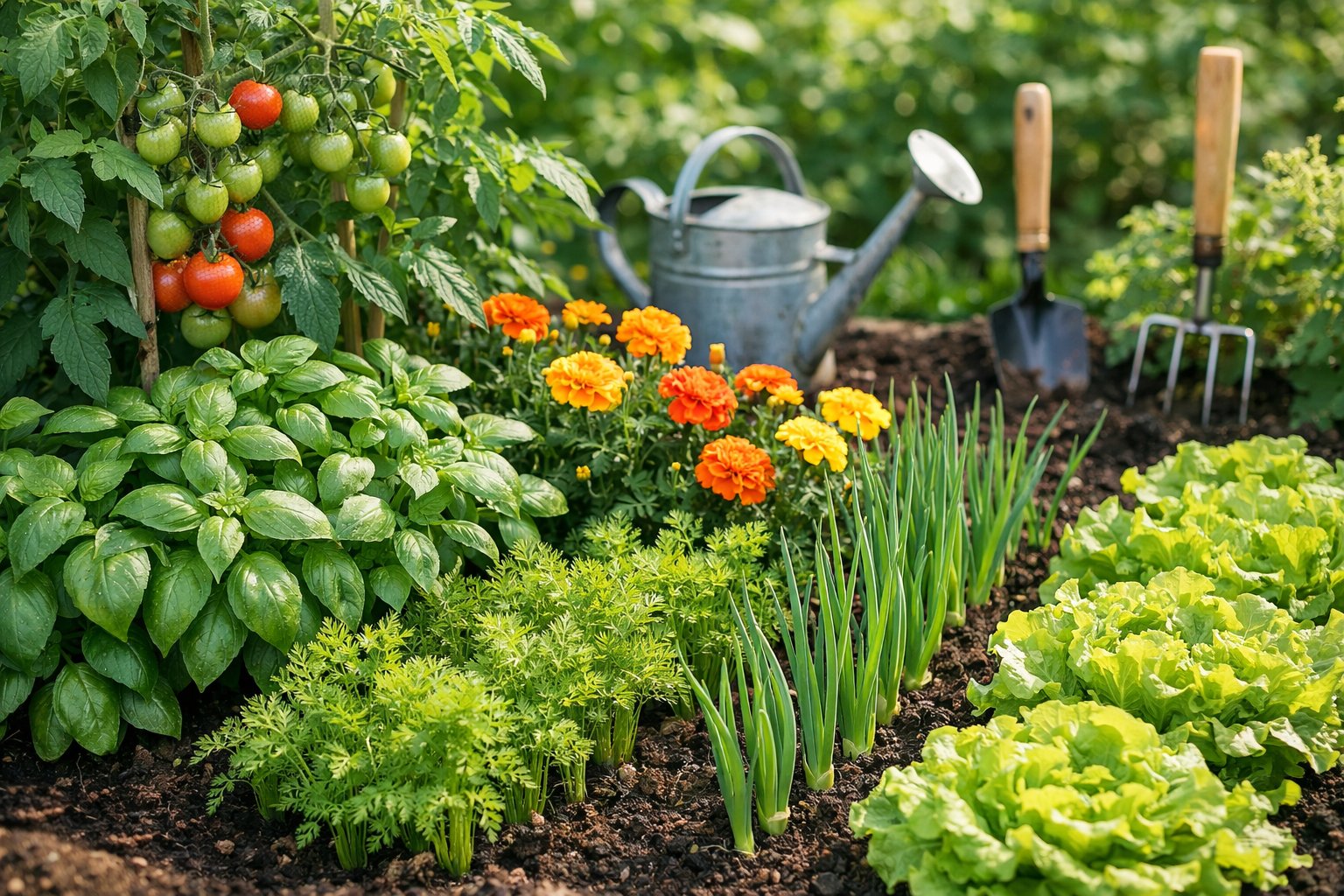
Certain plant pairings have proven themselves effective across gardens and climates. These combinations work through pest deterrence, nutrient sharing, physical support, and enhanced growth patterns.
Classic Pairings: Tomatoes and Basil
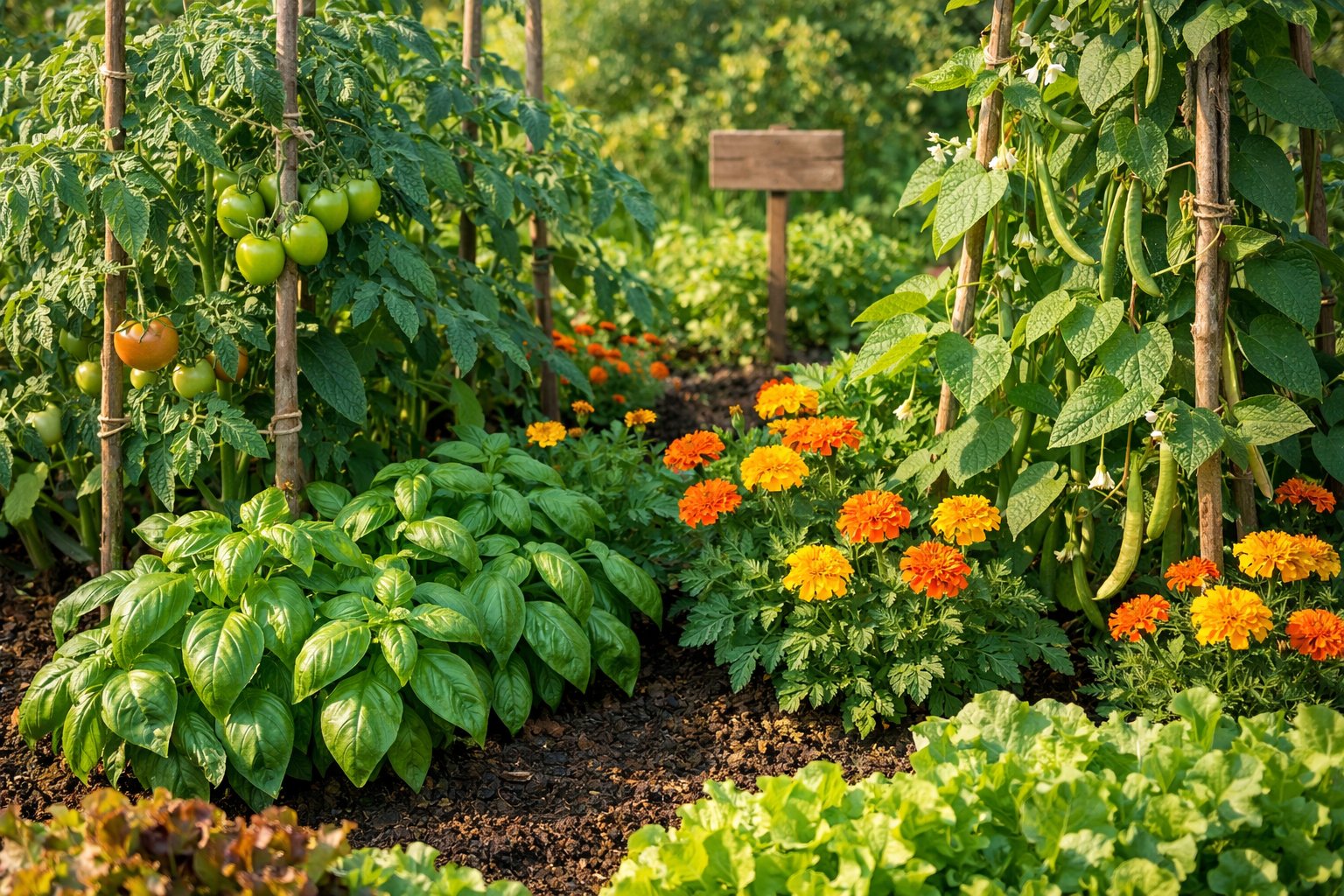
Tomatoes and basil create one of the most effective companion planting combinations in any garden. Basil's strong scent masks the aroma tomatoes release, which helps confuse and repel common pests like hornworms and aphids. Research shows basil actually triggers tomato plants to produce more of their natural defense compounds, making them more resistant to insect damage.
The volatile oils basil releases prime the tomato plant's immune response. This chemical communication between plants creates a stronger defense system without any intervention.
For best results, gardeners should plant 3-4 basil plants for every tomato plant, spacing them 12-18 inches apart. This distance allows the basil's protective scent to reach the tomatoes while preventing root competition. Many growers also report improved tomato flavor when these two plants grow together.
Carrots and Onions: Mutual Defense
Carrots and onions form a mutual protection partnership that demonstrates how companion plants can benefit each other equally. Carrot flies avoid the strong sulfur scent that onions produce, while onion flies stay away from the compounds carrots release. This creates a natural barrier against each plant's primary pest.
Their root systems work together efficiently below ground. Carrots develop deep taproots that reach 6-8 inches into the soil, while onions maintain shallow roots at 2-4 inches. This difference means they access nutrients and water from different soil layers without competing.
Gardeners can alternate rows of carrots and onions, or plant onion sets around carrot patch perimeters. Some growers interplant onions directly within carrot rows for maximum pest protection. The key is maintaining enough space so both plants can develop properly while staying close enough for the scent-masking effect to work.
The Three Sisters: Corn, Beans, and Squash
The Three Sisters represent one of the oldest and most sophisticated companion planting combinations. Developed by indigenous farmers thousands of years ago, this partnership demonstrates how three very different plants can support each other's growth.
Corn provides a natural climbing structure for pole beans, eliminating the need for stakes or trellises. Beans perform nitrogen fixation through their root nodules, converting atmospheric nitrogen into a form that corn and squash can absorb from the soil. This process enriches the growing area naturally without adding fertilizer.
Squash completes the system by spreading across the ground between corn stalks. Its large leaves shade the soil, which reduces moisture loss and prevents weed growth. Some squash varieties have slightly prickly stems that discourage raccoons and other animals from reaching the corn.
Planting sequence for success:
- Plant corn first in circles 18 inches across (4-6 seeds per circle)
- Add beans when corn reaches 6-8 inches tall (4-6 seeds around each circle)
- Plant squash 3 feet from corn circles once beans begin climbing
Other Proven Combinations
Marigolds with vegetables provide multiple benefits across the garden. French marigolds (Tagetes patula) release compounds through their roots that kill harmful soil nematodes, with studies showing up to 90% reduction in root-knot nematode populations. They also repel whiteflies, aphids, and certain beetles while attracting beneficial insects like hoverflies and parasitic wasps. Plant them 18-24 inches apart near tomatoes, peppers, and eggplants.
Nasturtiums as trap crops work by attracting pests away from main crops. Aphids, cucumber beetles, and cabbage worms prefer nasturtiums over most vegetables. Gardeners plant them near valuable crops and monitor them closely, removing heavily infested nasturtium plants before pest populations explode.
Lettuce with tall crops creates a beneficial shade partnership. Fast-growing lettuce planted beneath tomatoes, corn, or trellised crops gets protection from hot afternoon sun, which extends its harvest period and prevents bitter flavor. The lettuce harvests before the taller plants need the space.
Plants That Attract and Support Beneficial Insects
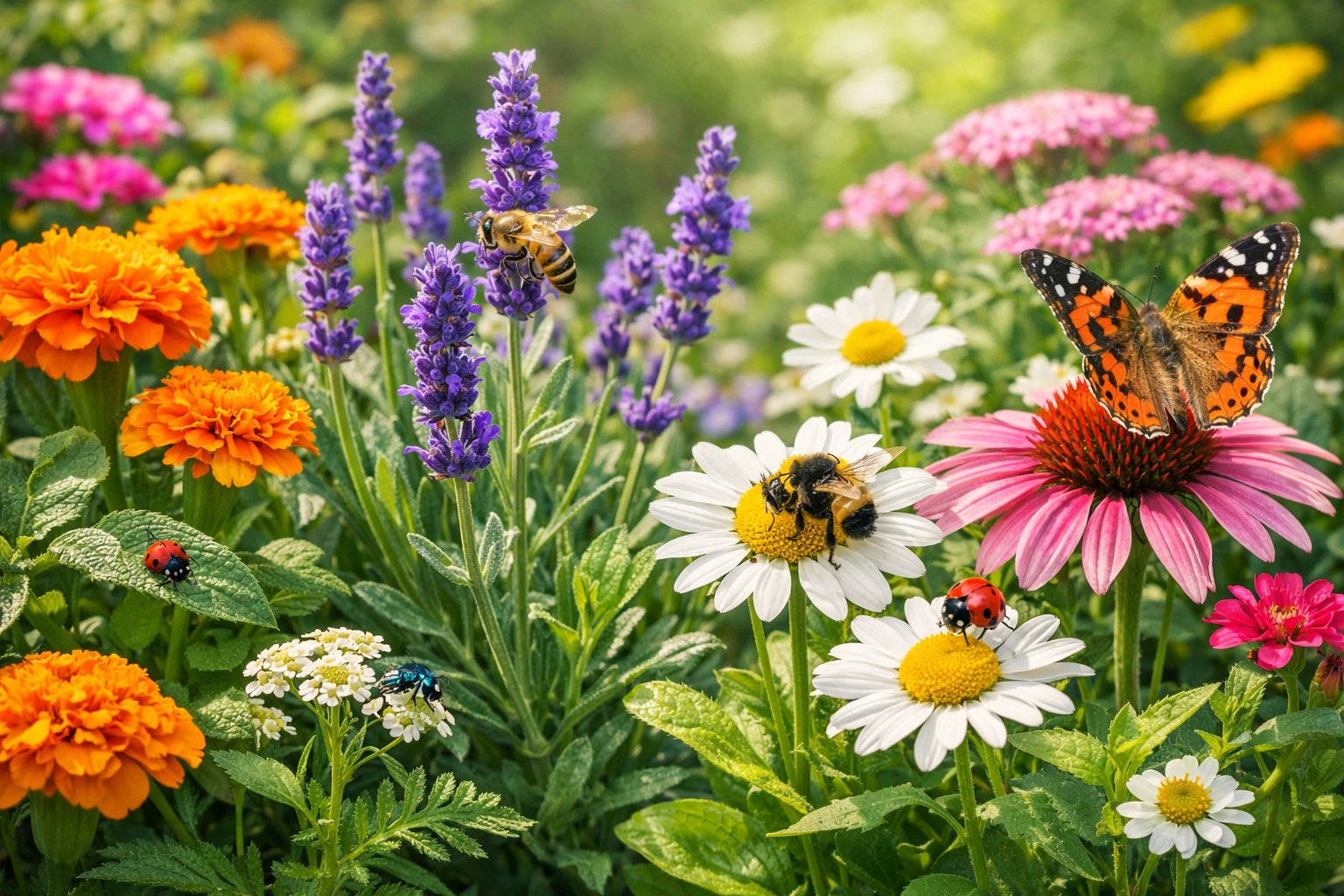
Beneficial insects serve two main roles in the garden. Pollinators help plants produce fruit and seeds. Predatory insects hunt and eat common garden pests.
Inviting Pollinators to the Garden
Flowers that produce nectar and pollen attract pollinators like bees and butterflies throughout the growing season. Alyssum, sunflowers, and wildflowers provide consistent food sources for these insects. Daisies and coneflowers offer accessible landing platforms for bees to collect pollen.
Planting a variety of flowering species ensures pollinators visit the garden from spring through fall. Different bloom times create continuous resources as one plant finishes flowering and another begins. This steady supply supports pollinator populations through their complete life cycles.
Key pollinator-attracting plants include:
- Sunflowers - attract multiple bee species
- Coneflowers - provide nectar for butterflies
- Alyssum - produces small flowers bees prefer
- Wildflower mixes - support diverse pollinator types
These plants increase fruit and vegetable yields by improving pollination rates. Gardens with strong pollinator activity produce more crops without additional effort or inputs.
Attracting Predatory Insects for Pest Control
Predatory insects eliminate garden pests without chemical pesticides. Ladybugs consume aphids, mites, and scale insects in large numbers. Lacewings feed on insect eggs, aphids, and caterpillars during their larval stage. Parasitic wasps lay eggs inside harmful pests like caterpillars and beetle larvae.
Dill, fennel, and yarrow attract these predatory species effectively. These plants produce small clustered flowers that provide nectar for adult beneficial insects. Marigolds and coriander create habitats where predatory insects shelter and reproduce.
Hoverflies look like small bees but their larvae eat hundreds of aphids per day. They prefer flowers in the carrot family, including cilantro and parsley. Calendula attracts multiple predatory insect types while adding color to garden beds.
Strategic placement of these insect-attracting plants near vulnerable crops reduces pest damage naturally. A diverse planting scheme maintains balanced predator populations that control pests before infestations develop.
The Role of Herbs and Flowers in Companion Planting
Herbs and flowers serve as natural pest deterrents and pollinator attractants in vegetable gardens. Their aromatic oils and bright blooms create a protective environment while supporting beneficial insects that keep gardens healthy.
Aromatic Herbs for Pest Repellence
Aromatic herbs release natural compounds that confuse or repel harmful insects. These pest-repelling herbs work by masking the scent of nearby vegetables, making it harder for pests to locate their target plants.
Basil protects tomatoes and peppers by deterring aphids, whiteflies, and mosquitoes. Its strong scent also enhances the flavor of neighboring tomato plants. Rosemary releases oils that repel cabbage moths, bean beetles, and carrot flies, making it valuable near brassicas and root vegetables.
Mint keeps aphids, cabbage moths, and flea beetles away but requires containment due to its aggressive spreading habit. Thyme deters cabbage worms and attracts pollinators at the same time. These herbs can be planted in containers around garden beds or interspersed between vegetable rows.
Other effective aromatic herbs include sage, oregano, and chives. Each releases distinct compounds that protect different plant families while adding culinary value to the garden.
Multi-Purpose Flowers in Vegetable Gardens
Flowers provide multiple benefits beyond visual appeal. Marigolds deter nematodes through chemicals released by their roots and repel aphids and whiteflies with their pungent scent. They work well planted around tomatoes, peppers, and squash.
Nasturtiums act as trap crops by attracting aphids away from vegetables. They also repel squash bugs and cucumber beetles while their edible flowers add a peppery flavor to salads.
Calendula attracts beneficial insects like hoverflies and ladybugs that prey on aphids and other pests. Sunflowers provide natural trellises for climbing beans and attract pollinators and pest-eating birds.
These flowers should be planted around garden borders or interspersed throughout vegetable beds. Their blooms ensure continuous pollinator activity while creating protective barriers against common garden pests.
Charting and Planning: How to Use a Companion Planting Chart
A companion planting chart works as a reference tool that shows which plants grow well together and which ones should stay apart. Learning to read these charts and apply timing strategies helps gardeners make the most of their growing space throughout the season.
Reading and Applying a Planting Chart
Most companion planting charts organize information in a grid or table format. The first column lists plant names, while other columns show beneficial companions, plants to avoid, and specific benefits like pest control or improved growth.
To use the chart effectively, gardeners should start by selecting their main crops. They then cross-reference these plants to find compatible companions listed in the chart. For example, a chart might show that tomatoes pair well with basil and marigolds but should not grow near brassicas.
Key elements to look for in a companion planting chart:
- Beneficial pairings - Plants that help each other grow or protect against pests
- Negative combinations - Plants that compete for nutrients or attract harmful insects
- Spacing requirements - How far apart each plant needs to be
- Growing season notes - Whether plants work together in spring, summer, or fall
Some charts include symbols or color coding to make scanning easier. A plus sign might indicate a good pairing, while a minus sign warns against planting those crops together.
Timing, Succession, and Living Mulch Strategies
Succession planting involves planting crops in intervals rather than all at once. This strategy keeps the garden producing fresh vegetables throughout the growing season. Gardeners can plant fast-growing crops like lettuce every two weeks to ensure a continuous harvest.
A companion planting guide helps coordinate these plantings with beneficial neighbors. Early spring crops like peas can be followed by summer tomatoes in the same space. The peas add nitrogen to the soil before the tomatoes need it.
Living mulch refers to low-growing plants that cover the soil around taller crops. Clover and creeping thyme work well as living mulches because they prevent weeds, retain moisture, and add nutrients. These ground covers pair especially well with crops like corn or fruit trees that have space underneath.
Gardeners should plan their planting schedule around these strategies. They can use their companion planting chart to identify which quick-growing plants work between slower main crops. This approach maximizes garden space and keeps the soil covered year-round.
Best Practices for a Healthy Garden Ecosystem
A thriving garden ecosystem depends on thoughtful layout design, soil management, and timing plant partnerships to work with natural growing cycles. These practices create conditions where plants support each other while reducing the need for synthetic inputs.
Designing a Balanced Planting Layout
A well-designed layout considers plant height, root depth, and spacing needs. Tall plants like corn or sunflowers should be positioned on the north side of garden beds to avoid shading shorter crops. This prevents sun-loving vegetables like tomatoes and peppers from losing valuable light.
Root depth matters when planning plant partnerships. Deep-rooted plants like carrots and parsnips can grow alongside shallow-rooted lettuce or spinach without competing for nutrients. This vertical layering of root systems maximizes soil use.
Border plantings create protective barriers for the entire garden. Marigolds, garlic, and chives planted around bed edges deter common pests before they reach main crops. These perimeter plants act as the first line of defense in organic gardening.
Space management improves garden health by preventing overcrowding. Each plant needs adequate room for air circulation, which reduces fungal diseases. Fast-growing radishes can fill gaps between slower crops like cabbage, making efficient use of available space before the larger plants mature.
Maintaining Soil Fertility Organically
Healthy soil feeds plants naturally without synthetic fertilizers. Legumes like beans and peas fix nitrogen from the air into the soil through their root nodules. This nitrogen becomes available to neighboring plants and future crops.
Crop rotation prevents nutrient depletion and disease buildup. Heavy feeders like tomatoes and corn should be followed by nitrogen-fixing legumes the next season. Root vegetables can then follow, benefiting from the improved soil structure.
Compost additions supply essential nutrients and beneficial microorganisms. A two-inch layer of compost worked into beds before planting provides slow-release nutrition throughout the growing season. Worm castings offer concentrated nutrients for transplants and established plants.
Cover crops protect and rebuild soil during off-seasons. Clover, vetch, or winter rye prevent erosion while adding organic matter when tilled under. These green manures improve soil structure and feed beneficial soil organisms that support plant pairing success.
Integrating Plant Partnerships Seasonally
Spring plantings benefit from cool-season companions. Peas climb on early-planted corn stalks while lettuce thrives in the partial shade both plants provide. Radishes planted with carrots germinate quickly and break up soil for carrot roots.
Summer heat demands strategic plant pairing for garden health. Squash leaves shade soil around corn and beans, reducing water evaporation and suppressing weeds. Basil planted near tomatoes repels hornworms and thrives in the same warm conditions.
Fall gardens extend the growing season through protective partnerships. Late-planted lettuce benefits from shade cast by taller summer crops that are finishing production. Cold-tolerant herbs like parsley can grow beneath spent tomato plants until frost.
Succession planting maintains continuous production and soil coverage. As early crops finish, new plantings fill those spaces with compatible companions. This approach keeps the garden ecosystem active and productive throughout the entire growing season.
Frequently Asked Questions
Companion planting offers practical solutions for improving garden health, from deterring pests naturally to enriching soil through strategic plant partnerships. These common questions address the specific ways gardeners can implement this technique in vegetable gardens and flower beds.
What are the benefits of companion planting in a vegetable garden?
Companion planting maximizes garden space while creating natural pest control systems. When plants grow together strategically, they attract beneficial insects that prey on common garden pests. This reduces the need for chemical pesticides.
Certain plant combinations improve nutrient uptake and soil structure. Some plants add nitrogen to the soil, which benefits neighboring vegetables that need this nutrient. Others provide shade or physical support to companion plants.
Companion planting can increase crop yields and enhance flavors. Basil grown near tomatoes improves the taste of the tomatoes while repelling flies and mosquitoes. This technique also promotes better pollination by attracting more pollinators to the garden throughout the growing season.
How can companion planting improve pest control in my garden?
Some plants release natural substances that repel specific pests. Marigolds secrete compounds from their roots that deter nematodes and other soil-borne pests. Their flowers also attract beneficial insects like ladybugs and lacewings that eat harmful pests.
Trap crops lure pests away from the main vegetables. Nasturtiums attract aphids, which keeps these pests from damaging more valuable crops. This sacrificial planting method protects the primary harvest without chemicals.
Strong-scented plants deter larger animals from entering gardens. Garlic, onions, and chives keep rabbits and deer away because these animals avoid their pungent odors. Planting these around garden borders creates a natural barrier.
Which plants should not be grown together in a companion planting layout?
Some plants release chemicals that inhibit the growth of nearby plants. Black walnut trees produce juglone, which harms tomatoes, potatoes, and eggplants. These vegetables cannot grow successfully near black walnut trees.
Certain vegetable combinations compete for the same nutrients or attract the same pests. Onions and beans should not grow together because they have conflicting growth requirements. Potatoes and cucumbers also make poor companions.
Corn and tomatoes attract similar pests and diseases. Growing them together increases the risk of pest problems spreading between both crops. Keeping these plants separated in different garden areas prevents shared pest issues.
Can you provide examples of companion planting pairs for a vegetable garden?
Tomatoes benefit from several companion plants. Basil improves tomato flavor while repelling flies and mosquitoes. Marigolds deter nematodes from tomato roots, and borage attracts pollinators while keeping tomato hornworms away.
Beans fix nitrogen in the soil, which benefits heavy feeders. Corn provides structural support for climbing bean vines. Squash grows as ground cover beneath corn and beans, creating shade that prevents weeds and retains soil moisture.
Carrots and onions make effective partners. Onions repel carrot flies with their strong scent. Lettuce grows well with radishes because radishes mature quickly and create space for lettuce to expand as it grows.
How does companion planting affect soil health and nutrient uptake?
Diverse plant combinations prevent soil-borne diseases from building up. Growing different plant species in the same area breaks pest and disease cycles. This diversity improves soil structure over time.
Certain plants contribute specific nutrients to the soil. Legumes like beans and peas fix atmospheric nitrogen into the soil through their root systems. Neighboring plants can use this nitrogen for growth without additional fertilizer.
Ground cover plants reduce soil erosion and improve water retention. Plants with dense foliage shade the soil, which decreases water evaporation. Better soil structure from varied root systems helps the soil hold moisture and nutrients more effectively.
What considerations should be made when creating a companion planting chart for flowers?
Flowers attract pollinators and beneficial insects to the entire garden. Choosing flowers that bloom at different times extends the availability of nectar and pollen throughout the growing season. This keeps beneficial insects present longer.
Different flowers have specific light, water, and nutrient requirements. Pairing flowers with similar needs ensures all plants thrive without competition. Checking each flower's growing conditions prevents planting incompatible species together.
Some flowers repel pests while others attract them intentionally. Combining pest-repelling flowers with trap crop flowers creates balanced protection. The chart should indicate which flowers serve each purpose for strategic placement in garden beds.