Late August is when garlic planting becomes a real deadline in the colder half of the country. In USDA Zones 3 through 5, cloves go in from mid-September to early October, so this is the week to order seed garlic, free a bed, and check soil temperature. Plant garlic in fall, not spring, if the goal is full-size bulbs next summer.
This guide covers why fall planting works, when to plant by USDA zone, how to choose hardneck or softneck types, and how to set cloves, mulch for winter, and harvest. For the rest of the September workload around that date, see What to Do in the Garden in September. Match the week to the local zone with the Planting Calendar.
Key Takeaways
- Plant garlic 4 to 6 weeks before the ground freezes, when soil is about 50 to 60°F. Confirm the local freeze pattern with the Frost Date Lookup.
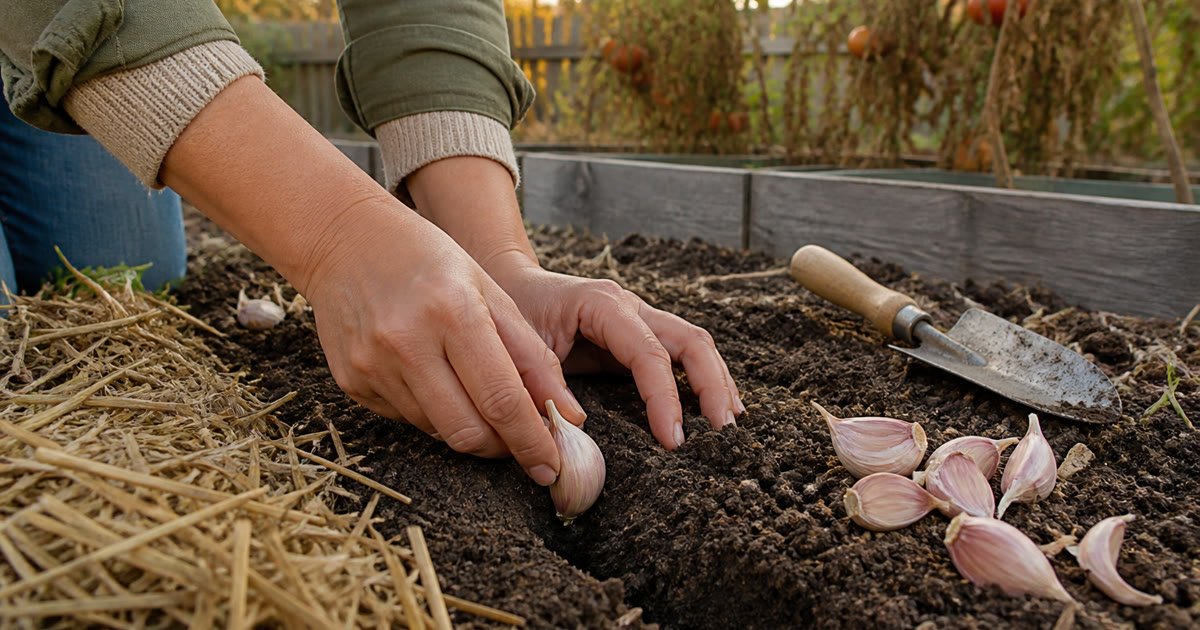
- Set cloves pointed end up, 2 inches deep (3 inches in cold zones), 4 to 6 inches apart, then mulch 2 to 4 inches of straw after the soil cools.
- Use seed garlic, not grocery bulbs. Hardnecks such as Music suit Zones 3 through 7. Softnecks such as Inchelium Red suit milder winters.
Why Plant Garlic in Fall, Not Spring
Garlic is not a spring bulb crop. Cloves need a long stretch of cold soil to split into a full bulb. Fall planting gives them that chill while roots establish. Spring planting usually produces a single round or a small, poorly divided bulb.
Winter Chill Builds Larger Bulbs
Garlic needs several weeks of soil near 40°F (typically 32 to 50°F) before it will divide. That cold, called vernalization, tells the clove to form a bulb instead of a single round.
Fall planting puts cloves in while soil is 50 to 60°F: warm enough for roots, cool enough to limit top growth. Roots run for 4 to 6 weeks. Winter then supplies the chill. In spring the plant already has a root system, so leaf growth starts as soon as soil thaws. More leaves mean a larger bulb, because each leaf feeds a wrapper and the energy that fills the cloves.
What Happens When You Plant in Spring
Spring-planted cloves miss most of the winter chill. In Zones 3 through 6, the gap between thawed soil and warm weather is short. Cloves may sprout, but they often form a round, undivided bulb or a cluster of small cloves.
Gardeners who must plant in spring can pre-chill cloves in the refrigerator for 4 to 6 weeks, then set them out as soon as the ground can be worked. Yields still lag. Treat spring planting as a backup, not the plan.
How Fall Roots Carry the Crop Through Winter
After planting, the clove should grow white roots and a short shoot that may or may not break the soil before freeze-up. That is normal. The goal before winter is roots, not a tall green top.
Those roots hold the plant through freeze and thaw. A clove with no fall roots sits in cold, wet ground and is more likely to rot. Plant too early in warm soil and the clove spends energy on leaves that winter will damage.
When to Plant Garlic by USDA Zone
Time garlic from the ground, not from a seed packet. The reliable rule is 4 to 6 weeks before the soil freezes, with soil in the 50 to 60°F range.
Plant 4 to 6 Weeks Before the Ground Freezes
First frost (32°F air) is not the same as frozen ground. In many gardens the top few inches stay workable for 2 to 4 weeks after the first light frost. Garlic wants cool soil, not ice.
Check soil at 2 to 4 inches with a soil thermometer in the morning. 50 to 60°F is the planting band. Above about 65°F, wait. Below 40°F, the window is closing. Look up the average first frost with the Frost Date Lookup, then count backward 4 to 6 weeks. Adjust for low spots and south-facing beds using the frost dates, zones, and microclimates guide.
Zone 3 Through 10 Planting Windows
Use these as starting points, then confirm with soil temperature:
- Zones 3 through 5: mid-September to early October. In Zone 3, aim for the middle of September. In Zone 5, early October is still on time if the ground is open.
- Zones 6 and 7: October. Early October in the colder parts of Zone 6, through late October in Zone 7 as long as soil is in the 50 to 60°F band.
- Zones 8 through 10: November into December. Wait until nights are consistently cool. Soil still in the 70s°F will push green growth instead of roots and chill.
Raised beds and dark containers freeze on a different schedule than in-ground rows. Measure soil in the bed you will plant.
Refrigerator Chilling for Warm-Zone Cloves
In Zones 8 through 10, winter soil may never stay cold long enough for hardneck types, and even some softnecks bulb poorly without a pre-chill. If soil rarely holds near 40°F for a month, chill the cloves before planting.
Place separated cloves in a paper bag in the refrigerator for 4 to 6 weeks, around 40°F. Keep them out of the freezer and away from apples and other fruit that give off ethylene gas. Do not seal them in plastic. After chilling, plant into cool, well-drained soil in November or December. Softnecks still outperform hardnecks in these zones.
Choose Hardneck or Softneck Garlic
The two garden types are hardneck and softneck. Match the type to winter cold, then pick a named variety sold as seed garlic.
Hardneck Garlic for Zones 3 Through 7
Hardneck garlic grows a stiff central stalk and, in late spring, a flowering stem called a scape. Bulbs usually have 4 to 8 large, easy-to-peel cloves, stronger flavor, and shorter storage: about 4 to 6 months. Hardnecks need real winter. They are the default in Zones 3 through 6 and a solid choice in Zone 7.
- Music: a Porcelain hardneck with 4 to 6 large cloves, strong flavor, and excellent cold hardiness. A standard for northern gardens.
- German Extra Hardy: another Porcelain type, very cold-tolerant, with tight wrappers and a long track record in Zones 3 through 5.
Softneck Garlic for Mild Winters and Storage
Softneck garlic does not send up a scape in most gardens. The stem stays flexible, which is why it braids. Bulbs hold more cloves, milder flavor, and longer storage: 8 to 12 months when cured well. Softnecks are the practical choice in Zones 8 through 10. They also grow in Zones 6 and 7. Some Zone 5 gardeners succeed with them under heavy mulch. Zones 6 and 7 can plant both types.
- California Early: an Artichoke-type softneck used widely in mild-winter production. Earlier harvest, milder flavor, good storage.
- Inchelium Red: an Artichoke-type softneck with a large bulb, many cloves, and a mellow flavor. A proven home-garden type that stores well.
Seed Garlic Versus Grocery Garlic
Buy named seed garlic grown for clove size, type, and plant health. That lowers the risk of bringing white rot, nematodes, or virus into the bed. White rot can persist in soil for years and will affect onions and other alliums. Order in summer or early fall. Popular lots of Music, German Extra Hardy, and Inchelium Red sell out. Plan on about 1 pound of seed garlic for a 10 to 15 foot row at 4 to 6 inch spacing. Plant the largest cloves.
Grocery garlic is often treated to delay sprouting. Those cloves may sit in the ground for weeks or never grow well. Much of it is selected for shipping, not for a Zone 4 winter, and a clean-looking clove can still carry disease. Keep seed bulbs whole until planting day in a cool, dry, airy place around 50 to 65°F. Discard cloves that are soft, moldy, or have no firm basal plate.
Garlic is a patient beginner crop once cloves are in. For other easy vegetables, see the beginner guide for Zones 3 through 10.
Prepare the Bed and Plant the Cloves
Garlic fails more often from wet winter soil than from cold. Full sun, drainage, and correct depth matter more than a special fertilizer. The raised-bed soil, depth, and fertilizer guide covers mix and depth in detail.
Soil, Compost, and Raised Beds
Give garlic 6 to 8 hours of direct sun. The bed must drain in winter. Standing water around a clove is enough to start rot. Avoid low spots and heavy clay that puddles. If in-ground soil stays wet, use a raised bed 12 inches or deeper.
Work 1 to 2 inches of finished compost into the top 6 to 8 inches. Skip high-nitrogen fertilizer at planting. Fall nitrogen pushes leafy growth when the plant should be building roots. In spring, when shoots are 4 to 6 inches tall, a light side-dress of compost or a balanced vegetable fertilizer is useful. Stop heavy feeding once plants begin to bulb. Do not plant garlic in the same bed that just grew onions, leeks, or garlic. A 3 to 4 foot raised bed holds 3 or 4 rows at 10 to 12 inches apart.
Split Cloves, Depth, Spacing, and Orientation
Leave seed bulbs whole until planting day, then break them apart by hand. Each clove should stay attached to a piece of the basal plate (the flat, root-forming end). Do not peel the clove skin. Plant the same day if you can. Do not soak seed garlic.
Set each clove pointed end up, basal plate down.
- Depth: 2 inches of soil over the top of the clove in most gardens. In Zones 3 through 5, 3 inches. Measure to the tip of the clove, not to the bottom of the hole.
- Spacing: 4 to 6 inches between cloves. Use 4 inches for smaller softneck cloves, 6 inches for large Porcelain hardnecks such as Music.
- Rows: 10 to 12 inches apart.
Water In, Then Mulch After the Soil Cools
Water thoroughly after planting so soil settles around each clove. The bed should be moist, not saturated.
Wait to mulch until the soil has cooled, generally after a few frosts or when soil is consistently in the 40s°F. Then apply 2 to 4 inches of clean straw or shredded leaves. Mulching while the soil is still warm can hold heat and moisture around unrooted cloves. In Zones 3 through 5, use the full 4 inches. In Zones 6 and 7, 2 to 3 inches is usually enough. In Zones 8 through 10, a thinner 2 inch layer suppresses winter weeds without trapping rain. The September garden checklist is a good place to schedule this mulch pass.
Grow Garlic in Containers, Then Carry It to Harvest
Garlic will grow in a pot if the container is large, drains freely, and stays outdoors through winter.
Large Pots, Mix, and Winter Protection
Use a container at least 12 inches deep and 12 to 18 inches wide. A 10 to 15 gallon tub holds 6 to 10 cloves. Drainage holes are required. Elevate the pot so water can leave. The same container logic as potatoes in pots applies: volume, drainage, and a mix that does not collapse into mud.
Use a potting mix cut with compost, roughly two parts mix to one part finished compost, with extra perlite if the mix stays wet. Space cloves 4 inches apart, 2 to 3 inches deep, pointed end up. Water in, keep the mix barely moist through fall, and leave the pot outdoors in full sun. Garlic needs the cold. Pots freeze from the sides and bottom. In Zones 3 through 6, group pots against a wall, wrap the sides, and bury the container up to the rim in mulch. An unheated garage is acceptable during the coldest stretches if the pot stays near 32 to 40°F and returns outdoors afterward. In Zones 7 through 10, move pots under an eave during long wet spells.
Spring Shoots, Water, and Hardneck Scapes
Green shoots appear in late winter or early spring. Leave mulch in place unless it is so matted that shoots cannot push through. Water when the top 2 inches of soil are dry. In a dry spring, garlic wants about 1 inch of water a week while it is building leaves. Cut water back 1 to 2 weeks before harvest. Weed by hand. A hoe used too close will nick shallow bulbs.
Hardneck types send up a scape in late spring, usually May or June. Cut or snap it off when it has made one full curl, before it straightens. Removing the scape sends energy into the bulb. Softnecks do not produce a scape in most home gardens. Scapes are edible.
Garlic occupies the bed from fall until early summer, so companion plantings stay light. A spring row of lettuce at the bed edge is reasonable. For pairing ideas, see the companion planting guide.
When to Harvest and How to Cure
Harvest when the lower leaves have browned and about 3 to 5 green leaves remain on top, roughly one-third to one-half of the foliage brown. That is usually June in Zones 8 through 10, June to July in Zones 6 and 7, and July in Zones 3 through 5. Waiting until all leaves die back lets wrappers rot in the soil.
Loosen soil with a fork several inches away from the row and lift. Do not wash the bulbs. Cure in a dry, shaded, airy place at about 70 to 80°F for 2 to 4 weeks. Hang in small bunches or lay on screens. Then trim roots, cut stems to 1 to 2 inches (or braid softnecks), and store in a cool, dry, dark place. Hardnecks keep about 4 to 6 months. Softnecks often keep 8 to 12.
Common Problems to Avoid
Most failed garlic crops trace to wet soil, late planting, grocery cloves, and a nitrogen-heavy bed.
Rot in Wet Soil
Cloves sit in the ground for 8 to 9 months. If that ground stays waterlogged, they turn to mush before spring, or the basal plate rots as the bulb forms. Symptoms are missing plants, a sour smell, and cloves that collapse when lifted. Prevention is drainage: raised beds, no low spots, moderate watering, and mulch that is not a soaked mat. Pull diseased cloves. Plant garlic elsewhere next fall if rot is widespread.
Planting Too Late
A clove planted a week before hard freeze may sprout in spring, but it will not have the root mass of a clove planted on time. Late plants are smaller and more likely to heave out of the soil. If the window is almost closed, plant at the full 3 inch depth, water once, and mulch immediately. That is a salvage approach for Zones 3 through 5 in late October, not the standard method. For next year, set a reminder from the Planting Calendar in late summer, when seed garlic is still in stock.
Supermarket Garlic and Nitrogen-Heavy Beds
Grocery garlic brings sprout inhibitors, the wrong type for the zone, and disease risk. If a bed of supermarket cloves comes up sparse, switch to named seed garlic and rotate if plants looked diseased.
High nitrogen at planting, or a bed fertilized for leafy greens, produces tall, soft tops and modest bulbs. Compost at planting and a light spring feed are enough. If plants yellow in spring while soil is wet, suspect drainage first, not a lack of fertilizer.
Frequently Asked Questions
When should I plant garlic in my USDA zone?
Plant 4 to 6 weeks before the ground freezes, when soil is 50 to 60°F: mid-September to early October in Zones 3 through 5, October in Zones 6 and 7, and November to December in Zones 8 through 10. Confirm frost timing with the Frost Date Lookup. Warm-zone gardeners may need to chill cloves in the refrigerator for 4 to 6 weeks before planting.
Can I plant garlic in spring instead of fall?
You can, but bulbs will be smaller. Spring cloves miss the winter chill that triggers full division. If spring is the only option, refrigerate cloves for 4 to 6 weeks at about 40°F, then plant as soon as the ground can be worked.
How deep and how far apart should garlic cloves be planted?
Set cloves pointed end up, with 2 inches of soil over the tip (3 inches in Zones 3 through 5). Space cloves 4 to 6 inches apart and rows 10 to 12 inches apart. Water in, then mulch 2 to 4 inches of straw after the soil cools.
Should I plant hardneck or softneck garlic?
Plant hardneck (Music, German Extra Hardy) in Zones 3 through 7 for large cloves and scapes. Plant softneck (California Early, Inchelium Red) in Zones 8 through 10, and anywhere you want longer storage and braids. Zones 6 and 7 can grow both. Buy named seed garlic, not grocery bulbs.
Can I grow garlic in a container over winter?
Yes, in a pot at least 12 inches deep with drainage holes and a loose, compost-amended mix. Space cloves about 4 inches apart and leave the pot outdoors so cloves receive winter chill. In cold zones, insulate the sides or mulch up to the rim so the root ball does not freeze solid.
How do I know when garlic is ready to harvest?
Lift bulbs when the lower leaves are brown and several upper leaves are still green, about one-third to one-half of the foliage browned. That is typically June or July, depending on zone. Cure unwashed bulbs in a dry, shaded, airy place for 2 to 4 weeks. Hardnecks store about 4 to 6 months. Softnecks often store 8 to 12 months.