Cucumbers are one of the most popular warm-season vegetables in home gardens, and learning how to grow cucumbers well can mean the difference between a handful of bitter fruits and a steady, abundant harvest. Cucumis sativus thrives in heat, produces quickly, and works in everything from backyard beds to patio containers. The key is getting the timing, soil, and daily care right from the start.
Growing cucumbers successfully comes down to five things: choosing the right variety for the space, planting after the soil is warm enough, building fertile and well-draining soil, watering consistently, and staying ahead of pests and diseases. Miss any one of those, and cucumber plants tend to let gardeners know quickly through wilting, bitterness, or dropped fruit.
This guide covers every step of growing cucumbers, from selecting varieties that match specific garden setups to harvesting at peak flavor. Whether the goal is crisp slicers for summer salads, small pickling cucumbers for homemade pickles, or compact bush types for a balcony container, the approach outlined here applies across USDA Zones 3 through 10. For gardeners who want zone-specific planting dates and soil planning tools, AgrowGuide offers practical calculators and guides that pair well with the advice below.
Key Takeaways
- Cucumber plants need warm soil (at least 70°F), full sun, consistent moisture, and fertile, well-draining soil to produce heavy yields without bitterness.
- Choosing between bush and vining types, and between slicing, pickling, and burpless varieties, determines the best setup for any garden size or growing method.
- Preventing cucumber beetles, powdery mildew, and bacterial wilt early is far easier than treating them after they take hold.
Choose the Right Type and Variety
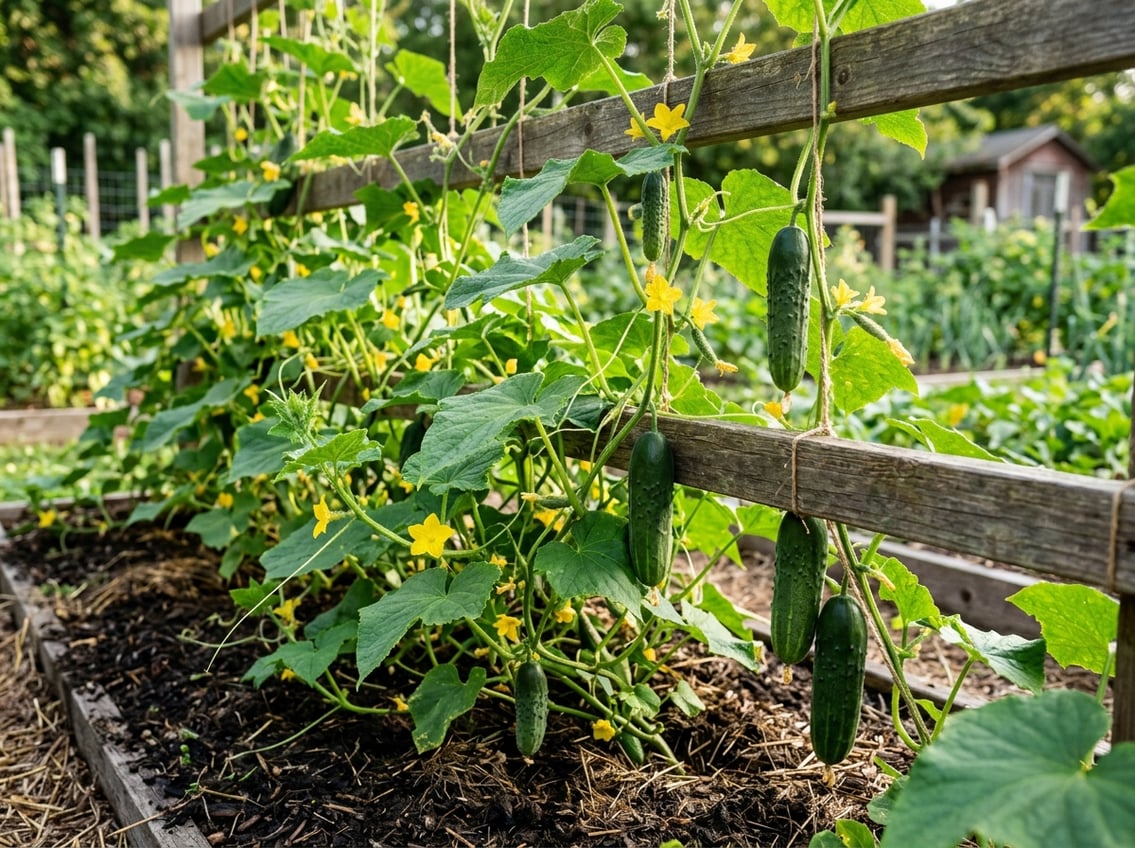
Picking the right types of cucumbers before planting saves time and prevents disappointment later. Variety selection affects plant size, harvest window, disease resistance, and how the cucumbers taste fresh or pickled.
Slicing, Pickling, and Burpless Options
Slicing cucumbers are the classic choice for fresh eating. Varieties like Marketmore 76 and Straight Eight produce smooth-skinned fruits that are best harvested at 6 to 8 inches long. They have mild flavor and tender skins that work well in salads.
Pickling cucumbers are shorter, blockier, and have a crunchier texture that holds up in brine. Boston Pickling and Bush Pickle are reliable pickling varieties. Gherkins, harvested at just 1 to 3 inches, make excellent cornichons.
Burpless cucumbers produce long, thin-skinned fruits with fewer seeds and less cucurbitacin, the compound that causes bitterness. Burpless Bush Hybrid is a solid option for gardeners who want mild-flavored cucumbers without a trellis.
Bush vs. Vining Growth Habits
Vining cucumbers grow on long runners, often reaching 6 feet or more, and produce heavily over a longer season. They do best when trained up a trellis or fence.
Bush cucumbers stay compact at 2 to 3 feet and are suited for containers, raised beds, and small spaces. Yields are slightly lower, but the plants take up much less room.
Best Choices for Containers, Trellises, and Small Spaces
For containers, bush varieties like Bush Pickle or Burpless Bush Hybrid work best in pots at least 5 gallons in size. For trellised growing, vining types like Marketmore 76 or Lemon Cucumber produce well vertically and keep fruit clean and easy to pick.
Disease-Resistant Varieties Worth Considering
Choosing disease-resistant cucumber varieties reduces the need for sprays. Marketmore 76 resists cucumber mosaic virus and powdery mildew. Calypso, a pickling variety, handles downy mildew and angular leaf spot better than most. Checking seed labels for resistance codes is a simple step that pays off all season.
When and Where to Plant for Strong Starts
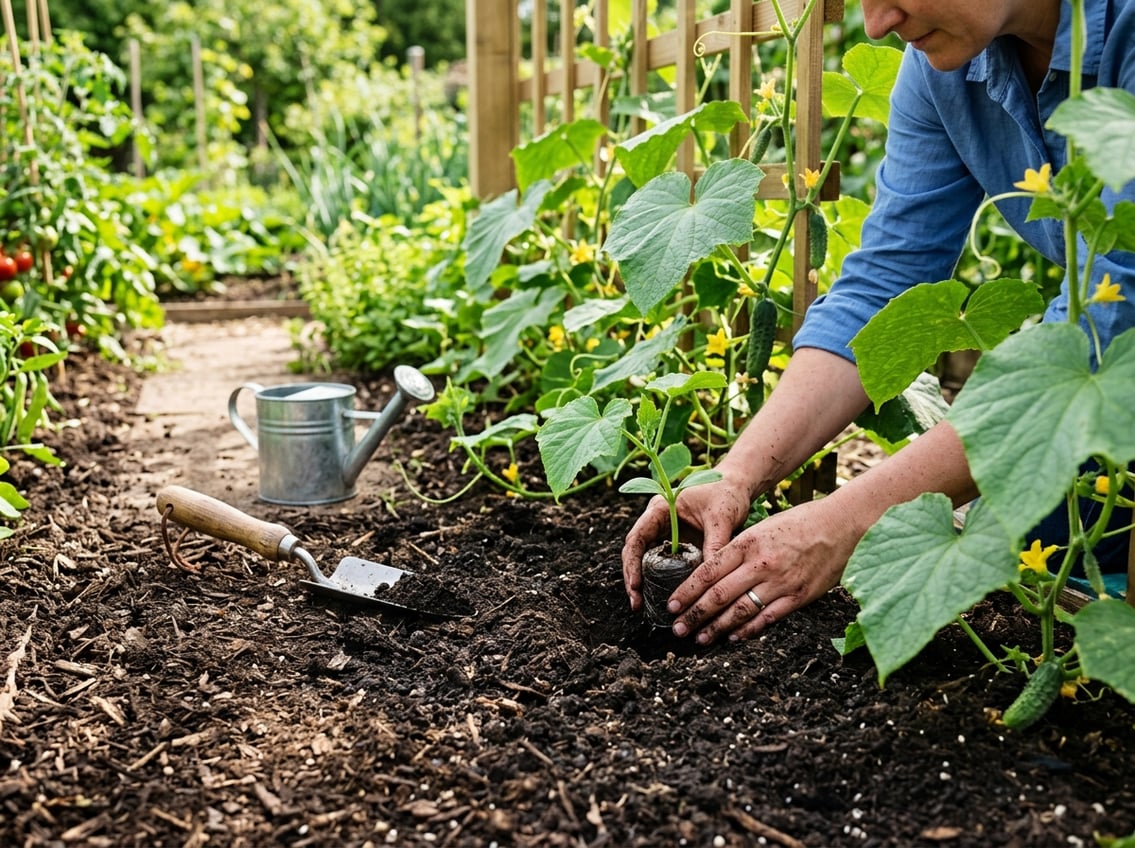
Planting cucumbers at the right time and in the right spot is one of the biggest factors in how well they produce. Cucumber seeds need warm soil, full sun, and protection from late cold snaps to germinate and grow without setbacks.
When to Plant Cucumbers by Frost Date and Soil Temperature
Cucumber seeds will not germinate reliably in cold soil. Wait until the soil temperature reaches at least 70°F, which typically falls two weeks or more after the last frost date. In cooler zones (3 through 5), this can mean late May or early June. In warmer zones (7 through 10), planting can start as early as March or April.
A soil thermometer takes the guesswork out of timing. For gardeners in any USDA zone, AgrowGuide's planting calendar can help pinpoint recommended sowing windows based on local frost dates.
Direct Sowing vs. Transplanting Cucumber Seedlings
Direct sowing cucumber seeds is the simplest method for most gardeners. Plant seeds about 1 inch deep after the soil has warmed. Seedlings typically emerge within 7 to 14 days.
For a head start, sow cucumber seeds indoors about 3 weeks before the transplant date. Use bottom heat around 70°F to speed germination. Cucumber seedlings do not like root disturbance, so biodegradable pots work well. Harden off seedlings before transplanting outside.
Sun, Warmth, and Airflow Requirements
Cucumber plants need full sun, meaning at least 6 to 8 hours of direct sunlight daily. They perform best in temperatures between 70°F and 85°F. Good airflow around plants reduces the risk of fungal diseases like powdery mildew.
Avoid planting in low, shaded, or wind-blocked areas where moisture collects on leaves.
Spacing for Beds, Rows, Hills, and Containers
For row planting, space cucumber seeds 12 to 18 inches apart in rows 4 feet apart. In hills, plant 2 to 3 seeds per mound with 1 to 2 feet between hills. In raised beds, 12 to 18 inches between plants works well when using a trellis.
For containers, one bush plant per 5-gallon pot is standard. Vining types need at least a 7-gallon container and a support structure.
Build the Best Soil and Planting Setup
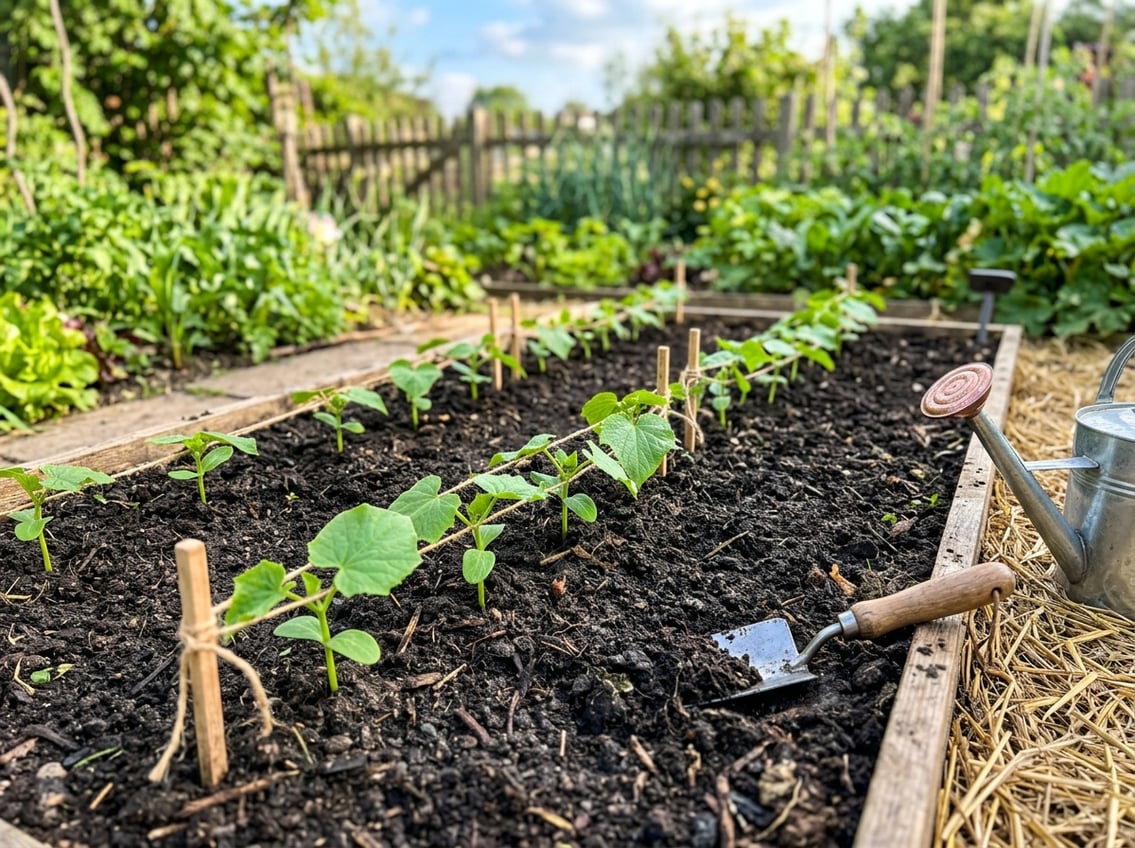
Cucumbers are heavy feeders that grow fast, so the soil needs to be rich, loose, and well-draining from day one. Getting the planting setup right reduces problems with root rot, slow growth, and poor fruit set.
Soil for Cucumbers: Texture, Drainage, and pH
The best soil for cucumbers is loamy, holds moisture without staying soggy, and drains freely. A pH between 6.5 and 7.0 is ideal. A simple soil test from a garden center or cooperative extension can confirm pH and nutrient levels before planting.
Heavy clay soil holds too much water and restricts roots. Sandy soil drains too fast and does not hold nutrients. Amending either with organic matter is essential.
How to Improve Beds With Compost and Organic Matter
Mix 2 to 3 inches of compost or aged manure into the top 6 to 8 inches of soil before planting. Worm castings are another excellent addition that improves both drainage and nutrient availability. These amendments feed the soil biology that cucumbers rely on for nutrient uptake throughout the season.
Planting Depth, Mulch, and Early Protection
Plant cucumber seeds 1 inch deep. After seedlings are established and the soil has warmed to at least 75°F, add 2 to 3 inches of straw or shredded leaf mulch around the base of the plants. Mulch keeps roots cool, retains soil moisture, and suppresses weeds.
In cooler climates or during unexpected cold snaps, a floating row cover protects young plants from chilly nights and early pest pressure.
Raised Bed and Container Considerations
Raised beds warm up faster in spring, which gives cucumbers a slight head start. Fill beds with a mix of quality topsoil, compost, and perlite or vermiculite for drainage. AgrowGuide's Raised Bed Soil Calculator can help estimate the volume of mix needed.
For containers, use a well-draining potting mix rather than garden soil. Containers dry out faster than beds, so consistent watering becomes even more important.
Daily Care for Fast Growth and Better Yields
Once cucumber plants are in the ground, daily attention to watering, feeding, and training determines how productive they become. Cucumbers grow quickly, often producing fruit within 50 to 60 days, so steady care through the season keeps plants healthy and productive.
Watering Without Causing Stress or Bitterness
Cucumber plants need at least 1 inch of water per week, and more during hot or dry stretches. Inconsistent watering is the most common cause of bitter cucumbers. The compound cucurbitacin concentrates in stressed, under-watered fruit.
Water deeply at the base of the plant rather than overhead. Drip irrigation or soaker hoses are the best options because they keep foliage dry and reduce the risk of fungal disease. Water in the morning whenever possible.
For gardeners who want help dialing in the right amount, AgrowGuide's Plant Watering Calculator estimates needs based on plant type, zone, and soil conditions.
Feeding Heavy Feeders Through the Season
Cucumbers are heavy feeders that deplete soil nutrients fast. Start with a balanced fertilizer worked into the soil at planting time. Once vines begin to run, side-dress with compost or apply a balanced liquid fertilizer every 2 to 3 weeks.
Compost tea is a gentle option for mid-season feeding. Avoid over-applying nitrogen late in the season, as it can push leaf growth at the expense of fruit.
Growing Cucumbers Vertically on Trellises
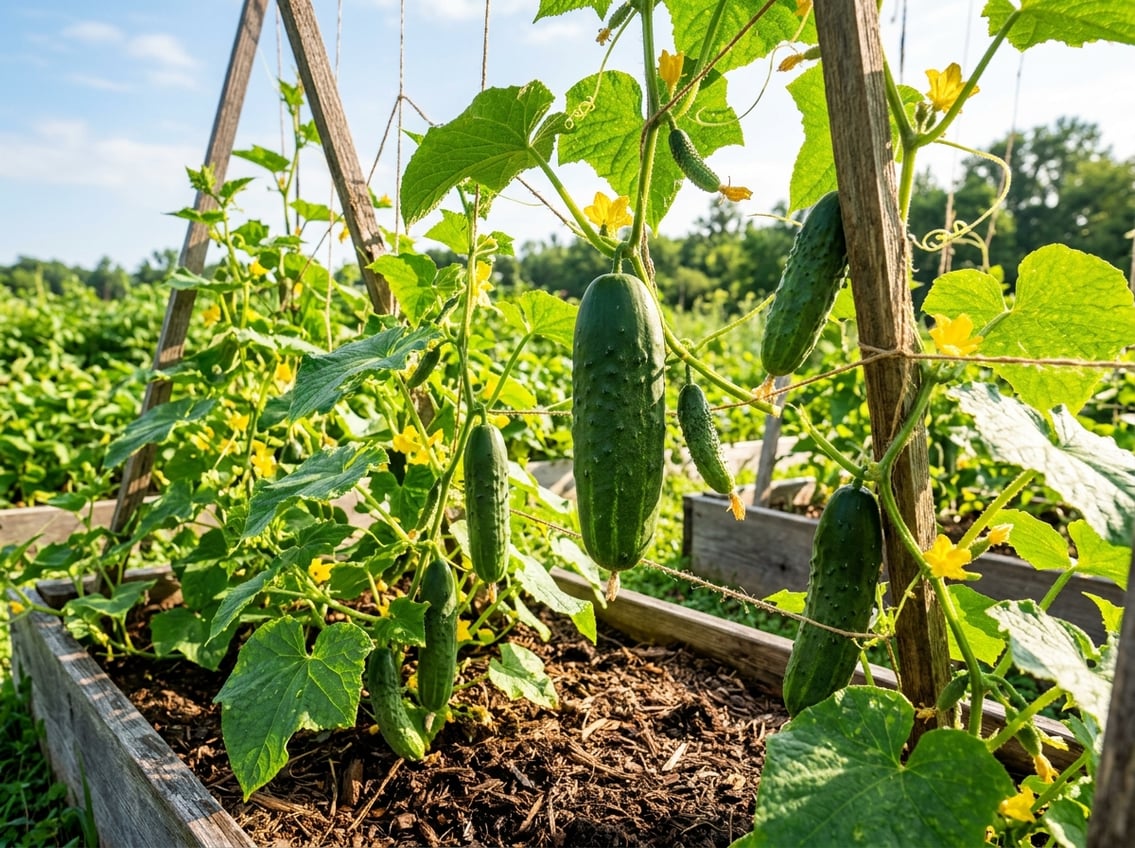
Growing cucumbers vertically saves space, improves airflow, and keeps fruit off the ground where it is prone to rot and pest damage. A simple A-frame trellis, cattle panel, or netting attached to a sturdy frame works well.
Train young vines by gently guiding tendrils toward the support. Most vining cucumbers will climb on their own once they make contact with the structure. Vertical growing is especially valuable in raised beds and small-space gardens.
Pollination, Flowering, and Fruit Set
Cucumber plants produce both male and female flowers. Male flowers appear first, which is normal. Female flowers have a small swelling at the base that becomes the fruit.
Bees and other pollinators transfer pollen from male to female flowers. If pollinator activity is low, hand pollinate by using a small brush or cotton swab to move pollen between flowers. Poor pollination leads to misshapen or aborted fruit.
Planting flowers nearby, such as marigolds or zinnias, helps attract beneficial insects and pollinators to the garden.
Prevent Pests and Diseases Before They Spread
Cucumber plants are vulnerable to a specific set of pests and diseases that can wipe out a harvest in a short time. A prevention-first approach is far more effective than scrambling to treat problems after they appear.
How to Spot and Manage Cucumber Beetles
Cucumber beetles are the most destructive pest for cucumber plants. The striped cucumber beetle has black and yellow stripes, while the spotted cucumber beetle has black spots on a green or yellow body. Both chew holes in leaves, damage flowers, and feed on fruit.
More critically, cucumber beetles spread bacterial wilt (Erwinia tracheiphila). Once a plant is infected, it wilts rapidly and cannot be saved.
To manage cucumber beetles:
- Inspect plants daily, especially at the base of stems and on flowers
- Handpick beetles early in the morning when they are sluggish
- Use a floating row cover at planting and remove it when flowers appear for pollination
- Apply neem oil as a deterrent on young plants
Common Fungal and Bacterial Problems
Powdery mildew shows up as white, powdery patches on leaves and stems. It spreads quickly in humid conditions with poor airflow. Downy mildew causes yellow patches on leaf tops with gray-purple growth underneath.
Angular leaf spot, a bacterial disease, creates water-soaked lesions on leaves that turn brown and papery. All three spread faster when foliage stays wet.
Prevention steps include:
- Spacing plants properly for good airflow
- Watering at the base, not overhead
- Removing and discarding infected leaves immediately
- Choosing resistant varieties like Marketmore 76 or Calypso
Virus Issues and When to Remove Plants
Cucumber mosaic virus (CMV) causes mottled, distorted leaves and stunted growth. There is no cure. Infected plants should be removed and destroyed, not composted, to prevent the virus from spreading. Aphids are the primary vector for CMV, so controlling aphid populations early reduces risk.
Organic Prevention Methods and Helpful Insects
Neem oil, insecticidal soap, and floating row covers form the backbone of organic cucumber pest management. Companion planting with herbs like dill and flowers like alyssum attracts beneficial insects such as ladybugs, lacewings, and parasitic wasps that prey on aphids, whiteflies, thrips, and spider mites.
Squash bugs and squash vine borers also target cucumbers occasionally. Check the base of stems regularly and remove egg clusters by hand.
Rotating cucumber plantings to a new spot each year helps break pest and disease cycles in the soil.
Harvest, Store, and Use Cucumbers at Peak Quality
Knowing when and how to harvest cucumbers makes a significant difference in taste, texture, and how long the plant keeps producing. Cucumbers that stay on the vine too long become seedy, tough-skinned, and bitter.
When to Harvest Cucumbers for Best Texture and Flavor
Harvest timing depends on the variety:
| Type | Ideal Harvest Size |
|---|---|
| Slicing cucumbers | 6 to 8 inches long |
| Pickling cucumbers | 2 to 4 inches long |
| Burpless cucumbers | 8 to 10 inches long |
| Gherkins | 1 to 3 inches long |
Check plants every 1 to 2 days during peak season. Cucumbers grow fast in warm weather, and waiting even a day or two too long can result in overripe, bitter fruit. The best cucumbers are firm, uniformly green, and crisp.
How to Pick Without Damaging the Plant
Use a sharp knife, pruning shears, or garden scissors to cut the stem about a quarter inch above the fruit. Pulling or twisting cucumbers off the vine can tear stems and damage the plant, reducing future production.
Always harvest in the morning when fruits are cool and firm. Keep picking regularly, as leaving mature fruit on the vine signals the plant to slow down or stop producing.
Storing Cucumbers After Harvest
Cucumbers are over 90% water, so they lose moisture quickly after picking. Wrap them tightly in plastic wrap or place them in a sealed container and refrigerate. Stored this way, they keep for 7 to 10 days.
Do not store cucumbers near ethylene-producing fruits like tomatoes or bananas, as ethylene speeds spoilage.
Fresh Eating, Refrigerator Pickles, and Homemade Pickles
Slicing cucumbers are best eaten fresh within a few days of harvest. For refrigerator pickles, slice pickling cucumbers and soak them in a simple brine of vinegar, water, salt, sugar, and spices. They are ready in about 24 hours and keep for several weeks in the fridge.
For shelf-stable homemade pickles, use a water-bath canning method with tested recipes. Prepare cucumbers within a few hours of harvesting for the crispest results.
Frequently Asked Questions
When should I start cucumber seeds indoors versus sowing them directly outdoors?
Start cucumber seeds indoors about 3 weeks before the planned transplant date, using bottom heat around 70°F. Direct sowing outdoors is the easier method and works best once soil temperatures consistently reach 70°F, which is typically 2 or more weeks after the last frost date. In short-season zones (3 through 5), starting indoors gives plants a valuable head start.
What type of soil and sunlight do cucumbers need for strong growth and good yields?
Cucumbers need well-draining, fertile soil with a pH of 6.5 to 7.0, enriched with compost or aged manure. They require full sun, meaning at least 6 to 8 hours of direct sunlight per day. Poor drainage or heavy shade will lead to weak growth and increased disease pressure.
How often should cucumber plants be watered to prevent bitterness and stress?
Cucumber plants need at least 1 inch of water per week, delivered consistently at the soil level. Irregular watering is the primary cause of bitter-tasting cucumbers because it triggers a buildup of cucurbitacin in the fruit. Drip irrigation or soaker hoses are the most reliable watering methods.
What is the best way to grow cucumbers in pots, including container size and support?
Use a container that holds at least 5 gallons for bush varieties and 7 gallons or more for vining types. Choose a well-draining potting mix and place the pot in full sun. Vining varieties in containers need a trellis, cage, or stakes for support, while bush types can grow without one.
How do I train cucumber vines on a trellis, and when should I prune them?
Guide young vines toward the trellis by gently wrapping tendrils around the support structure. Most vining cucumbers will climb naturally once they contact the trellis. Pruning is generally minimal; remove any dead or diseased leaves and pinch off side shoots near the base of the plant to improve airflow and direct energy toward fruit production.
How can I prevent and treat common cucumber pests and diseases like powdery mildew and cucumber beetles?
Use floating row covers at planting to block cucumber beetles early, and remove covers once flowers appear. For powdery mildew, ensure good airflow, water at the base of plants, and choose resistant varieties. Neem oil and insecticidal soap provide organic treatment options for both pests and early fungal issues. Removing and destroying infected plant material promptly prevents further spread.