Zucchini and summer squash are some of the easiest and most productive vegetables a gardener can grow. These warm-season crops thrive in sunny spots and reward growers with an abundant harvest throughout the summer months. With proper planting, consistent watering, and basic pest management, gardeners can expect multiple fruits per plant and may even find themselves sharing extra zucchini with neighbors.
Growing zucchini and summer squash requires minimal space and effort compared to many garden vegetables. Bush varieties work well in small gardens or containers, while vining types can climb supports to save ground space. The plants need warm soil, full sun, and regular moisture to produce their best crop.
Success with these prolific plants comes down to timing and care. Starting seeds when soil temperatures reach at least 65°F prevents germination problems. Regular harvesting when fruits reach 6 to 8 inches keeps plants producing and ensures the best flavor. A few simple practices protect against common pests and diseases that might otherwise reduce yields.
Key Takeaways
- Plant zucchini and summer squash in warm soil with full sun and provide consistent watering for healthy growth
- Harvest fruits when they reach 6 to 8 inches long for the best flavor and to encourage continued production
- Protect plants from squash bugs and vine borers through regular monitoring and early intervention
Understanding Zucchini and Summer Squash
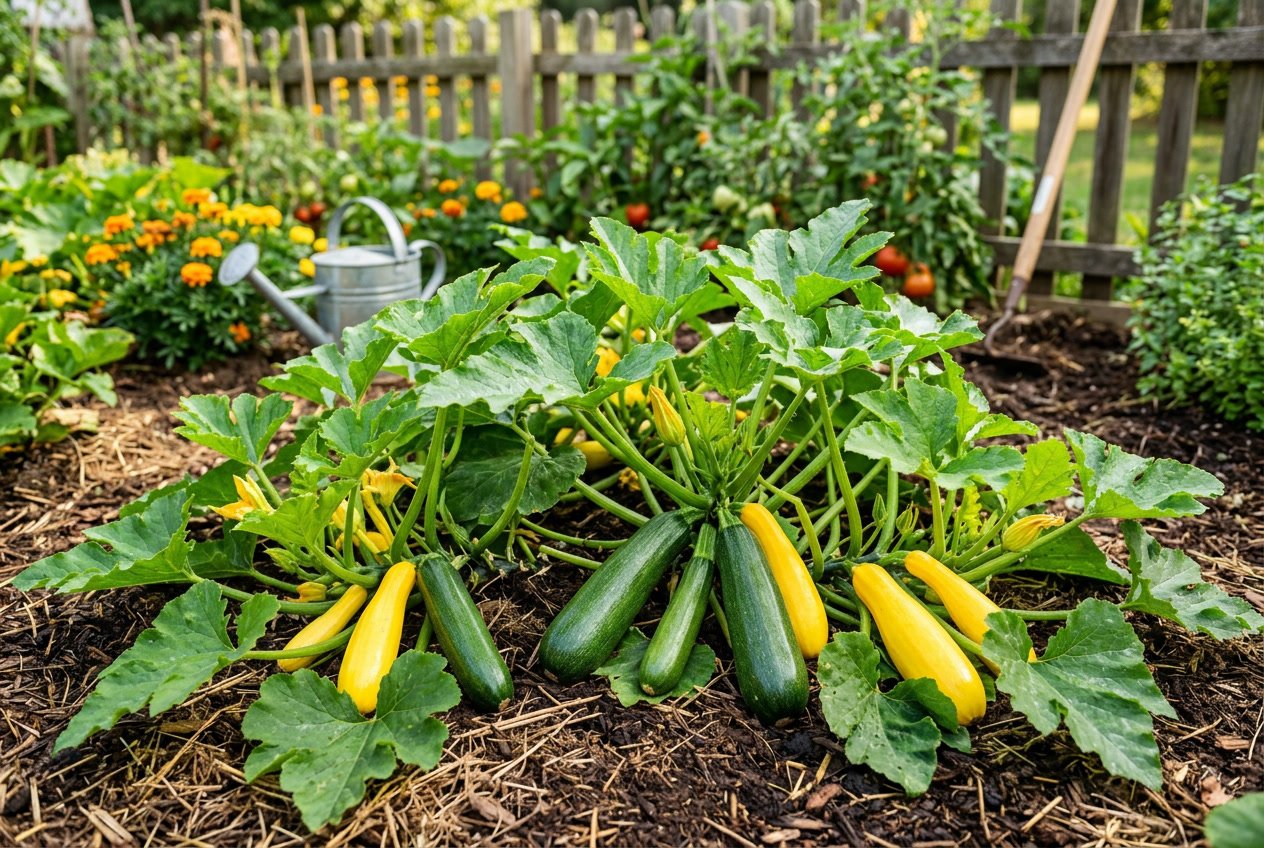
Zucchini and summer squash belong to the same plant species but come in different shapes, colors, and sizes. These warm-season vegetables offer gardeners a range of options from classic green zucchini to golden varieties and uniquely shaped pattypan squash.
Zucchini vs. Summer Squash: Key Differences
Zucchini is actually a type of summer squash, not a separate vegetable. All zucchini are summer squash, but not all summer squash are zucchini. Both belong to the species Cucurbita pepo.
The main difference lies in their shape and appearance. Zucchini typically grows in a cylindrical shape with smooth, dark green skin. Summer squash includes zucchini plus other varieties like yellow squash, crookneck squash, and pattypan squash.
Summer squash gets harvested while immature, when the skin is still tender and edible. The seeds inside remain soft and don't need removal before cooking. This sets them apart from winter squash, which develops hard rinds and gets harvested when fully mature.
Popular Varieties and Types
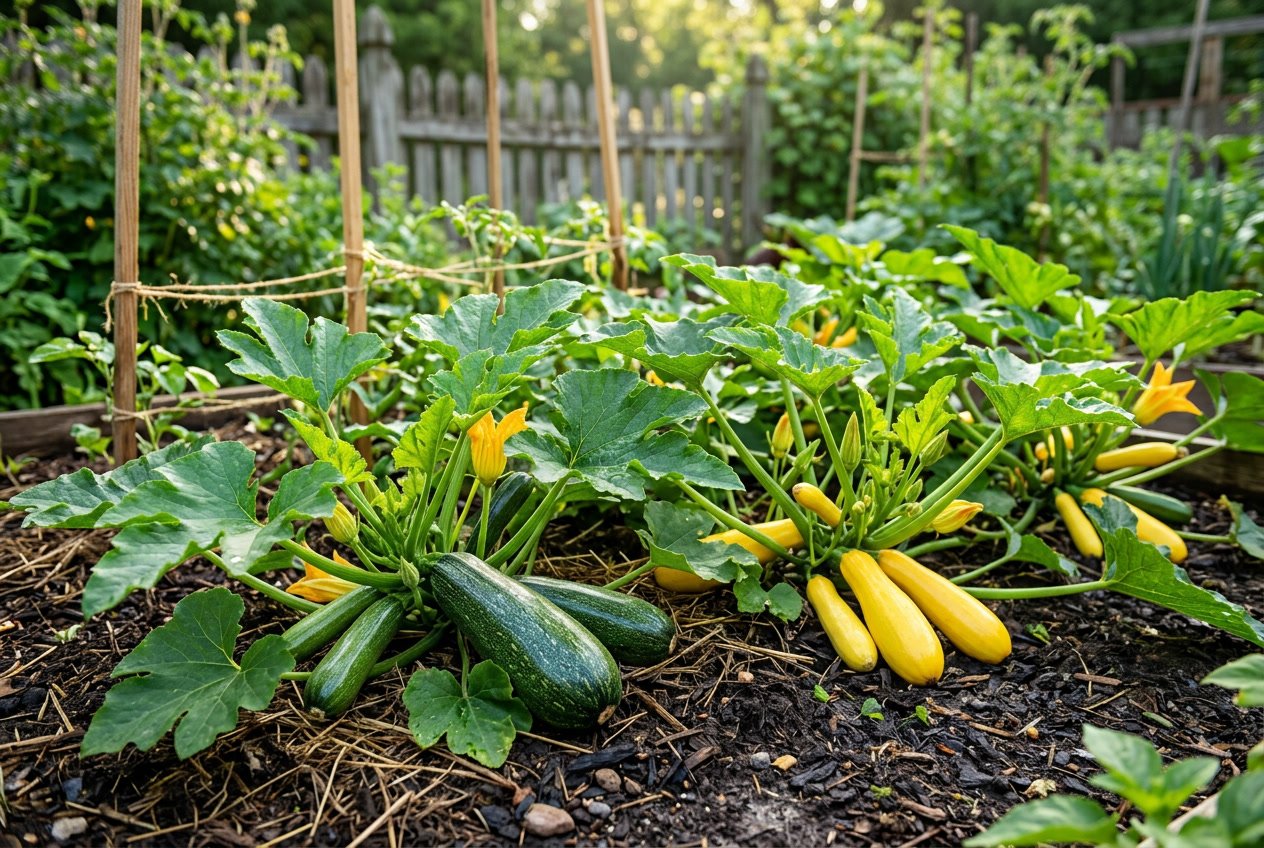
Gardeners can choose from several zucchini varieties. Classic green zucchini remains the most common, but golden zucchini offers a bright yellow color with a slightly sweeter taste. Grey zucchini features dusty grey-green skin and grows well in many climates.
Round zucchini produces ball-shaped fruits perfect for stuffing. Giant zucchini varieties can grow extremely large, though smaller fruits taste better. Tromboncino is a unique climbing variety with long, curved fruits.
Common summer squash types include:
- Yellow squash - Straight or slightly tapered with bright yellow skin
- Crookneck squash - Curved neck with bumpy yellow skin
- Pattypan squash - Flat, scalloped edges resembling a flying saucer
- Cousa squash - Light green with dense, flavorful flesh
Nutritional Value and Culinary Uses
Zucchini and summer squash provide low-calorie nutrition with high water content. One cup of raw zucchini contains only 20 calories but delivers vitamin C, potassium, and fiber. The vegetables also contain antioxidants and small amounts of B vitamins.
Fresh zucchini works well in numerous recipes. Zoodles (spiralized zucchini noodles) serve as a low-carb pasta alternative. Gardeners with abundant harvests often make zucchini bread, a popular sweet quick bread.
Summer squash recipes range from simple sautéed dishes to grilled vegetables and casseroles. The mild flavor pairs well with many ingredients. Smaller fruits (6-8 inches) taste best, with tender skin and sweet flesh. Larger fruits can become watery and develop tougher seeds.
Planning and Preparing Your Growing Site
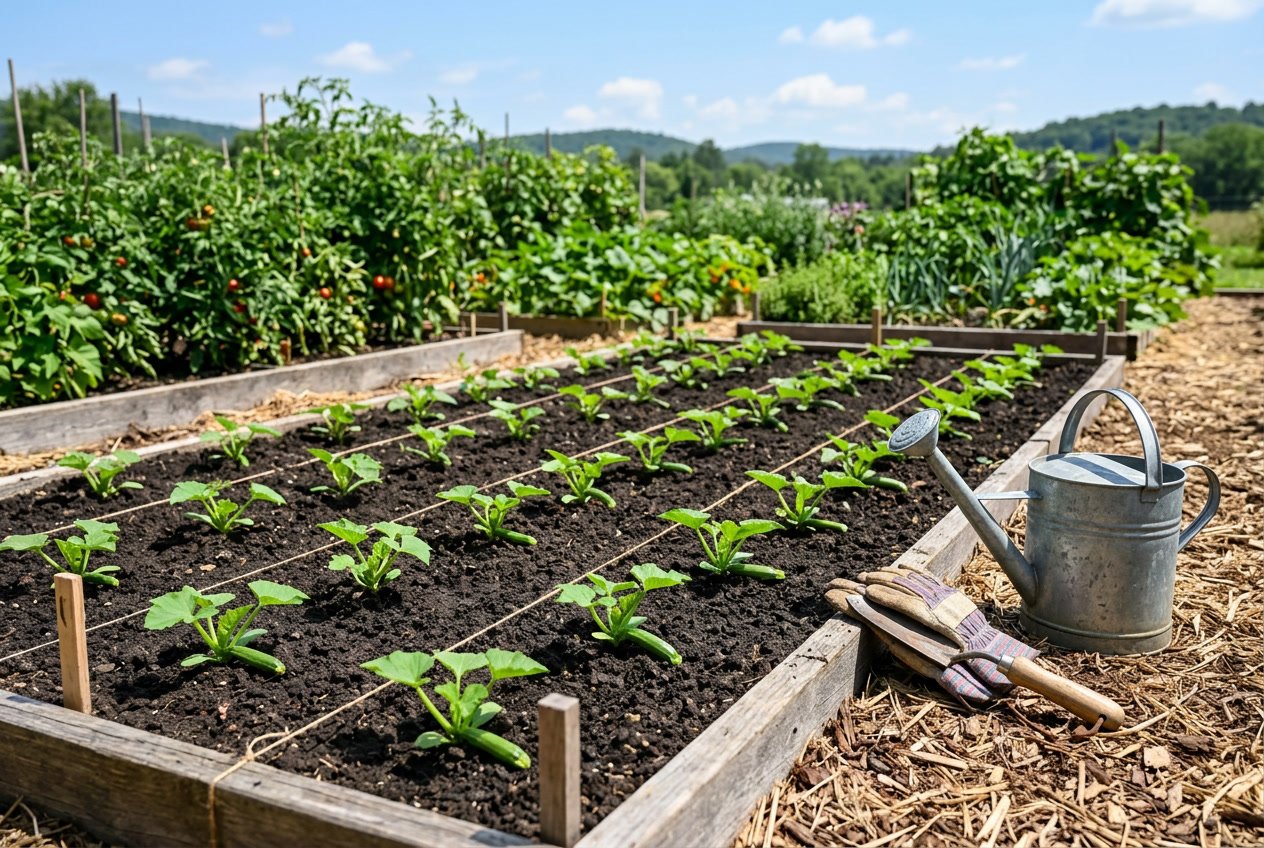
Successful zucchini and summer squash plants start with proper site selection and preparation. The soil needs specific amendments and pH levels, while growers must decide between direct seeding or using transplants based on their climate and growing season length.
Choosing Between Seeds and Transplants
Zucchini seeds work well for direct sowing in most regions once soil temperatures reach 60°F and all frost danger has passed. Seeds should be planted 1 inch deep and spaced 36 inches apart. This method costs less and avoids transplant shock.
Transplants give gardeners in cooler climates a head start on the growing season. They allow harvest 2-3 weeks earlier than direct-seeded plants. Gardeners should start seeds indoors 3-4 weeks before the last frost date in biodegradable pots to minimize root disturbance.
Direct seeding remains the preferred method in warm climates with long growing seasons. The plants establish stronger root systems and adapt better to local conditions. Seeds germinate in 7-10 days when soil stays consistently warm.
Soil Preparation and pH Requirements
Zucchini grows best in soil with a pH between 6.0 and 7.5. Gardeners should test their soil before planting and adjust as needed with lime to raise pH or sulfur to lower it.
The soil must drain well while holding enough moisture to support these heavy feeders. Working 2-4 inches of compost into the top 8-12 inches of soil improves both drainage and water retention. Adding organic fertilizer at planting time provides essential nutrients for rapid growth.
Compost tea applied every 2-3 weeks during the growing season boosts plant health and productivity. The soil should feel loose and crumbly, not compacted. Heavy clay soils need extra organic matter to improve structure.
Raised Beds and Container Considerations
Raised beds offer excellent drainage and warm up faster in spring than ground-level soil. They should be at least 12 inches deep and 4 feet wide to accommodate the spreading habit of zucchini plants. Each plant needs about 9 square feet of space.
Containers must hold at least 5 gallons of soil per plant, though 10-gallon containers work better. Bush varieties adapt more easily to container growing than vining types. Pots need multiple drainage holes to prevent waterlogged roots.
Both raised beds and containers require more frequent watering than in-ground gardens. They also need additional organic fertilizer throughout the season since nutrients leach out faster with regular watering.
How to Plant Zucchini and Summer Squash
Zucchini and summer squash need warm soil and proper spacing to grow strong and produce well. The planting process is simple when gardeners follow basic guidelines for timing, technique, and seed placement.
Timing and Temperature for Planting
Wait until all danger of frost has passed before planting zucchini seeds. The soil temperature should reach at least 60°F, though 70°F is better for faster germination.
Cold soil will cause seeds to rot before they sprout. Most gardeners plant zucchini 1-2 weeks after the last spring frost date in their area.
Summer squash can be planted every 2-3 weeks through midsummer for continuous harvests. This helps prevent having too many squash ready at once.
Planting Techniques: Direct Sowing and Mounds
Direct sowing works best for zucchini and summer squash since these plants don't like their roots disturbed. Gardeners should plant seeds directly in the garden rather than starting them indoors.
Create small mounds of soil about 6-8 inches high and 12-18 inches wide. These mounds improve drainage and warm up faster in spring.
Plant 2-3 seeds per mound to ensure at least one germinates. Once seedlings develop two sets of true leaves, thin to the strongest plant by cutting off the weaker ones at soil level.
Flat planting also works in well-drained soil. This method uses the same spacing but skips the mounds.
Spacing and Depth Guidelines
Plant seeds 1 inch deep in the soil. Deeper planting may delay germination or prevent seedlings from emerging.
Space plants 36 inches apart in all directions to allow for mature plant size. Bush varieties need this full spacing even though they start small.
| Planting Factor | Measurement |
|---|---|
| Seed depth | 1 inch |
| Plant spacing | 36 inches |
| Row spacing | 4-6 feet |
| Seeds per mound | 2-3 |
Rows should be 4-6 feet apart for easy access when harvesting. Proper spacing prevents crowding, improves air circulation, and reduces disease problems.
Essential Care for Healthy Plants
Zucchini and summer squash need consistent water, proper nutrients, and successful pollination to produce well. Getting these basics right prevents common problems like poor fruit set and nutrient deficiencies.
Watering Strategies and Mulching
Summer squash plants need about 1 inch of water per week. Deep watering works better than frequent shallow watering because it pushes roots 6 to 8 inches down into the soil.
Water at the base of plants using drip irrigation or soaker hoses. This keeps leaves dry and reduces disease problems. Wet leaves that stay damp past noon often develop powdery mildew.
A 2 to 3 inch layer of organic mulch helps in several ways:
- Cuts water loss from soil by up to 50%
- Keeps soil temperature steady between 55 and 75°F
- Reduces weeds by 40 to 70%
- Adds nutrients as it breaks down
Straw, shredded bark, or compost all work well as mulch. Keep mulch a few inches away from plant stems to prevent rot.
Feeding and Fertilizing Tips
Soil testing shows exactly what nutrients the plants need before fertilizing zucchini. Most summer squash grows well with a balanced 10-10-10 fertilizer at planting time.
Switch to a 5-10-10 formula when flowers start to appear. This lower nitrogen blend supports fruit production instead of just leaf growth. Side-dress fertilizer in a shallow trench near the drip line, then water it in well.
Organic fertilizer options include well-aged manure, compost tea, and fish emulsion. These feed plants while improving soil structure. Bone meal or rock phosphate adds phosphorus for strong root development.
Consistent watering and calcium availability prevent blossom end rot. This condition shows up as dark, sunken spots on the bottom of fruits. Maintaining even soil moisture fixes most cases without extra calcium supplements.
Pollination and Flower Care
Summer squash plants produce separate male and female flowers on the same plant. Male flowers appear first on long thin stems. Female flowers have a small swelling at the base that becomes the fruit.
Bees and other pollinators transfer pollen between flowers in the morning when flowers are open. Poor pollination causes small, misshapen fruits that stop growing.
Gardeners can hand pollinate if bee activity is low. Use a small brush or cotton swab to move pollen from male flowers to the center of female flowers. This works best between 6 and 10 AM.
Avoid using pesticides when flowers are open. Even organic sprays can harm beneficial insects. If pest control is needed, apply treatments in late afternoon after pollinators have finished their work.
Managing Pests and Preventing Diseases
Zucchini and summer squash face several common pests and diseases that can reduce yields if left unchecked. Quick identification and proper cultural practices keep plants healthy and productive throughout the growing season.
Identifying and Controlling Pests
Squash vine borers pose one of the most serious threats to zucchini plants. These moth larvae tunnel into stems and cause sudden wilting. Gardeners should look for small holes at the base of stems with sawdust-like material nearby. Wrapping the lower stems with aluminum foil or row cover fabric prevents adult moths from laying eggs.
Squash bugs are shield-shaped insects that feed on plant sap and cause leaves to wilt and turn brown. Adults are grayish-brown and gather in groups on the undersides of leaves. Remove eggs (copper-colored clusters) by hand and destroy them. Check plants daily in early summer when these bugs first appear.
Cucumber beetles damage plants by feeding on leaves, flowers, and fruits while spreading bacterial wilt disease. These beetles are yellow with black spots or stripes. Floating row covers protect young plants until they flower. After that, handpick beetles in the morning when they move slowly.
Whiteflies cluster on leaf undersides and weaken plants by sucking sap. A strong spray of water knocks them off, or gardeners can apply neem oil solution every 7-10 days.
Common Disease Issues and Solutions
Powdery mildew appears as white or gray powdery coating on leaves and stems. It spreads quickly in humid conditions with fluctuating temperatures. To prevent powdery mildew, water only at the base of plants using drip irrigation or soaker hoses. Never use overhead watering.
Remove infected leaves immediately and dispose of them in the trash, not compost. Apply diluted neem oil to remaining foliage to slow the spread. Choose resistant varieties labeled "PM resistant" in seed catalogs.
Downy mildew creates yellow blotches on upper leaf surfaces with gray or purple fuzz underneath. It thrives in cool, wet weather. Space plants 18-24 inches apart to improve air circulation.
Blossom end rot causes dark, sunken spots on the fruit ends. This happens from calcium deficiency or inconsistent watering rather than disease. Add crushed eggshells or oyster shell to soil and maintain steady moisture with mulch and regular irrigation.
Cultural Practices for Prevention
Proper spacing and watering form the foundation of disease prevention. Plant zucchini 18-24 inches apart to allow air flow between plants. This reduces humidity around leaves where fungal diseases develop.
Use drip irrigation or soaker hoses instead of overhead sprinklers. Wet foliage invites powdery mildew, downy mildew, and other fungal problems. Water in the morning so any moisture on leaves dries quickly.
Floating row covers protect young plants from cucumber beetles, squash vine borers, and other insects. Remove covers when flowers appear so pollinators can access blooms. Clean up all plant debris at season's end since pests and disease spores overwinter on dead leaves and stems.
Rotate cucurbit crops (squash, cucumbers, melons) to different garden areas each year. This prevents soil-borne diseases from building up. Wait at least two years before planting cucurbits in the same spot.
Companion Planting and Biodiversity Benefits
Companion planting pairs zucchini with specific flowers, herbs, and vegetables that attract helpful insects, repel pests, and improve pollination. These plant partnerships create a healthier garden ecosystem while reducing the need for chemical pesticides.
Best Companion Plants for Zucchini
Flowers provide the most benefits for zucchini. Nasturtiums attract beneficial predators like ladybugs and parasitic wasps while their spicy scent keeps pests away. These vining plants can spread 3 feet wide, so gardeners should plant them 18-24 inches from zucchini.
Marigolds repel aphids and cucumber beetles above ground while suppressing harmful nematodes in the soil. French marigold varieties work best when planted 12-18 inches from zucchini plants around bed edges.
Sweet alyssum draws in bees for pollination and attracts predatory insects that eat aphids. This low-growing flower doesn't compete with zucchini for space or nutrients when planted 10-12 inches away.
Herbs like dill and oregano offer dual benefits. Dill's umbrella-shaped flowers attract beneficial insects, while oregano's aromatic leaves repel squash bugs. Both should be spaced 12-18 inches from zucchini plants.
Vegetables can also be good companions. Beans add nitrogen to the soil, while corn provides vertical structure. Radishes grow quickly in the space between young zucchini plants.
How to Attract Pollinators and Repel Pests
Flowering companions bring bees and other pollinators essential for zucchini fruit production. Borage, phacelia, and bee balm produce nectar-rich blooms that attract multiple pollinator species. These flowers should be planted near zucchini beds to ensure adequate pollination of the yellow squash blossoms.
Aromatic plants create a scent barrier that confuses or deters common pests. The strong fragrance from marigolds, nasturtiums, and herbs masks the scent of zucchini from squash bugs and cucumber beetles. Plant these companions around the perimeter of beds for maximum protection.
Beneficial predatory insects control pest populations naturally. Sweet alyssum, calendula, and yarrow attract lacewings, hoverflies, and parasitic wasps that feed on aphids and other harmful insects. A diverse planting of these flowers ensures beneficial insects stay in the garden throughout the growing season.
Harvesting and Storing Your Crop
Picking zucchini and summer squash at the right time makes a big difference in flavor and texture. Proper storage methods help keep the harvest fresh for days or even weeks.
Signs of Readiness and How to Harvest
Zucchini plants start producing fruit about 50 to 60 days after planting. The key to great-tasting squash is harvesting early and often.
Ideal Size for Harvesting:
- Standard zucchini: 4 to 8 inches long
- Round varieties: About the size of a billiard ball
- Yellow summer squash: 4 to 6 inches long
Gardeners should check plants every day or two once fruiting begins. Squash grows fast and can become oversized in just a couple of days. Larger fruits develop tough skins and a mushy, stringy texture inside.
The best way to harvest is with a sharp knife or pruning shears. Cut the fruit from the plant, leaving about 1 inch of stem attached. Never pull or twist squash off the vine, as this damages the plant and reduces future yields.
Look under large leaves during each check. Squash often hides beneath the foliage and can quickly grow too large if missed.
Handling and Storing Fresh Squash
Fresh zucchini and summer squash have delicate skins that bruise easily. Handle each fruit gently during and after harvest to prevent damage.
Store unwashed squash in the refrigerator for 1 to 2 weeks. Place them in a plastic bag with a few holes for air circulation or in the crisper drawer.
For longer storage:
- Cut squash into slices, cubes, or grate it
- Blanch pieces in boiling water for 3 minutes
- Cool quickly in ice water
- Pat dry and pack in freezer bags
- Store in the freezer for up to 3 months
Squash tastes best when used fresh. The texture changes after freezing, making it better suited for cooked dishes like soups, breads, and casseroles rather than raw applications.
Preserving and Enjoying Your Bounty
Summer squash and zucchini grow so quickly that gardeners often harvest more than they can eat fresh. Five proven preservation methods let gardeners store their harvest for months, while creative recipes transform abundant crops into delicious meals.
Freezing, Pickling, and Preserving Methods
Freezing works best for maintaining zucchini quality. Gardeners should cut squash into half-inch slices and blanch them in boiling salted water for one minute. After draining, the slices go into an ice bath to stop cooking. Laying them on a baking tray for flash freezing prevents clumping before transferring to freezer bags. Frozen zucchini lasts up to a year.
Pickling extends shelf life through two methods. Quick pickles last about two weeks in the refrigerator. Standard pickling uses vinegar-based liquid and water bath canning to preserve squash for a year.
Dehydrating creates versatile storage options. Gardeners slice zucchini into quarter-inch rounds and arrange them on dehydrator trays or oven racks set to 150°F. The process takes 2-5 hours until slices become brittle. Dried zucchini stores for a year in airtight containers.
Pressure canning works for low-acid vegetables like summer squash. Gardeners cut squash into desired shapes, pack them into jars with one inch of headspace, and process according to their pressure canner instructions. Canned squash keeps for several months.
Creative Ways to Use Abundant Zucchini and Squash
Zucchini bread remains the most popular way to use excess harvest. Grated zucchini adds moisture without affecting flavor. Bakers can freeze grated zucchini in measured portions for year-round baking.
Zoodles (spiralized zucchini noodles) replace pasta in many dishes. Fresh or frozen zoodles work in stir-fries, salads, and pasta dishes. They cook in just 2-3 minutes.
Summer squash recipes include:
- Grilled slices with herbs and olive oil
- Stuffed squash boats filled with meat and cheese
- Sautéed medleys with other garden vegetables
- Fritters made from grated squash
Baked goods hide shredded zucchini in muffins, cakes, and brownies. The moisture from squash keeps baked items tender. Gardeners can also add zucchini to soups, stews, and casseroles where it absorbs surrounding flavors.
Frequently Asked Questions
Spring planting after the last frost gives zucchini and summer squash the warm soil they need, while container growing requires at least 5-gallon pots with good drainage. Most gardeners direct-sow seeds outdoors, but these plants can also grow vertically with sturdy trellises to save space.
When is the best time of year to plant zucchini and summer squash?
Zucchini and summer squash should be planted after all danger of frost has passed in spring. The soil temperature needs to reach at least 60°F for seeds to sprout well.
In most regions, this means planting happens between late April and early June. Gardeners in warmer climates can start earlier, while those in cooler areas should wait until late May or early June.
A second planting can be done in mid-summer for a fall harvest. This works best in areas with long growing seasons where temperatures stay warm into autumn.
Should zucchini and summer squash be started from seed indoors or direct-sown outside?
Direct-sowing seeds into the garden works best for zucchini and summer squash. These plants have sensitive roots that don't like being disturbed during transplanting.
Seeds should be planted 1 inch deep in warm, fertile soil. Place them 36 inches apart to give the plants room to spread.
Starting seeds indoors is possible but not necessary for most gardeners. If someone chooses this method, they should plant seeds only 2-3 weeks before the last frost date in biodegradable pots that can go directly into the ground.
What soil conditions and spacing do zucchini and summer squash need to grow well in the ground?
Zucchini and summer squash grow best in well-drained soil amended with compost. The soil pH should be between 6.0 and 7.5 for optimal growth.
Plants need full sun exposure for at least 6-8 hours per day. They require plenty of space, with seeds or transplants placed 36 inches apart in all directions.
The soil should stay moist but not waterlogged. Good drainage prevents root rot and other diseases that affect squash plants.
How can zucchini be grown successfully in containers, and what pot size is recommended?
Container-grown zucchini needs pots that are at least 5 gallons in size, though 10-gallon containers work even better. The container must have drainage holes in the bottom to prevent water from pooling.
Use a high-quality potting mix rather than garden soil. Container plants dry out faster than those in the ground, so they need checking daily and watering when the top inch of soil feels dry.
Compact or bush varieties work better in containers than vining types. Container plants also need regular feeding with a balanced fertilizer since nutrients wash out faster with frequent watering.
Can zucchini be trained to grow vertically, and what support system works best?
Zucchini can be trained to grow vertically using sturdy support structures. This method saves space and keeps fruit off the ground where it's less likely to rot.
A trellis or cage made from strong wire or wood works well for vertical growing. The support needs to be at least 5-6 feet tall and firmly anchored in the ground to handle the plant's weight.
Gardeners should gently tie the main stem to the support as the plant grows. Vining varieties adapt better to vertical growing than bush types, though both can be trained upward with proper support.
What are the most common zucchini growing problems, and how can they be prevented or fixed?
Powdery mildew appears as white patches on leaves and stems. Good air circulation between plants and watering at soil level rather than overhead helps prevent this fungal disease.
Blossom end rot shows up as dark, sunken spots on the fruit ends. This happens when plants don't get consistent water or lack calcium in the soil. Regular watering and adding compost prevents this problem.
Poor pollination causes fruit to start growing but then turn yellow and shrivel. Hand-pollinating flowers with a small brush solves this issue when bees aren't active enough. Squash vine borers tunnel into stems and can kill plants quickly, but wrapping the base of stems with foil or row covers keeps these pests away.