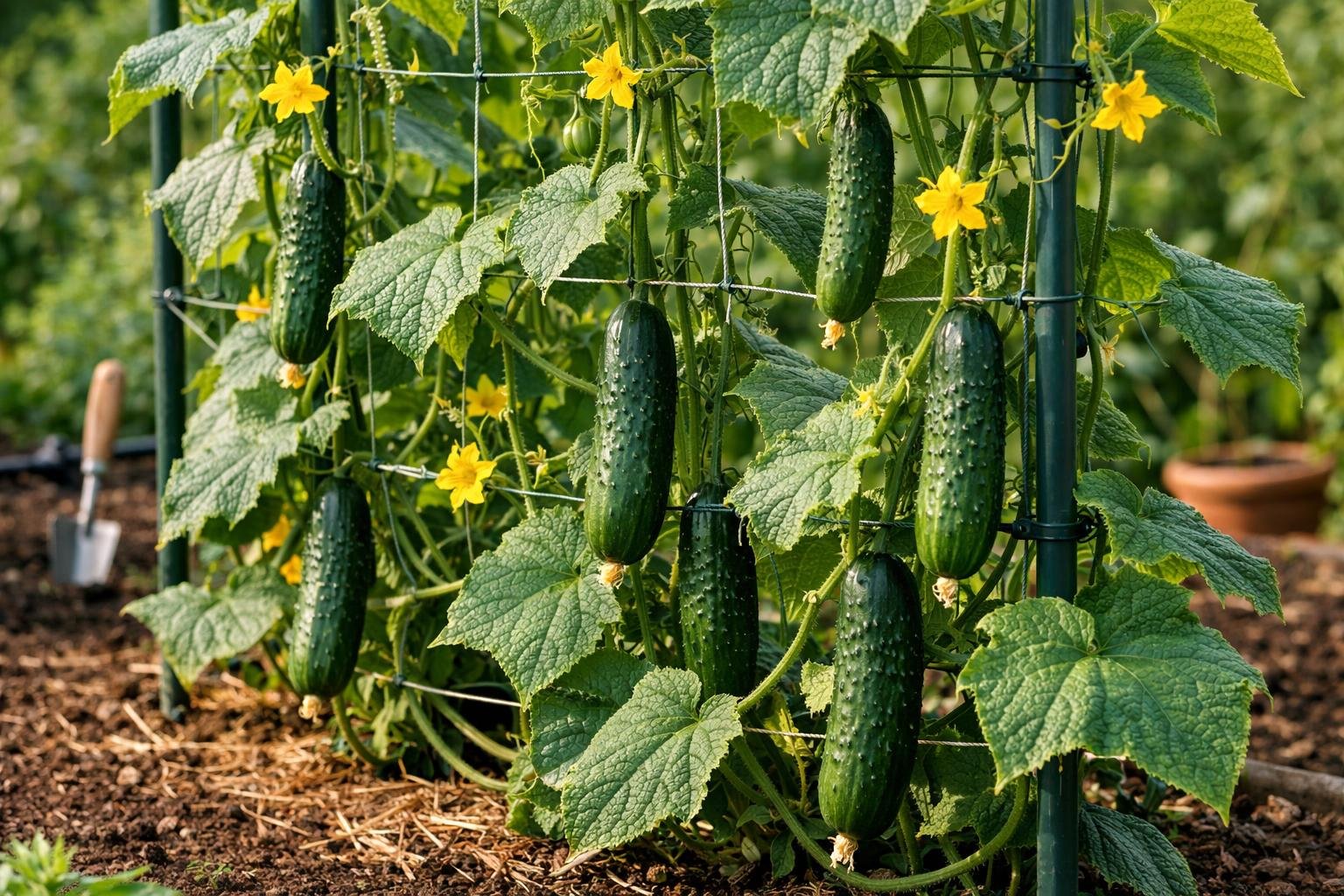
Cucumbers are a favorite in home gardens, but their sprawling vines can quickly take over precious space and create a tangled mess on the ground. Growing cucumbers vertically on a trellis or support structure saves space, increases yields, and produces healthier plants with fewer diseases. Instead of letting vines crawl across the soil where they're vulnerable to pests and rot, gardeners can train them to climb upward using simple support systems.
Vertical cucumber growing isn't complicated, but it does require some planning. The right trellis type, proper planting techniques, and basic training methods make the difference between a struggling plant and a productive vine that produces straight, clean cucumbers all season long. This method works well in both ground gardens and containers, making it accessible for gardeners with limited space.
This guide covers everything needed to grow cucumbers vertically, from selecting the best varieties and building sturdy supports to training vines and maximizing harvest. Whether working with a small patio or a full garden bed, vertical growing transforms how cucumbers are cultivated and harvested.
Key Takeaways
- Growing cucumbers vertically saves garden space, improves air circulation, and makes harvesting easier
- A sturdy trellis about five feet tall works best, with A-frame structures offering the best balance of support and accessibility
- Cucumber plants need full sun, consistent watering, fertile soil, and gentle training to climb their supports successfully
Benefits of Growing Cucumbers Vertically
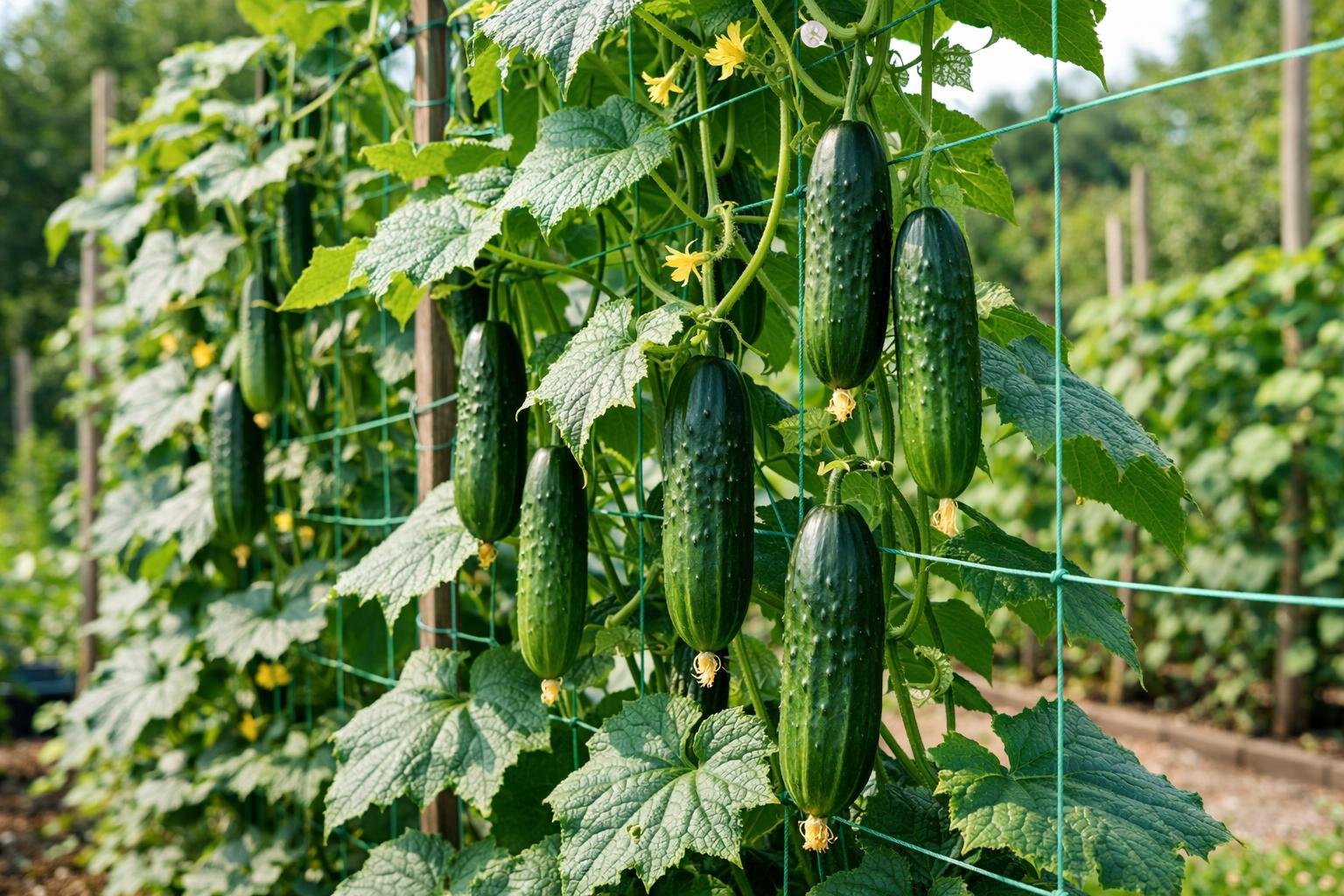
Growing cucumbers vertically transforms the way gardeners approach their cucumber harvest. This method offers practical advantages in space management, plant health, fruit quality, and daily garden maintenance.
Space Saving and Yield Maximization
Vertical cucumber growing allows gardeners to produce more food in less ground area. A single trellis takes up about one square foot of ground space while supporting multiple plants that would otherwise spread across several feet horizontally.
This space efficiency means gardeners can fit more crops into small garden beds or containers. The vertical structure also lets cucumber leaves spread out and capture more sunlight from top to bottom. Better sun exposure leads to stronger photosynthesis and increased fruit production.
Container gardeners benefit especially from vertical methods. A large pot with a five-foot trellis can support vining cucumbers that would be impossible to grow in the same space using traditional ground methods. The upward growth pattern also reduces the need for extensive weeding since the plants occupy less ground area.
Improved Air Circulation and Disease Prevention
Air flows freely around cucumber plants when they grow upward on supports. This circulation keeps leaves dry and prevents moisture from sitting on plant surfaces.
Fungal diseases and rot develop quickly on cucumbers grown flat on the ground where moisture accumulates. Vertical cucumber gardens experience significantly fewer disease problems because air moves through the foliage constantly. The leaves dry faster after rain or watering.
Plants grown on trellises also avoid direct contact with soil-borne diseases. Ground-level pests find it harder to reach vertical plants. The elevation creates a natural barrier that protects developing fruit from soil moisture, insects, and fungal spores that live in garden dirt.
Cleaner, Straighter Fruit
Cucumbers hanging from vines grow straight downward due to gravity. This natural positioning eliminates the curved or misshapen fruit that develops when cucumbers rest on the ground.
Clean cucumbers are another major benefit. Fruit that hangs in the air never touches soil, mulch, or wet ground. This means no mud spots, no yellowing from ground contact, and no need to scrub dirt off before eating.
The straight growth also makes cucumbers easier to spot during harvest time. Gardeners can see the fruit clearly rather than searching through ground-level foliage where cucumbers hide under leaves.
Easier Harvesting
Vertical cucumber gardens put the fruit at eye level and within easy reach. Gardeners can walk along the trellis and pick ripe cucumbers without bending, kneeling, or searching through tangled vines on the ground.
This upright positioning saves backs and knees. Older gardeners or those with mobility issues find vertical harvesting much more comfortable than ground-level picking.
The visibility of hanging cucumbers also helps prevent overripe fruit. When cucumbers are easy to see, gardeners harvest them at the right time. This regular picking encourages the plant to produce more fruit throughout the growing season.
Choosing the Best Cucumber Varieties for Vertical Growth
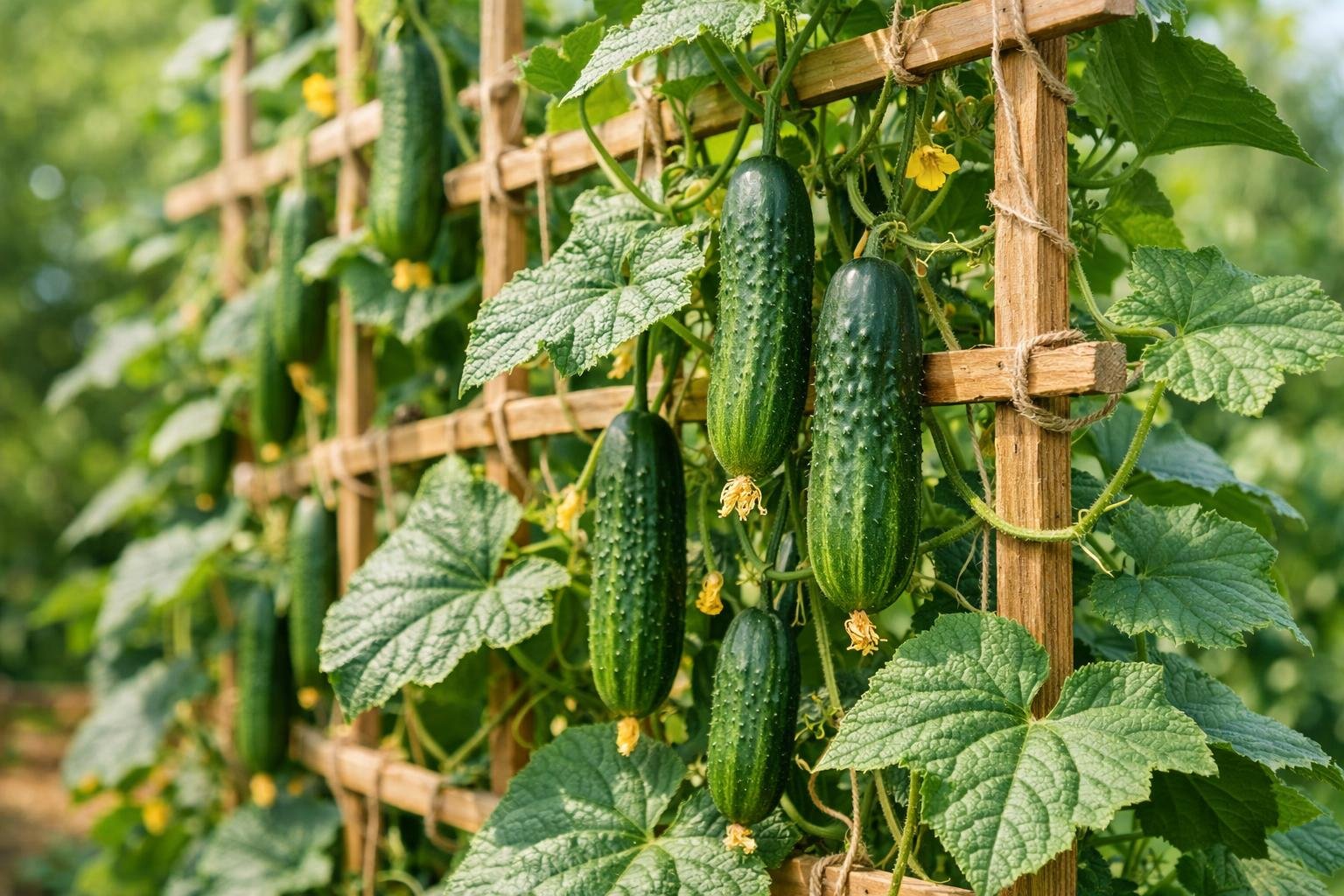
Not all cucumber varieties work well for vertical growing. Vining types naturally climb and produce more fruit on a trellis, while bush varieties stay compact and work better on the ground.
Vining vs. Bush Cucumbers
The main difference between these two types comes down to growth habit and space needs. Vining cucumbers send out long runners that can reach 6 to 8 feet or more. These varieties have tendrils that grab onto supports and pull the plant upward.
Bush cucumbers grow in a compact mound, usually staying under 2 to 3 feet wide. They don't produce long vines and lack the climbing ability needed for vertical growing.
Key differences:
- Vining cucumbers: Long runners, natural climbers, need 5+ feet of vertical space
- Bush cucumbers: Compact growth, no climbing ability, better for containers or ground growing
Always check seed packets for terms like "vining" or "climbing" when selecting varieties for a trellis. Bush types labeled as "compact" or "patio" won't provide the vertical growth needed.
Recommended Varieties for Trellising
Several vining cucumber varieties perform well on vertical supports. Marketmore 76 produces straight, 8 to 9 inch fruits and resists common diseases. Armenian cucumber, technically a melon, grows extremely long fruits and climbs vigorously on any support structure.
Lemon cucumber creates round, yellow fruits on strong vines that handle trellising well. This variety offers mild, sweet flavor and adds visual interest to the garden.
Boston Pickling works well for vertical growing and produces heavy yields of small cucumbers. Straight Eight, another reliable choice, creates uniform 8-inch fruits on disease-resistant vines.
English cucumbers, also called greenhouse types, have thin skins and few seeds. These long, slender varieties need support and thrive on vertical structures.
Pickling, Slicing, and Specialty Types
Slicing cucumbers grow 6 to 10 inches long with thick flesh and mild flavor. These varieties work well for fresh eating and salads. Most slicing types have vining growth habits that suit vertical growing.
Pickling cucumbers stay smaller, usually 3 to 6 inches at harvest. These varieties produce bumpy skins and crisp texture ideal for making pickles. Many pickling types vine aggressively and benefit from trellis support.
Specialty cucumbers include unique options beyond standard types. Lemon cucumber falls into this category with its round shape and pale yellow color. Persian cucumbers produce small, crunchy fruits on compact vines that still climb moderately well.
Each type serves different purposes in the kitchen. Gardeners can grow multiple varieties on separate trellises to enjoy different cucumber types throughout the season.
Selecting and Building Vertical Support Structures
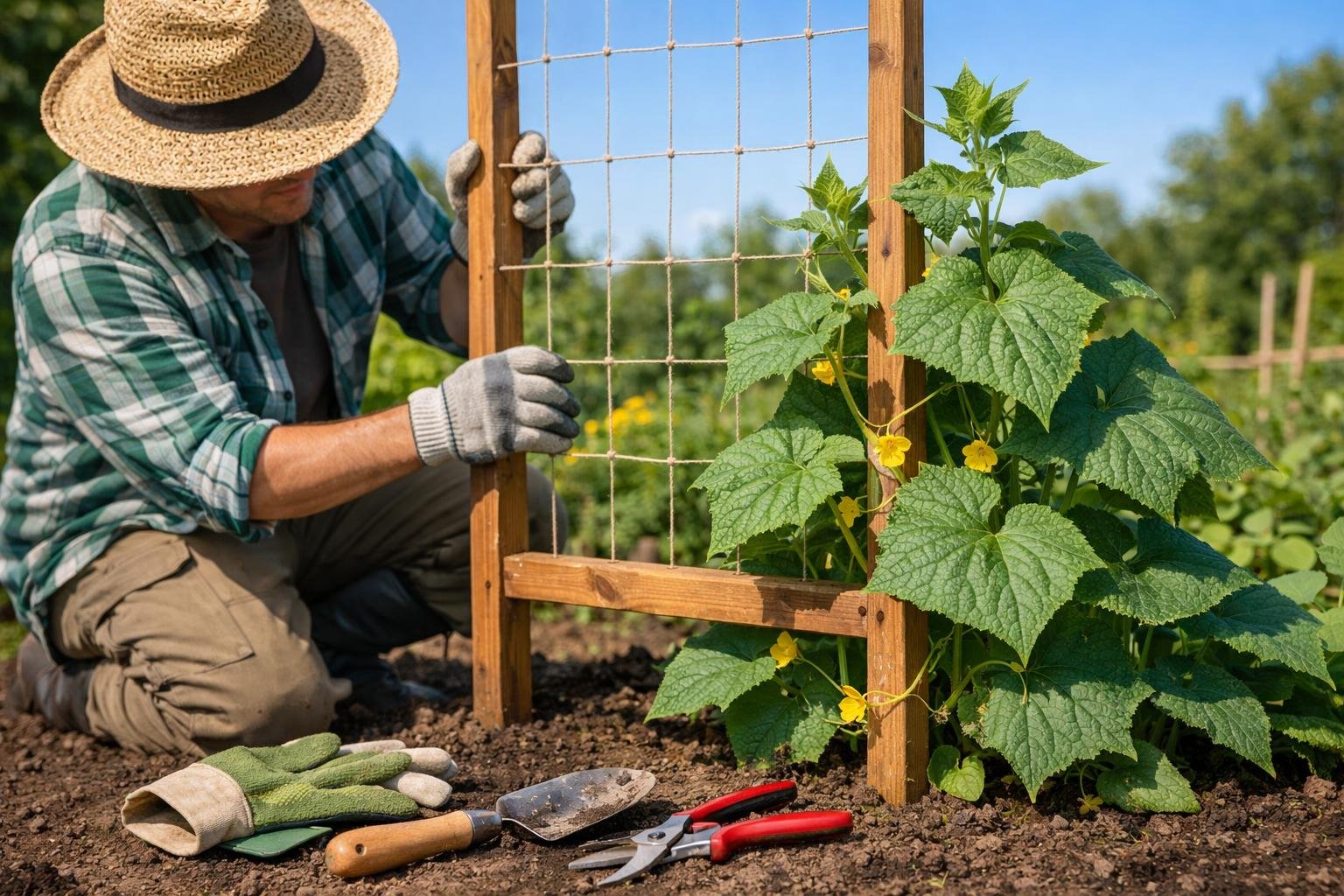
A strong support structure keeps cucumber vines organized and productive throughout the growing season. The right trellis depends on available space, budget, and how many plants need support.
A-Frame Trellis Systems
An A-frame trellis offers stability and access from both sides, making it one of the most practical options for vertical gardening. The structure stands independently without needing fence or wall support. Gardeners can reach cucumbers easily from either side during harvest.
These frames typically stand 5 to 6 feet tall and span 3 to 4 feet wide at the base. The angled design provides natural strength against wind and heavy fruit loads. Most A-frames use wooden posts or PVC pipes as the main supports with wire mesh, string, or netting stretched between them.
Building a basic A-frame requires two sets of posts joined at the top and spread apart at the bottom. The posts should be secured at least 8 to 12 inches into the ground for stability. Wire mesh or sturdy netting gets attached to both sides, creating climbing surfaces for the vines. This design works well in raised beds or directly in garden soil.
Other Trellis Types and Support Options
Grid trellises attach flat against walls or fences and save horizontal space in small gardens. They work well but can trap cucumbers between the trellis and wall, making harvest difficult.
Arch trellises create attractive garden features while supporting vines overhead. They require proper anchoring to handle the weight of mature plants. Tomato cages offer a quick solution for single plants but may need stacking for adequate height.
Chicken wire frames provide an affordable cucumber trellis option with easy installation. The wire gives tendrils many attachment points. However, cucumbers sometimes grow through the holes and become stuck as they expand.
| Trellis Type | Best For | Height Needed |
|---|---|---|
| Grid | Space-limited areas | 5-6 feet |
| Arch | Aesthetic appeal | 6-7 feet |
| Tomato cage | Single plants | 4-5 feet (stacked) |
| Chicken wire | Budget projects | 5-6 feet |
DIY vs. Commercial Trellises
Commercial trellises arrive ready to install and often include detailed assembly instructions. They feature consistent quality and predetermined sizes that fit standard garden spaces. Prices range from $20 for basic models to over $100 for premium options.
DIY cucumber trellis projects cost less and allow custom sizing for specific garden layouts. Builders can use reclaimed materials like old fence posts, bamboo poles, or lumber scraps. A homemade A-frame typically costs $15 to $30 in materials.
The main drawback of building from scratch is the time investment and need for basic tools. Commercial options eliminate construction time but limit customization. Gardeners with multiple cucumber plants often find that building one larger DIY structure costs less than buying several smaller commercial trellises.
Planting and Training Cucumbers Vertically
Getting cucumbers established correctly from the start makes vertical growing much easier. Proper soil preparation, strategic planting, and gentle training techniques set up the vines for strong upward growth throughout the season.
Soil Preparation and Location
Cucumbers need extremely fertile soil to support their rapid growth and heavy fruit production. Before planting cucumbers, mix 2-4 inches of compost or aged manure into the top 6-8 inches of soil. Add a balanced fertilizer following package directions to boost nutrient levels.
Choose the sunniest spot available, as cucumbers require 8 hours of full sun daily. When growing cucumbers vertically, position the trellis so vines face south for maximum light exposure. Leave enough space around all sides of the structure for easy harvesting access.
The soil should be loamy with good drainage. Sandy soil works if heavily amended with organic matter. Clay soil doesn't drain well enough and should be avoided or improved with compost.
Test soil temperature before planting. The ground must be at least 60°F, though 70°F is better for germination. Use black plastic mulch to warm cold soil if needed.
Seeding and Planting Techniques
Plant cucumber seeds directly in the garden after the last frost date has passed. Space seeds 12 inches apart along the base of the trellis, placing them 1 inch deep in the soil. Plant 2-3 seeds at each spot.
Germination takes 7-14 days in warm soil. Once seedlings reach 2-3 inches tall, thin each cluster to keep only the strongest plant. This spacing gives each vine enough room to climb without crowding.
For earlier harvests, start seeds indoors 3-4 weeks before transplanting. Use seedling trays with one seed per cell and a heat mat to maintain 70°F soil temperature. Young plants transplant well when they have 2-3 true leaves.
Container growing works for a vertical cucumber garden if the pot is large enough. Use containers at least 12 inches deep and wide to accommodate long roots and trellis support.
Training Vines to Climb
Cucumber vines climb naturally using their tendrils, but they often need initial guidance. As shoots grow, gently wrap them around the trellis structure in an upward spiral pattern. Handle the stems carefully to avoid breaking them.
Use soft materials like twine, fabric strips, or garden string to loosely tie wandering vines to the support. Place ties just below a leaf joint where the stem is stronger. Check ties weekly and loosen or remove them if they start constricting the growing stem.
Key training steps:
- Start when vines reach 6-8 inches long
- Guide main stems upward first
- Secure vines loosely to prevent damage
- Remove ties once tendrils grip firmly
Some cucumbers grow too heavy for the vine alone. Support large fruits with fabric slings tied to the trellis. Cut old t-shirts or use netting to create these hammocks.
Prune secondary vines from the bottom 5-7 leaf joints to direct energy into upward growth. Always prune lateral shoots rather than main stems, cutting close to the main vine with bypass pruners. Remove lower fruit if needed to strengthen vine development early in the season.
Caring for Vertical Cucumber Plants
Vertical cucumber plants need consistent moisture, regular feeding, and occasional pruning to produce healthy fruits throughout the growing season. These three care practices work together to support strong vine growth and maximize harvest quality.
Watering and Mulching Strategies
Cucumbers need consistent moisture to produce crisp, non-bitter fruits. The soil should stay evenly moist but never waterlogged or soggy.
Gardeners should water deeply 1-2 times per week, providing about 1-2 inches of water. During hot weather, vertical cucumbers may need water every other day. The best time to water is early morning, which allows foliage to dry before evening and reduces disease risk.
Mulch helps maintain even soil moisture and regulates soil temperature. A 2-3 inch layer of organic mulch like straw, shredded leaves, or grass clippings works well around the base of plants. Keep mulch a few inches away from the stems to prevent rot.
Container-grown vertical cucumbers dry out faster than in-ground plants. These need daily watering checks and may require twice-daily watering during peak summer heat.
Fertilizing for Vertical Growth
Cucumbers are heavy feeders that need regular nutrients to support their fast growth and fruit production. They require a balanced supply of nitrogen, phosphorus, and potassium.
Apply a balanced fertilizer (such as 10-10-10) at planting time by mixing it into the soil. Once vines start flowering, switch to a fertilizer lower in nitrogen and higher in phosphorus and potassium to support fruit development rather than just leaf growth.
Feed plants every 2-3 weeks throughout the growing season. Gardeners can use either granular fertilizers worked into the soil or liquid fertilizers applied during watering. Container-grown cucumbers need more frequent feeding, typically once per week, since nutrients wash out faster through drainage holes.
Pruning for Health and Productivity
Pruning vertical cucumbers improves air circulation and directs energy toward fruit production. Remove any yellow, damaged, or diseased leaves as soon as they appear to prevent problems from spreading.
For vining varieties, gardeners can pinch off the growing tip once vines reach the top of their support structure. This encourages side shoot development and more flowering sites. Remove the first few lateral shoots that appear at the base of the plant to strengthen the main vine.
Thin out excess foliage if vines become too dense. This allows better light penetration and air movement through the plant. Cut stems cleanly with sharp pruning shears rather than tearing them, which can damage the plant and invite disease.
Managing Pests and Diseases in Vertical Cucumber Gardens
Vertical cucumber gardens offer better air circulation and cleaner growing conditions, but pests and diseases can still cause problems. Good plant spacing, regular monitoring, and quick action help keep vertical cucumber plants healthy and productive through the growing season.
Preventing and Treating Common Pests
Cucumber beetles rank as the most serious pest threat to vertical cucumber gardens. These yellow-green insects with black spots or stripes feed on leaves, stems, and fruits while spreading bacterial wilt disease.
Row covers provide the best protection for young plants during their first few weeks of growth. Gardeners should remove covers once flowers appear to allow pollination. Daily inspection of plants helps catch beetle problems early when hand-picking remains effective.
Common control methods include:
- Insecticidal soap or neem oil applied directly to beetles
- Yellow sticky traps placed near plants to monitor populations
- Pyrethrin-based sprays for severe infestations
Aphids cluster on the undersides of cucumber leaves and suck plant sap. A strong spray from a garden hose knocks these small green or black insects off plants. Ladybugs and other beneficial insects eat aphids naturally. Insecticidal soap works well for larger populations.
Spider mites appear as tiny red or yellow dots that create fine webbing on leaves. These pests thrive in hot, dry conditions. Regular water sprays help prevent infestations. Predatory mites or miticides control established populations.
Addressing Disease Issues
Powdery mildew shows up as white, powdery spots on leaves, stems, and sometimes fruits. This fungal disease spreads quickly in humid conditions with poor air flow. Vertical gardening reduces this problem but doesn't eliminate it completely.
Infected leaves should be removed and destroyed immediately. Fungicides containing neem oil or sulfur treat active infections. Spacing plants properly on the trellis allows air to move freely between vines.
Downy mildew creates yellow spots on upper leaf surfaces with grayish-purple mold underneath. This disease thrives in cool, wet weather. Remove infected leaves right away and improve air circulation around plants. Fungicides with chlorothalonil or mancozeb help control spread.
Bacterial wilt causes leaves to wilt during the day and recover at night. Eventually the entire plant dies. Cucumber beetles spread this disease, so controlling these insects prevents most bacterial wilt problems. No treatment exists for infected plants, which must be removed and destroyed.
Maintaining Plant Health
Strong, healthy plants resist pests and diseases better than stressed plants. Consistent watering provides about 1 inch of water per week through deep soaking once or twice weekly. Well-drained soil prevents root rot while maintaining adequate moisture.
Fertilizing with compost or balanced fertilizer (10-10-10) during the growing season supports vigorous growth. Side-dress plants once or twice with these nutrients. Avoid over-fertilizing, which creates weak, disease-prone growth.
Mulch around the base of vertical cucumber plants suppresses weeds and maintains even soil moisture. A 2-3 inch layer of organic mulch also regulates soil temperature.
Regular monitoring catches problems early when they're easiest to fix. Check plants at least twice weekly for:
- Pest activity on leaves and stems
- Discolored or spotted leaves indicating disease
- Wilting that suggests water stress or bacterial wilt
- Proper vine attachment to the trellis
Crop rotation prevents soil-borne diseases from building up. Avoid planting cucumbers, melons, or squash in the same location for at least three years.
Harvesting and Maximizing the Vertical Cucumber Yield
Harvesting cucumbers at the right time and maintaining consistent care practices directly impacts the total yield from vertical plants. Regular picking and proper feeding keep plants producing throughout the growing season.
When and How to Harvest
Cucumbers reach harvest size 6 to 8 weeks after planting, depending on the variety. Check plants daily once they start producing because cucumbers grow fast in warm weather.
Harvest cucumbers when they reach their expected size for the variety. Slicing cucumbers are typically ready at 6 to 8 inches long. Pickling types should be picked at 3 to 5 inches. The fruit should be firm and have a bright, even color.
Use garden shears or a sharp knife to cut cucumbers from the vine. Leave a small piece of stem attached to the fruit. Pulling or twisting can damage the vine and reduce future production.
Pick all mature cucumbers even if you don't need them right away. Leaving overripe fruit on the vine signals the plant to stop producing new cucumbers. Yellow, oversized cucumbers drain energy from the plant.
Harvest in the morning after dew dries but before the heat of the day. This is when cucumbers have the most moisture and crispness.
Tips for Consistent Production
Regular harvesting every 2 to 3 days keeps plants producing new flowers and fruit. The more you pick, the more the plant produces.
Add fertilizer in early summer and again in fall to maintain soil fertility. A balanced, slow-release fertilizer or compost tea supports continued growth. Spread it around the base of plants without touching the stems.
Water consistently throughout the season. Plants need 1 inch of water per week minimum, more during hot spells. Inconsistent watering causes bitter fruit and reduced yields.
Remove any diseased or damaged leaves promptly. Good air circulation around vertical plants helps prevent problems, but regular inspection catches issues early. Healthy foliage supports better fruit production.
Frequently Asked Questions
Growing cucumbers vertically raises common questions about equipment, techniques, and specific growing conditions. These answers help gardeners make informed decisions about their vertical cucumber projects.
What are the best trellis designs for vertical cucumber growth?
A-frame trellises work best for most gardeners because they provide sturdy support and allow easy access from both sides. These structures stand about 5 feet tall and give cucumber vines plenty of room to spread out while keeping the fruit visible for harvesting.
Grid trellises attached to walls or fences save space in smaller gardens. They work well but can create issues if cucumbers grow between the trellis and the fence behind it.
Arches offer an attractive option that makes harvesting simple. Chicken wire frames cost little to build and give plants plenty of grip, though they require more monitoring as vines grow. Tomato cages work in a pinch but often need stacking to reach adequate height.
The best choice depends on garden size, number of plants, and harvest access needs. Stronger structures handle the weight of mature plants better than flimsy options.
Can cucumbers be grown vertically in containers, and if so, how?
Cucumbers grow successfully in containers when gardeners use large pots that support both the trellis and the plant's long root system. The container must be big enough to prevent tipping as the vine grows heavy with fruit.
Container soil dries out faster than ground soil. Gardeners need to water more frequently and check soil moisture daily during hot weather.
Drainage holes are essential to prevent waterlogging. Fertile potting mix gives plants the nutrients they need, though additional fertilizer helps in early summer and fall.
The trellis can be inserted directly into the container or attached to a nearby structure. Vining cucumber varieties work better than bush types for vertical container growing.
What techniques are effective for training cucumbers to climb vertically?
Cucumber vines climb naturally but sometimes need guidance to find the trellis. Gardeners should gently wrap wandering vines around the trellis structure when they head in the wrong direction.
Soft ties made from twine, string, or fabric strips help secure stubborn vines. The tie should go under a leaf joint for better support without damaging the stem. These ties may need removal as stems thicken to prevent choking.
Starting when plants are young makes training easier. Once tendrils grab the trellis, vines usually continue climbing on their own.
Heavy fruits sometimes need fabric slings tied to the trellis for extra support. This prevents vines from breaking under the weight but may cause cucumbers to grow curved instead of straight.
What considerations are there for growing cucumbers vertically in raised beds?
Raised beds work well for vertical cucumber growing when the trellis fits properly within the bed dimensions. A-frame structures can be placed directly in the soil of raised beds before planting time.
The bed should be deep enough to accommodate cucumber roots and filled with nutrient-rich soil. Gardeners need to mix in fertilizer, compost, or manure before planting.
Spacing matters in raised beds since space is limited. Plants should be about a foot apart along the trellis base to give each vine room to climb without crowding.
Raised beds often drain faster than ground soil. Watering frequency may need to increase, especially during warm weather. Mulch helps retain moisture and reduces weeding.
The trellis must be sturdy enough not to tip over as plants grow heavy. Securing it to the sides of the raised bed adds stability.
How should one set up a vertical growing system for cucumbers using tomato cages?
Tomato cages provide a quick and cheap option for vertical cucumber growing. However, standard cages are often too small for vigorous cucumber vines.
Gardeners can stack two tomato cages on top of each other to create adequate height. The cages need securing together with ties or clips to prevent separation.
Each cage supports one cucumber plant. Pushing the cage firmly into the soil before planting ensures stability.
Plants may need initial guidance to wrap around cage wires. As they grow, tendrils grab the metal and pull the vine upward.
The main drawback is limited space for vine spread compared to A-frames or grid trellises. Bush cucumber varieties adapt better to cage growing than long-vining types.
What are the optimal conditions for growing cucumbers vertically in the UK?
UK gardeners should plant cucumbers after the last frost passes, typically in late spring. Starting seeds indoors a few weeks earlier gives plants a head start in the shorter growing season.
Cucumbers need at least 8 hours of full sun daily. Choosing the sunniest spot in the garden and facing vines south maximizes light exposure.
Temperature matters since cucumbers prefer 60°F to 90°F. Black plastic mulch helps warm soil in cooler UK climates by absorbing heat during the day.
Consistent watering is critical because UK weather varies. Soil should stay moist but not waterlogged, requiring about an inch of water weekly depending on rainfall.
Protection from wind helps vertical structures stay stable. UK gardeners may need to secure trellises more firmly or choose sheltered locations.
Greenhouse growing extends the season and provides more control over temperature and moisture. This works especially well in northern UK regions with shorter summers.