March brings the perfect moment to prepare gardens for the growing season ahead. The ground begins to thaw, days grow longer, and plants wake up from winter dormancy. This transition period offers a narrow window to complete important tasks before spring fully arrives.
Gardeners should focus on soil preparation, seed starting, pruning shrubs that bloom on new growth, and cleaning up debris left from winter. These activities set the foundation for healthy plants and better harvests later in the year. Some tasks work well in all climate zones, while others depend on local frost dates and soil temperature.
The work done now saves time and effort when the busy planting season begins. Starting seeds indoors gives plants a head start. Testing soil helps gardeners add the right nutrients instead of guessing. Building new beds or spreading mulch now means less work when warm weather hits and outdoor planting takes priority.
Key Takeaways
- March is the ideal time to start seeds indoors, test soil, and build new garden beds before the rush of spring
- Prune shrubs that flower on new growth, spread mulch to suppress weeds, and clean up winter debris to prepare for planting
- Direct sow cold-tolerant crops outdoors in warmer zones while focusing on maintenance tasks that establish a strong foundation for the growing season
March Gardening Priorities
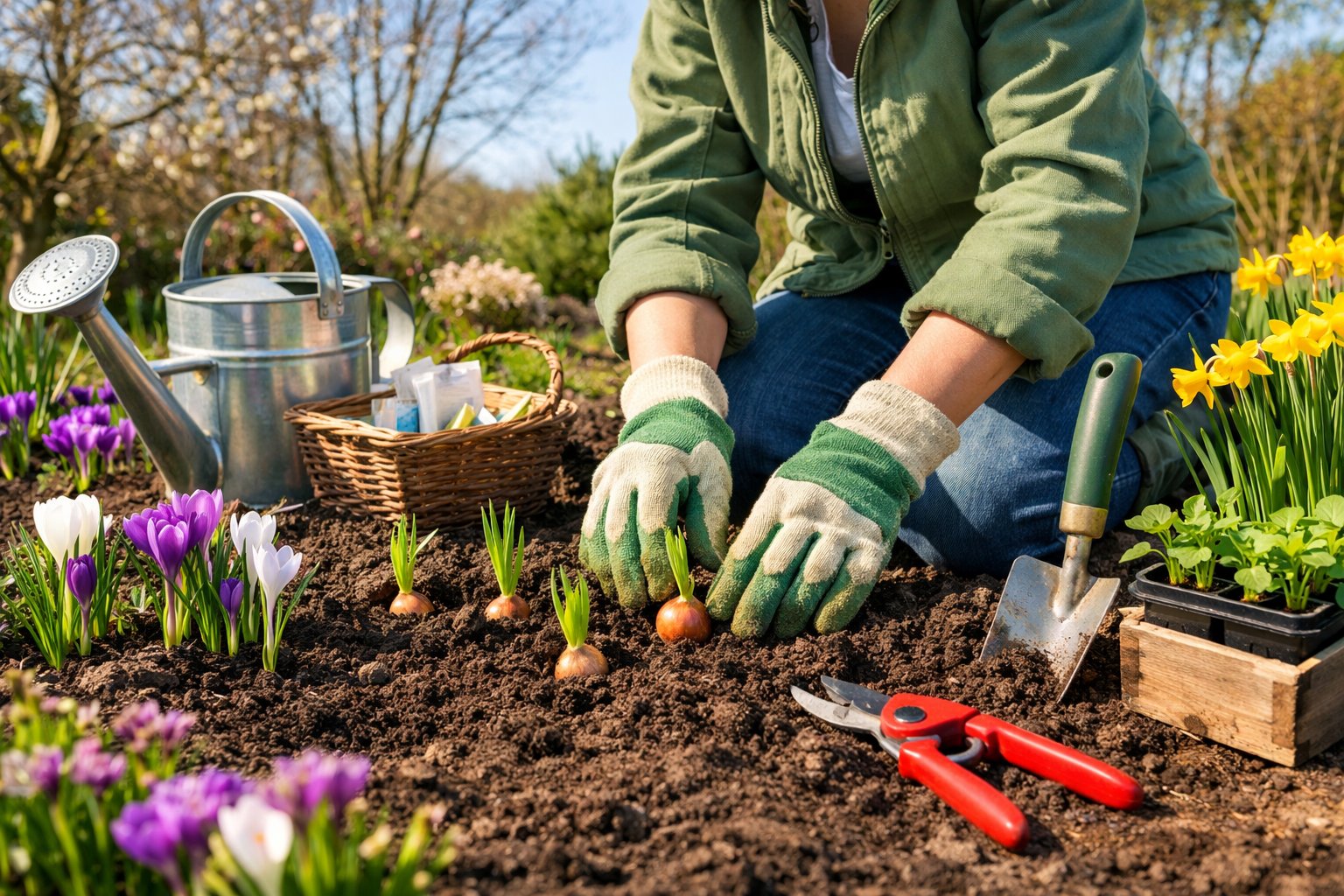
March gardening success depends on organizing tasks around local climate conditions and creating a realistic plan that accounts for unpredictable spring weather. A gardener should focus on understanding their specific frost dates and breaking down tasks into manageable weekly goals.
Review Your March Garden Checklist
A March garden checklist helps organize essential tasks by urgency and weather dependency. The most critical items include seed starting indoors, soil preparation, pruning specific plants, and outdoor planting of cold-hardy crops.
Gardeners should separate their checklist into three categories: tasks that must be done early in the month, mid-month activities, and end-of-month projects. Early March priorities typically include starting seeds indoors for warm-season crops and pruning shrubs that flower on new growth. Mid-month tasks often involve soil testing and bed preparation once the ground thaws. Late March work focuses on direct seeding cold-tolerant vegetables and transplanting hardened-off seedlings.
The checklist should account for indoor and outdoor work. Indoor tasks like seed starting can happen regardless of weather, making them ideal for cold or rainy days. Outdoor work requires dry soil conditions and temperatures above freezing for most activities.
Understand Local Frost Dates
Frost dates determine when a gardener can safely plant different crops outdoors. The last spring frost date represents the average date when freezing temperatures end in a specific area, though actual conditions vary year to year.
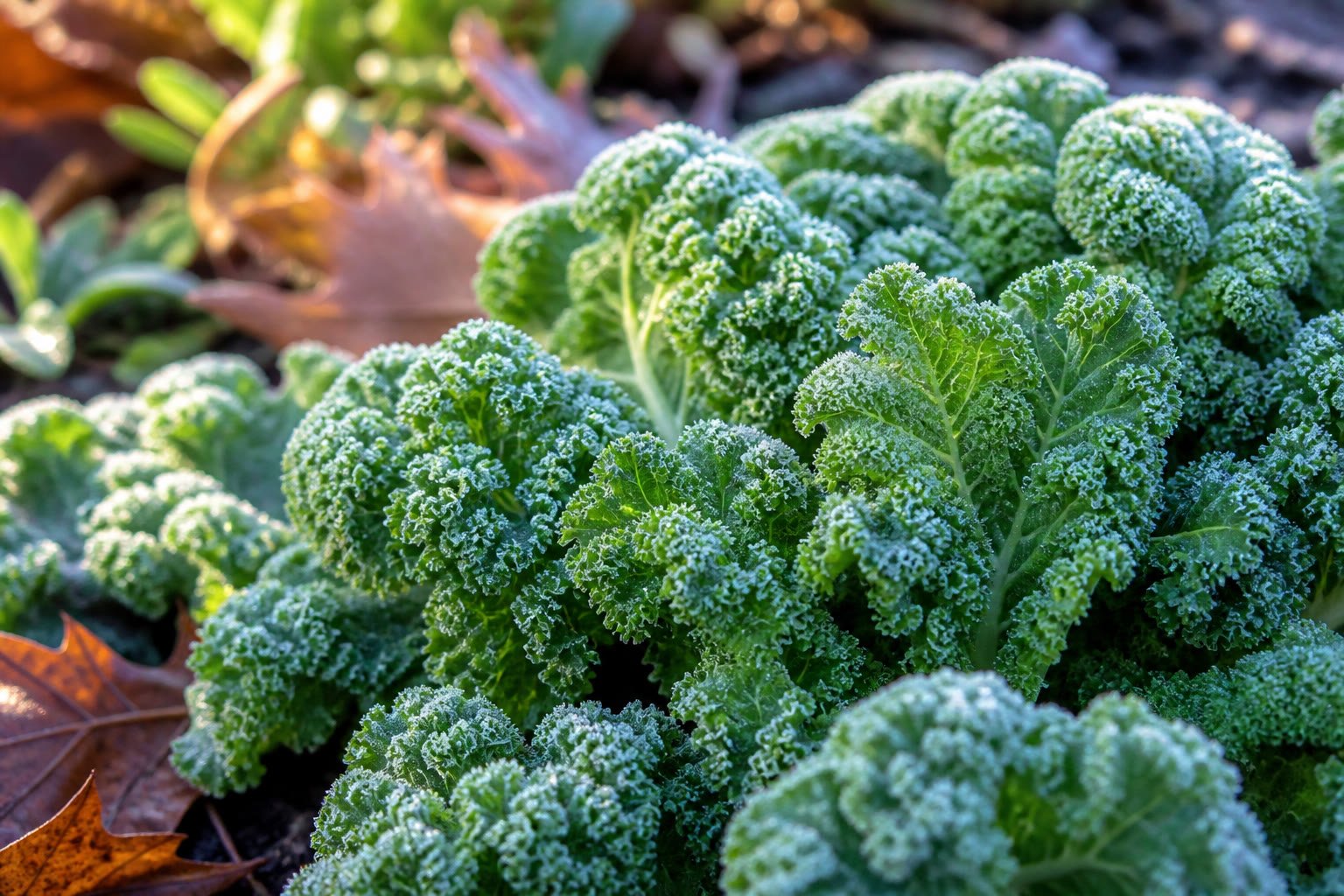
Cold-hardy vegetables like spinach, lettuce, peas, and kale can go into the ground 4-6 weeks before the last frost date when soil temperatures reach 40°F. These crops tolerate light frosts and cold soil. Warm-season plants like tomatoes, peppers, and basil must wait until after the last frost date when soil temperatures stay consistently above 50-60°F.
Gardeners should look up their specific frost dates through local extension offices or gardening resources rather than relying on general zone information. Microclimates within a property can create warmer or colder spots that affect planting times.
Plan Gardening Tasks for Optimal Timing
March gardening requires strategic timing to maximize effort and avoid weather-related setbacks. Tasks should be scheduled based on soil conditions, temperature trends, and plant needs rather than calendar dates alone.
Soil preparation work must wait until the ground thaws and dries enough to work without compacting. A simple test involves squeezing a handful of soil—if it crumbles easily, it's ready to work. If it forms a muddy ball, it needs more time to dry.
Seed starting indoors follows a backward timeline from the last frost date. Most transplants need 6-8 weeks of indoor growth before moving outside. A gardener planting tomatoes after a May 15 frost date should start seeds around March 20-30. Succession planting of quick-growing crops like lettuce and radishes can begin in early March for zones 6 and warmer, with new sowings every 2-3 weeks.
Essential March Garden Maintenance
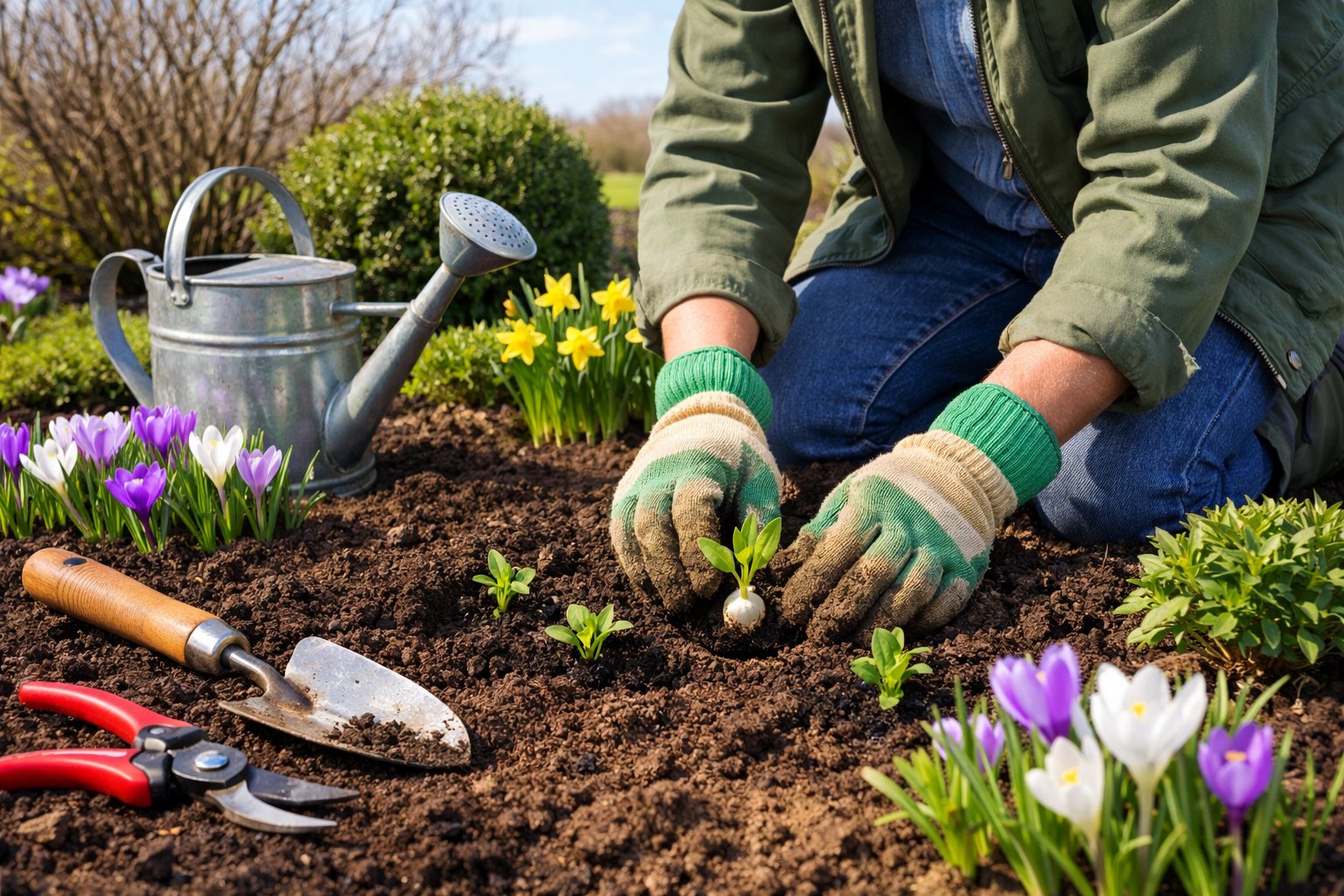
March garden maintenance focuses on clearing away winter debris, preparing beds for planting, and maintaining tools and plants. These tasks set up the garden for healthy spring growth.
Garden Cleanup and Bed Preparation
Winter leaves behind dead plant material, fallen branches, and compacted soil that need removal before new growth begins. Gardeners should rake away leaves and debris from garden beds to prevent disease and pest problems. This also allows soil to warm up faster.
Soil preparation is critical in March. Beds should be cleared of weeds while they're still small and easy to pull. Adding compost or well-rotted manure improves soil structure and adds nutrients. Working organic matter into the top 6-8 inches creates ideal conditions for root development.
A soil test helps determine pH levels and nutrient deficiencies. Results guide decisions about adding lime to raise pH or sulfur to lower it. Testing now means amendments have time to adjust the soil before planting.
Tool Cleaning and Maintenance
March gardening requires functional, clean tools. Pruners, shears, spades, and hoes should be cleaned of dirt and rust using a wire brush and soapy water. This prevents spreading diseases between plants.
Tool maintenance checklist:
- Sharpen blade edges on pruners, hoes, and shears
- Oil moving parts to prevent rust
- Replace cracked or broken handles
- Disinfect cutting tools with rubbing alcohol
- Check irrigation systems for leaks or clogs
Sharp tools make cleaner cuts that heal faster on plants. They also require less physical effort to use. Organizing tools in a shed or garage saves time during busy planting seasons.
Pruning Trees, Shrubs, and Roses
Late winter into early March is ideal for pruning most trees and shrubs before active growth starts. Dead, damaged, or crossing branches should be removed first. Cuts should be made just above outward-facing buds at a slight angle.
Roses need pruning before new growth emerges. Cut back hybrid tea roses to 6-8 inches above ground level. Shrub roses require lighter pruning, removing only dead wood and shaping. Always use sharp, clean pruners to avoid crushing stems.
Spring-blooming shrubs like lilacs and forsythia should not be pruned in March since they flower on old wood. Wait until after they bloom to prune these plants.
Soil and Bed Preparation for Spring
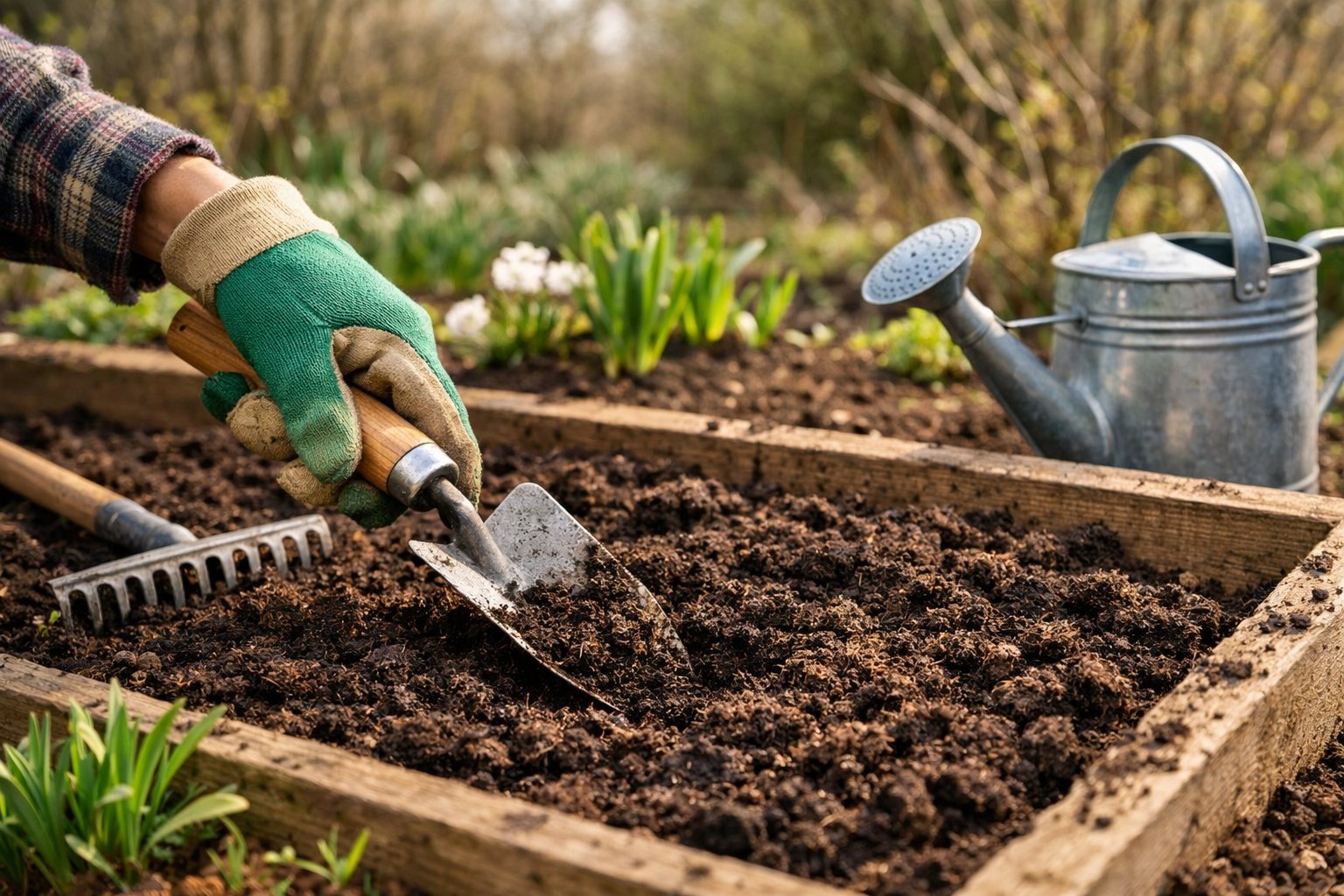
March gardening starts with building a strong foundation through proper soil testing and organic amendments, combined with strategic composting and mulching to protect beds and retain moisture.
Soil Testing and Amendment
Testing soil in March provides critical data about pH levels and nutrient content before planting begins. Gardeners should collect samples from multiple spots in each bed, mixing them together for an accurate reading. Home test kits work well for basic pH checks, while lab tests offer detailed nutrient breakdowns.
Most vegetables thrive in soil with a pH between 6.0 and 7.0. If tests show soil is too acidic, gardeners can add lime to raise the pH. Sulfur lowers pH in alkaline soil. These amendments take several weeks to work, making March the ideal time to apply them.
Adding organic matter improves any soil type. Work 2-4 inches of compost or well-rotted manure into the top 6-8 inches of soil. This increases drainage in heavy clay and boosts water retention in sandy soil. The organic matter also feeds beneficial microorganisms that help plants access nutrients.
Till or dig beds when soil is workable but not waterlogged. Squeeze a handful of soil to test readiness. If it crumbles easily, it's ready to work. If it forms a muddy ball, wait a few more days.
Composting and Mulching Techniques
Fresh compost application in March enriches beds before spring planting. Spread a 1-2 inch layer over garden beds and gently work it into the soil surface. Avoid burying it too deep, as decomposition needs oxygen.
Mulch serves multiple purposes in early spring gardens. Apply 2-3 inches of organic mulch like shredded leaves, straw, or wood chips around plants and over bare soil. Keep mulch pulled back 2-3 inches from plant stems to prevent rot.
The mulch layer suppresses weeds before they germinate and moderates soil temperature during March's unpredictable weather swings. It also reduces water evaporation as temperatures warm. As mulch breaks down over the season, it adds nutrients back into the soil.
Wait to mulch until after the soil warms slightly. Cold, wet soil under early mulch can slow plant growth and encourage disease.
Planting and Sowing in March
March gardening offers the chance to start warm-season vegetables indoors while sowing hardy crops directly in the garden. The key is checking local frost dates to determine which plants can go outside and which need the protection of indoor starting.
Vegetables and Herbs to Start Indoors
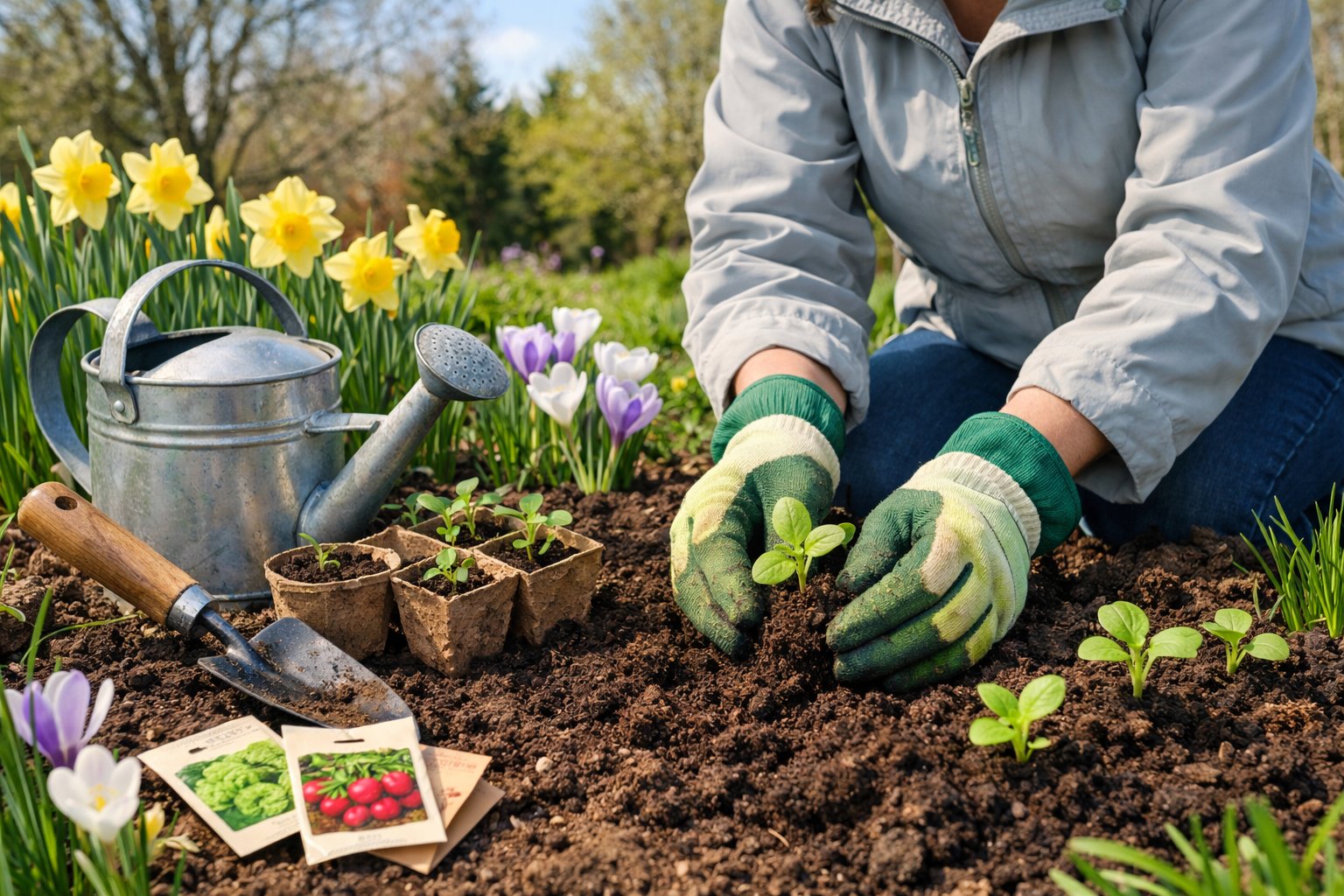
Warm-season crops need a head start indoors during March. Tomatoes, peppers, and eggplants require 6-8 weeks of indoor growth before transplanting outside after the last frost.
Gardeners should use seed trays or small pots filled with seed-starting mix. These plants need warmth and light to germinate properly. A sunny windowsill works, but a grow light provides more consistent results.
Basil and other tender herbs also benefit from indoor starting in March. The seeds germinate quickly in warm conditions and will be ready to move outside when nighttime temperatures stay above 50°F.
Starting these plants indoors extends the growing season and ensures strong transplants. Each seed packet provides specific timing, but most warm-season vegetables planted in early March will be ready for outdoor transplanting in May.
Hardy Crops to Sow Outdoors
Cool-season vegetables can go directly into the garden as soon as the soil is workable. Lettuce, spinach, kale, and Swiss chard tolerate cold soil and even light frosts.
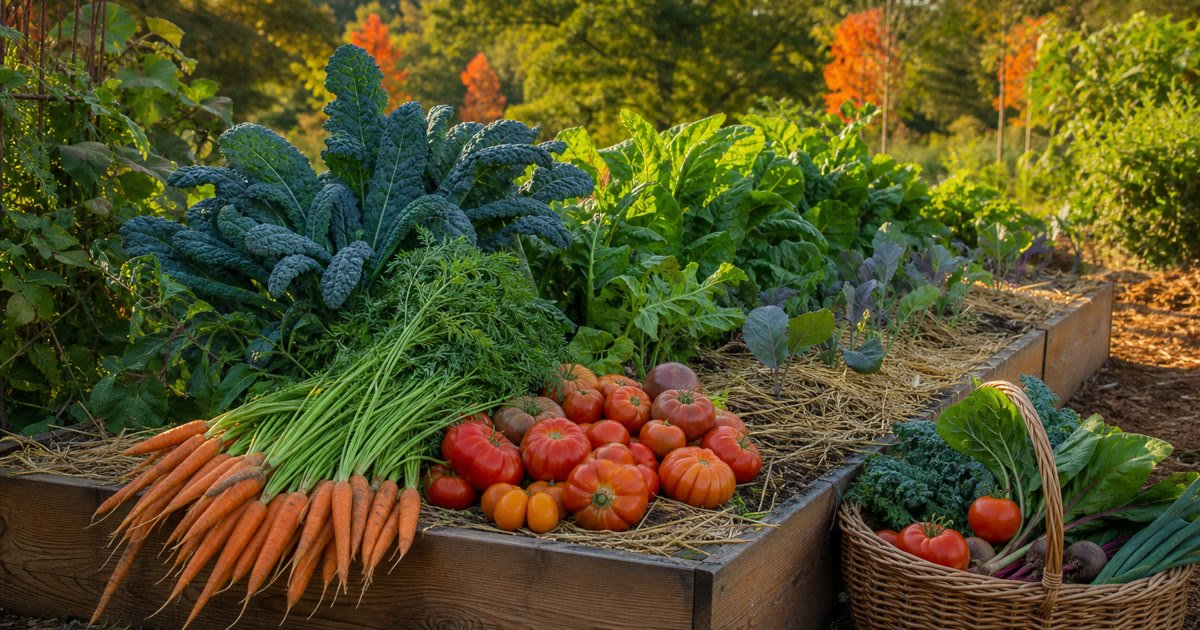
Root vegetables like carrots, radishes, and beets grow well in March's cooler temperatures. Radishes mature in just 3-4 weeks, making them one of the fastest crops to harvest. Peas should go in the ground early since they produce best before hot weather arrives.
Onion sets and seed potatoes can be planted in early to mid-March in most regions. These crops actually prefer cool soil for initial root development.
Hardy herbs like parsley, cilantro, and chives thrive when direct-sown in March. Cilantro particularly benefits from cool weather since it tends to bolt quickly in heat.
Starting Summer-Flowering Bulbs
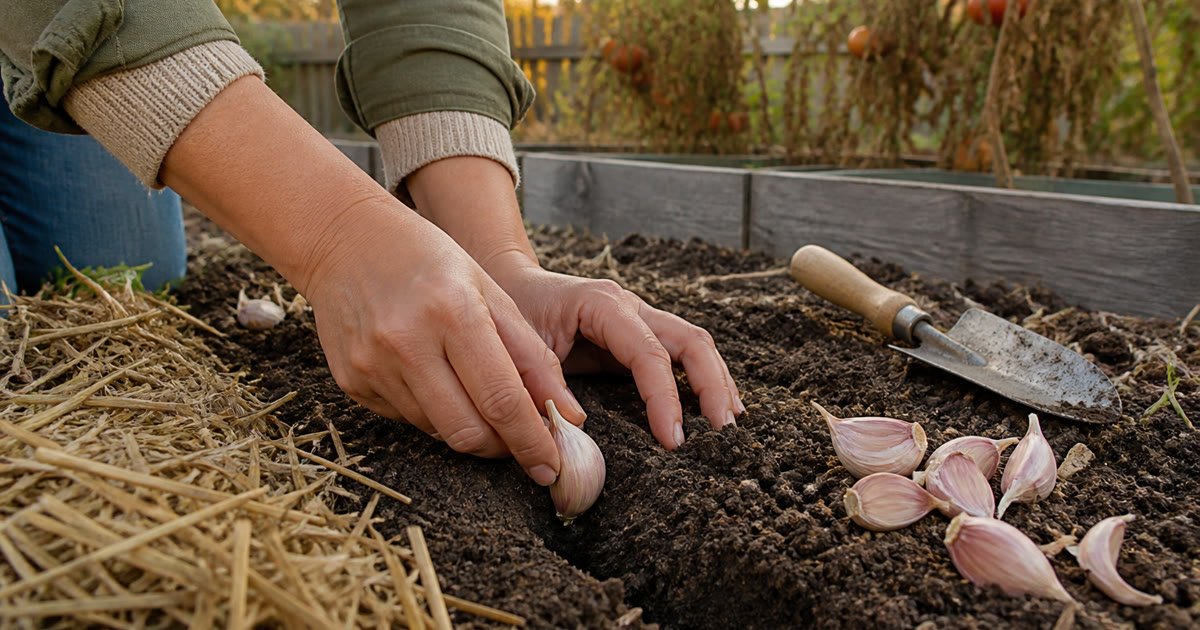
March is the time to plant summer-blooming bulbs like dahlias, gladiolus, and begonias. These tender bulbs cannot tolerate frost but need early planting for summer flowers.
Gardeners in warmer zones can plant directly in the ground after the last frost date passes. In cooler areas, starting bulbs in pots indoors gives them a growth advantage. The containers can move outside once frost danger ends.
Dahlias benefit from a March start since they need a long growing season to produce their large blooms. Plant the tubers 4-6 inches deep in well-draining soil. Gladiolus corms should be planted 4 inches deep and spaced 6 inches apart for best results.
Pest Management and Weed Control
March brings warmer weather that wakes up both beneficial organisms and destructive pests in the garden. Early action against common spring pests and emerging weeds prevents major problems later in the growing season.
Preventing and Managing Pests
Spring warmth triggers pest activity as insects break dormancy and begin feeding on young plants. Aphids emerge from the soil to cluster on leaf undersides, sucking sap from tender new growth. Slugs and snails leave silvery trails as they chew holes in broad leaves during nighttime feeding.
Cutworms pose a serious threat by cutting through stems of seedlings at soil level. These caterpillars curl up at plant bases during the day and feed at night. Root maggots work underground, with adult flies laying eggs near crop bases in early March.
Daily garden inspections help catch pest problems before they escalate. Check the undersides of leaves for aphid colonies and look for slug trails in the morning. Remove any visible pests by hand, especially larger ones like snails and cutworms that are easy to spot on cloudy days.
Physical barriers offer excellent protection for vulnerable seedlings. A ring of diatomaceous earth around plants stops soft-bodied pests from crossing. Copper tape or wood ash creates similar barriers against slugs and snails.
Natural and Organic Pest Control
Beneficial insects provide the most sustainable pest management solution. Ladybugs, lacewings, and parasitic wasps naturally control aphids and scale insects without chemicals. A pollinator garden with diverse flowering plants attracts these helpful predators to the area.
Homemade sprays effectively control soft-bodied pests like aphids. Mix 1 quart of water with 1 teaspoon of liquid dish soap and a pinch of cayenne pepper. Spray directly on affected plants, or use a simple vinegar solution as an alternative.
Insecticidal soaps work well on immature scale insects and aphids. For stubborn adult scale insects with waxy coatings, apply the soap with a toothbrush to physically dislodge them while treating the plant.
Trapping works for slugs and snails without toxic baits. Place wet cardboard or wood planks in the garden at night. These pests will gather underneath, making morning removal simple. A homemade bait of equal parts flour and water with cornmeal, molasses, and yeast attracts slugs into shallow containers.
Early Weed Removal Strategies
Weeds sprout quickly in March as soil temperatures rise. Pulling them by hand before they establish deep root systems saves significant effort later. Young weeds come out of moist soil easily, especially after rain.
Apply 2-3 inches of organic mulch around plants to suppress weed germination. Wood chips, straw, or shredded leaves block light from reaching weed seeds while retaining soil moisture. For persistent weed problems, lay landscape fabric or cardboard under the mulch layer.
Regular monitoring prevents weeds from setting seed and multiplying. A quick weekly walk through garden beds to pull any new sprouts keeps weed populations manageable. Early morning weeding sessions work best when soil moisture makes extraction easier.
Sustainable and Wildlife-Friendly Gardening
March is the perfect time to set up gardens that support local wildlife and use eco-friendly methods. Simple changes in planting and maintenance habits create spaces where beneficial insects thrive and gardens stay healthy without harmful chemicals.
Encouraging Pollinators and Beneficial Insects
March marks the start of pollinator activity as temperatures rise. Gardeners should plant early-blooming native flowers like crocuses, hellebores, and primroses to provide food for emerging bees and butterflies.
Creating diverse plantings helps different species find what they need. Single-petal flowers with accessible centers work better than double-petal varieties because pollinators can reach nectar easily. Grouping the same plant types together makes it easier for insects to find food sources.
Key plants to add in March:
- Wildflowers that bloom early
- Native flowering shrubs
- Herbs like rosemary and thyme
Leaving some areas of the garden untidy supports beneficial insects. Dead plant stems provide nesting sites for solitary bees. Small piles of leaves or twigs offer shelter for ladybugs and ground beetles that eat garden pests. A shallow dish of water with stones gives insects a safe drinking spot.
Eco-Conscious Gardening Practices
Starting compost piles in March turns kitchen scraps and garden waste into rich soil by summer. This eliminates the need for chemical fertilizers and reduces waste sent to landfills.
Gardeners should avoid using pesticides and synthetic fertilizers during march gardening preparations. These chemicals kill helpful insects along with pests. Natural alternatives like neem oil or hand-picking pests work without harming the ecosystem.
Sustainable practices for March:
- Collect rainwater in barrels for watering
- Use organic mulch to retain soil moisture
- Plant ground covers instead of expanding lawns
- Choose native plants that need less water
Reducing lawn areas by converting sections to wildflower meadows or native plant beds cuts maintenance time and supports more wildlife species. Even small changes make gardens more sustainable and attractive to birds, bees, and butterflies throughout the growing season.
Frequently Asked Questions
March gardening involves soil preparation with compost and organic matter, sowing hardy vegetables like peas and lettuce, and maintaining tools and irrigation systems. Early spring also offers opportunities to prune specific shrubs, support emerging wildlife, and start flowers for summer color.
How should I prepare my soil for spring planting in March?
Soil preparation begins with clearing winter debris from garden beds. Rake away fallen leaves, dead plant material, and any accumulated mulch that has broken down completely.
Test the soil pH and nutrient levels before adding amendments. Most garden centers offer simple test kits that provide results within minutes.
Add 2-3 inches of organic compost or well-rotted manure to garden beds. Work these materials into the top 6-8 inches of soil using a spade or garden fork. This improves soil structure and adds essential nutrients.
Break up compacted soil by tilling or double-digging the beds. Avoid working the soil when it's too wet, as this damages soil structure. The soil is ready when a handful forms a ball that crumbles easily when pressed.
Which vegetables can I start sowing outdoors in March?
Hardy vegetables tolerate cool soil and light frosts common in early spring. Peas can go directly into the ground once the soil can be worked.
Broad beans handle cold conditions well and establish strong root systems in March. Lettuce, spinach, and other salad greens also thrive when sown in early spring.
Root vegetables like radishes and early carrots can be planted toward the end of March in most regions. These crops germinate quickly in cool soil temperatures.
Onion sets planted in March develop into full bulbs by summer. Space them 4 inches apart in rows with good drainage. Start brassicas like cabbage and broccoli from seed indoors if outdoor temperatures remain too cold.
What maintenance tasks should be prioritized in the garden during March?
Cleaning and organizing garden tools ensures they work efficiently throughout the growing season. Sharpen pruning shears, hoes, and spades. Oil metal parts to prevent rust.
Check irrigation systems for leaks or damaged parts. Replace worn drip lines or fix broken sprinkler heads before the busy planting season begins.
Weed early and often to prevent unwanted plants from establishing deep roots. Hand-pulling works best when the soil is slightly moist. Remove the entire root system to stop regrowth.
Apply fresh mulch around established plants and in prepared beds. A 2-3 inch layer suppresses weeds and helps soil retain moisture as temperatures rise.
Can I start pruning shrubs and trees in March, and if so, which ones?
Summer-blooming shrubs benefit from March pruning because they flower on new wood. Roses, butterfly bush, and crape myrtle can be trimmed back before new growth emerges.
Remove dead, damaged, or crossing branches from most trees and shrubs. Use clean, sharp pruning tools to make cuts at a 45-degree angle just above a healthy bud.
Avoid pruning spring-blooming shrubs like lilac, forsythia, and azalea until after they flower. These plants set buds on old wood, so early spring pruning removes potential blooms.
Fruit trees require careful pruning to shape their structure and encourage fruit production. Remove water sprouts and thin out crowded branches to improve air circulation.
What are some tips for attracting and supporting wildlife in the garden this March?
Leave some areas of the garden slightly wild with native plants and natural debris. Birds use twigs and dried grasses for nesting material in early spring.
Install or clean bird feeders and fill them with seeds, suet, or peanuts. Fresh water in a birdbath attracts birds and beneficial insects. Change the water every few days to prevent mosquito breeding.
Create habitat for beneficial insects by planting early-blooming flowers. Crocus, snowdrops, and early primroses provide nectar for emerging pollinators.
Avoid using chemical pesticides and herbicides that harm wildlife. Natural pest control methods like companion planting and handpicking pests protect beneficial creatures while managing garden problems.
What flowering plants can I begin to grow in March for a summer bloom?
Start warm-season annual seeds indoors 6-8 weeks before the last expected frost. Marigolds, zinnias, and cosmos germinate quickly under grow lights or in a sunny window.
Sow hardy annual seeds directly in the garden once soil temperatures reach 50°F. Sweet peas, calendula, and bachelor's buttons tolerate cool conditions and bloom by early summer.
Plant summer bulbs like dahlias and gladiolus after the danger of frost passes. In warmer regions, these can go in the ground by late March.
Divide established perennials like daylilies and hostas while they're still dormant. This rejuvenates the plants and creates new specimens for other garden areas. Plant the divisions immediately and water them thoroughly.